

Maddy summaryHRES 550 is a non-binding House resolution recognizing June 2025 as LGBTQIA+ Pride Month. It formally encourages all U.S. citizens to celebrate Pride Month to learn about LGBTQIA+ history, including the Stonewall Inn and Compton's Cafeteria uprisings. The resolution affirms that LGBTQIA+ rights are human rights and emphasizes the ongoing struggle for equality. It has no legal effect but serves as a symbolic statement of support for the LGBTQIA+ community and its history.
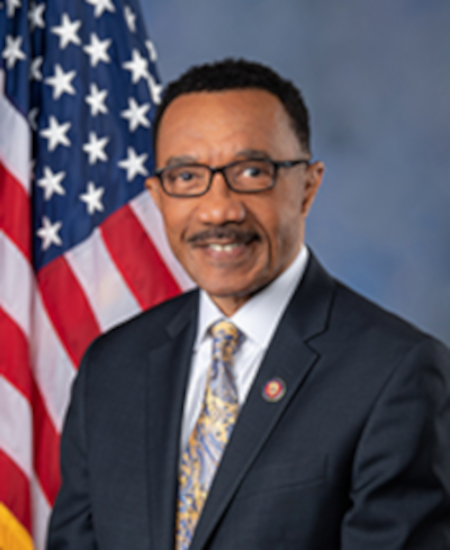
Rep. Kweisi Mfume
Sponsored bills
Maddy summaryThe No Secret Police Act of 2025 requires U.S. Immigration and Customs Enforcement (ICE) and other Department of Homeland Security officers working on border security or immigration enforcement to visibly display their official badges or uniforms and provide identification during detentions or arrests. It prohibits officers from wearing face coverings that conceal their face during these interactions. The bill also mandates that the Department report to Congress about tactical gear policies and research technology to improve badge visibility in different conditions like weather or lighting. These changes aim to increase transparency in immigration enforcement encounters.
Maddy summaryHRES 547 is a symbolic resolution recognizing June as National Caribbean American Heritage Month. It does not create new laws or directly affect any individuals or groups; instead, it encourages the public to observe the month through ceremonies and celebrations. The resolution affirms that Caribbean Americans' contributions are integral to U.S. history, progress, and cultural diversity. It supports the month's goals and highlights the community's longstanding role in American society, from historical figures like Alexander Hamilton to modern leaders like Kamala Harris. As a non-binding resolution, it has no legal effect but serves to honor this cultural observance.
Maddy summaryThe CONNECT for Health Act of 2025 expands Medicare telehealth coverage by removing geographic restrictions that limited where patients could receive care, expanding the types of health care providers who can offer telehealth services, and eliminating the requirement for an in-person visit before receiving telemental health services. The bill includes specific provisions to support telehealth use for Native American health facilities, rural health clinics, and Federally Qualified Health Centers. It requires the Centers for Medicare & Medicaid Services to collect and publish data on telehealth usage and impacts, and to develop resources to improve accessibility for people with disabilities and limited English proficiency. Program integrity measures are added to monitor telehealth billing practices and prevent fraud while maintaining coverage for telehealth services during public health emergencies.
Maddy summaryHR 4192, the Military PFAS Transparency Act of 2025, requires the Department of Defense to publicly report on its cleanup efforts for PFAS (toxic chemicals used in firefighting foam) at military installations. It mandates annual reports to Congress detailing site-specific funding, progress, and delays in PFAS remediation, plus a public online dashboard showing site-by-site spending, timelines, and community contact points. The bill also requires a remediation acceleration strategy prioritizing sites based on health risks and environmental impact. This directly affects military installations with PFAS contamination and the surrounding communities relying on affected water sources. The law focuses solely on increasing transparency and accountability in existing cleanup efforts, not on new funding or policy changes.
Maddy summaryHRES 546 is a resolution encouraging Members of Congress to visit U.S. Immigration and Customs Enforcement (ICE) detention facilities in their states to observe conditions firsthand and fulfill oversight responsibilities. It references the 2024 Appropriations Act, which permits unannounced visits and prohibits facilities from altering conditions for such visits, ensuring transparency. The resolution cites concerns about recent cuts to oversight staff (including closed offices for detainee rights) and reports of overcrowding and inadequate medical care in detention centers. It aims to inform congressional efforts to address systemic issues in immigration detention without mandating visits.
Maddy summaryThis bill makes technical corrections to the Camp Lejeune Justice Act of 2022 to streamline claims for individuals harmed by water contamination at Camp Lejeune. It clarifies the evidence required (30+ days at the base plus a link between contaminants and health harm), specifies that cases must be handled in North Carolina courts (with limited transfer options), and sets attorney fee caps (20% before suit, 25% after). These changes directly affect veterans and civilians who lived at Camp Lejeune and filed claims under the 2022 law. The bill does not create new eligibility but aims to improve the legal process for existing cases.
Maddy summaryThe Women's Health Protection Act of 2025 would protect access to abortion services across the United States by prohibiting states from imposing restrictions that are more burdensome than those on comparable medical procedures. The bill directly affects people seeking abortion care and health care providers by banning restrictions such as mandatory in-person visits, requirements for specific tests, limitations on telemedicine, and rules based on a patient's reason for seeking abortion. It prohibits state laws that single out abortion for unnecessary restrictions while allowing post-viability abortions when necessary to protect a patient's life or health. The bill preempts conflicting state laws and provides enforcement mechanisms through private lawsuits and actions by the Attorney General.
Maddy summaryThis bill prohibits state officials from blocking abortion access for patients traveling from other states, including restricting providers who offer legal abortions in their state to out-of-state patients. It protects people traveling across state lines for legal abortions, those assisting such travel, and the interstate transport of FDA-approved abortion medication. Violations can be challenged by the Justice Department or affected individuals through civil lawsuits seeking injunctions and damages. The law applies broadly across all states, territories, and tribal nations, defining "abortion service" to include both medical procedures and related care.
Maddy summaryHR 4113 reauthorizes and updates U.S. anti-trafficking programs through 2029, extending funding for victim assistance and prevention efforts. It modifies the "Tier 2 watch list" system to better identify countries failing to combat trafficking, clarifies which foreign aid can be withheld from non-compliant nations, and requires new reporting on organ trafficking. The bill increases annual funding for key programs - from $13.8 million to $23.1 million for victim services and $111 million for broader anti-trafficking initiatives - and mandates a printed public version of annual trafficking reports. These changes directly affect U.S. agencies (like the State Department), foreign governments receiving aid, and anti-trafficking organizations.