

Save America's Forgotten Equines Act of 2025 or the SAFE Act of 2025 This bill permanently prohibits the slaughter of equines (e.g., horses and mules) for human consumption. (Current law prohibits the slaughter of dogs and cats for human consumption. This bill extends the prohibition to equines.) Specifically, this bill prohibits a person from knowingly (1) slaughtering an equine for human consumption; or (2) shipping, transporting, possessing, purchasing, selling, or donating an equine to be slaughtered for human consumption or equine parts for human consumption. The bill subjects a violator to a fine. The bill applies to conduct in or affecting interstate or foreign commerce or within the special maritime and territorial jurisdiction of the United States. However, it does not apply to an activity carried out by an Indian for a religious ceremony. As background, in recent years, the appropriations acts have prohibited the Department of Agriculture (USDA) from using federal funds to inspect horses before they are slaughtered for human consumption. Therefore, there are currently no USDA-inspected horse slaughter facilities in the United States.
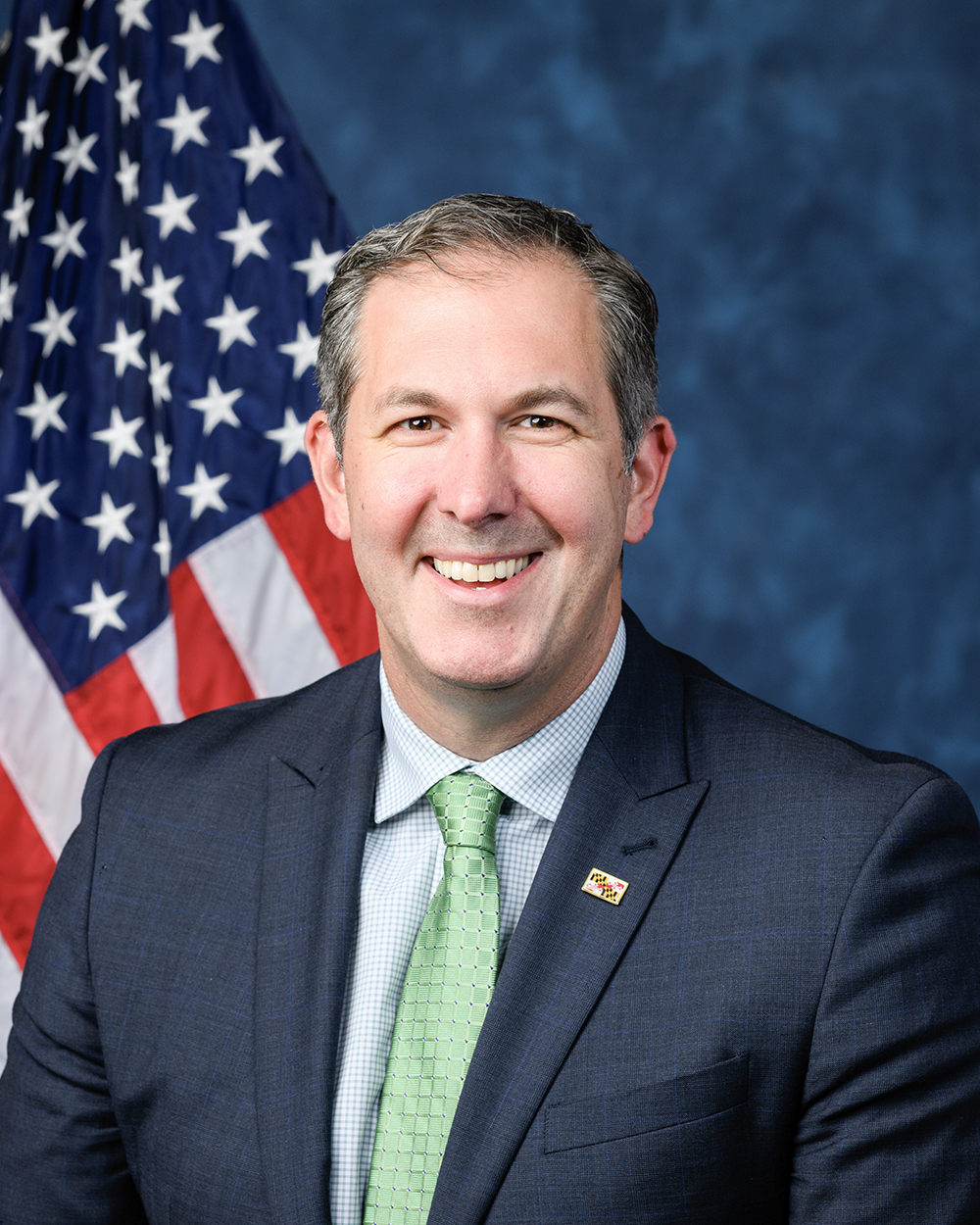
Rep. Johnny Olszewski, Jr.
Sponsored bills
Maddy summaryHRES 265 is a symbolic House resolution condemning the Trump administration for allegedly using the Signal messaging app to share highly sensitive or classified military information, directly affecting officials including Vice President Vance, Secretary of Defense Hegseth, and Secretary of State Rubio. The resolution cites risks to national security, noting foreign adversaries like China and Russia have previously accessed U.S. classified data. It calls for investigations into unauthorized communications, mandates review of classified information procedures, and demands accountability for any violations of federal laws governing classified data handling. The resolution does not create new laws but formally expresses disapproval of the administration's communication practices.
Maddy summaryHR 2429 requires the Secretary of Transportation to create and implement a 10-year campus modernization plan for the U.S. Merchant Marine Academy within 180 days. The bill directs the modernization of outdated facilities - including new training labs, a safety training pool, updated athletic facilities, and infrastructure upgrades like electrical systems and accessibility improvements - to support midshipmen training for maritime careers and national defense. It authorizes $1.02 billion in funding (starting in 2026) for phased construction and renovations over 10 years, prioritizing facilities needed for Coast Guard licensing exams, physical readiness, and campus safety. The plan directly affects the academy’s midshipmen, faculty, and operations by replacing aging infrastructure that currently hinders training.
TAP Promotion Act This bill requires that pre-separation counseling under the Transition Assistance Program include a presentation that promotes the benefits available to veterans from the Department of Veterans Affairs (VA). The bill also requires the VA to annually report on the presentation to (1) identify veterans service organizations that participate, (2) provide the number of members of the Armed Forces who attend, and (3) provide any recommendations for changes to the presentation.
Maddy summaryThis resolution requests the President and Secretary of State to share specific documents with the House of Representatives by April 9, 2025. It seeks all records created after January 20, 2025, related to U.S. military strikes on Yemen's Houthis and the disclosure of classified information to journalist Jeffrey Goldberg via Signal. The documents include Signal chat transcripts, strike details, legal justifications, coordination with allies, and any new security reforms following the incident. This procedural request directly affects the executive branch and aims to obtain records about sensitive national security communications.
Maddy summaryThis bill would require federal firearms licensees to prohibit sales of specific high-capacity rifles and shotguns to people under 21. It targets semiautomatic centerfire rifles and shotguns capable of holding more than 5 rounds in their magazines, raising the age limit from 18 to 21 for these weapons. Exceptions apply for active military members and certain government employees authorized to carry firearms. The law directly affects gun retailers and individuals under 21 seeking to purchase these specific firearms. It modifies existing federal gun sale rules without changing age requirements for other firearms.
Maddy summaryHCONRES 21 is a symbolic House resolution recognizing the persistent gender wage gap in the U.S., where women earn significantly less than men for comparable work. It cites specific data showing women overall earn 75 cents and women of color earn even less (e.g., 58 cents for Latinas) per dollar earned by White, non-Hispanic men. The resolution does not create new laws or policies but formally acknowledges the economic impact of this disparity, including annual lost wages exceeding $994 million for full-time women workers. It also highlights designated Equal Pay Days for different demographic groups to underscore the varying timelines to close the gap.
Maddy summaryThe Paycheck Fairness Act strengthens equal pay protections by expanding the definition of "sex" to include pregnancy, childbirth, sexual orientation, gender identity, and sex characteristics. It modifies employer defenses for pay disparities to require proof that any pay difference is job-related, not based on sex, and accounts for the entire pay gap. The bill prohibits employers from asking about salary history, enhances penalties for violations, and requires employers with 100+ employees to collect and report detailed pay data by race, sex, and job category. It also establishes training programs for employers on eliminating pay bias and creates a National Equal Pay Enforcement Task Force to coordinate enforcement efforts. This legislation directly affects employers, particularly those with 100+ employees, and aims to address pay disparities impacting women, people of color, and other underrepresented groups.
Maddy summaryH.J. Res. 80 would declare the Equal Rights Amendment (ERA) part of the U.S. Constitution, asserting it has been ratified by 38 states (three-fourths of the states) despite the original 1972 deadline. If passed, this resolution would formally establish the ERA as a constitutional amendment, requiring all federal and state laws to align with its gender equality protections. The bill does not create new laws but confirms the ERA's status as part of the Constitution, affecting how laws are interpreted and enforced. It is a procedural step to resolve the legal dispute over the ERA's validity after decades of debate.
Maddy summaryHR 2311, the Pakistan Democracy Act, imposes U.S. sanctions on Pakistani military and government officials who undermine democracy or wrongfully detain political figures. Specifically, it requires sanctions within 180 days on General Asim Munir (Pakistan’s Army Chief) and identifies individuals involved in the persecution of Imran Khan or other political detainees, barring them from U.S. entry via visa inadmissibility. The bill mandates the President to certify to Congress for waivers, requiring proof that military rule has ended and political detainees are freed. It defines key terms like "knowingly" and "foreign person" to clarify eligibility for sanctions. The law directly affects targeted Pakistani officials and their immediate family members, with no mention of broader economic or diplomatic measures.