

Maddy summaryHR 3986 exempts small businesses (as defined by the Small Business Act) from import taxes imposed under Executive Order 14257. This means small businesses importing goods for their own use will no longer pay these specific taxes. The bill directly affects small businesses meeting the size standards outlined in the Small Business Act. It removes an existing tax burden without creating new regulations or requirements.
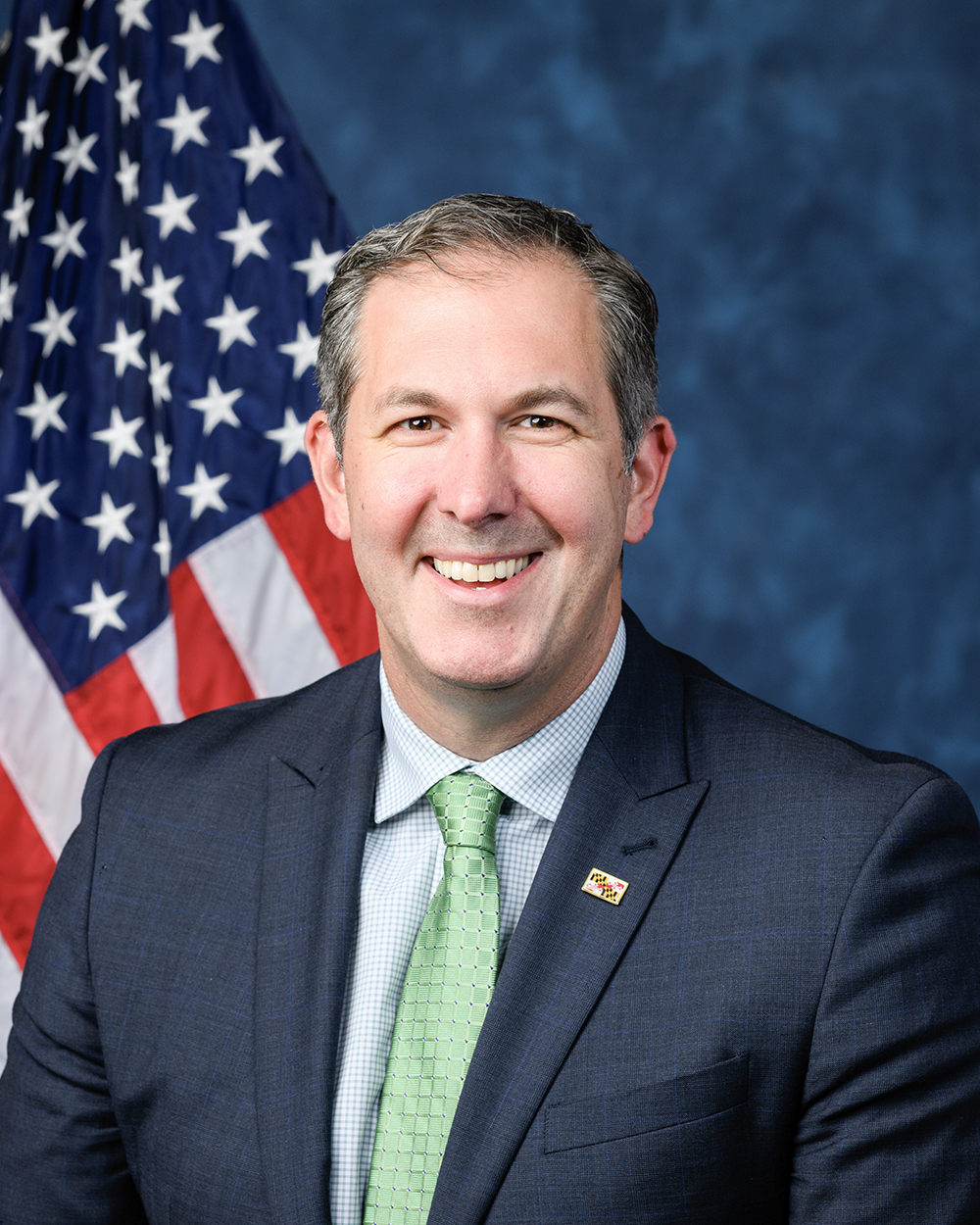
Rep. Johnny Olszewski, Jr.
Sponsored bills
Maddy summaryHR 3988 requires the Department of Housing and Urban Development (HUD) and the Census Bureau to jointly study how federal agencies track and record "housing loss" in the U.S. Housing loss is defined as involuntary displacement, including evictions, foreclosures, or displacement from natural disasters. The study must identify common types of housing loss, review existing federal data sources, assess data quality, and recommend improvements for better tracking. HUD and the Census Bureau must submit a report to Congress within six months detailing these findings and recommendations. This bill does not change current laws but mandates a federal review to improve how housing loss is measured.
Maddy summaryHR 3941 would repeal Section 5123 of Public Law 118-159, which is part of the Caesar Syria Civilian Protection Act of 2019. This bill specifically targets one provision within the larger 2023 law, removing that particular section from federal law. It does not affect the rest of the Caesar Act or its core sanctions framework. The bill's direct effect is solely on the repealed section of the existing law. This is a procedural change focused on eliminating a specific legal provision.
Maddy summaryHR 3906, the Medical Research for Our Troops Act, restores funding levels for military medical research by increasing the Defense Health Agency's research budget from $40.395 billion to $41.576 billion in the 2025 appropriations act. It ensures Congressionally Directed Medical Research Programs funds are used consistently with the Consolidated Appropriations Act, 2024, requiring the Defense Secretary to support all previously identified research programs and maintain existing funding allocations. The bill directly affects military medical research initiatives and the Defense Health Agency's budget implementation. This is a procedural funding adjustment, not a new policy, maintaining continuity for ongoing research projects.
Maddy summaryThis bill requires private firearm transfers between individuals to go through a licensed dealer who must conduct a background check. It applies to most private sales but includes exceptions for transfers between family members (like parents and children), law enforcement, emergencies preventing harm, and temporary loans at shooting ranges or for hunting. Dealers must provide background check notices in both English and Spanish. The law aims to prevent prohibited individuals from obtaining firearms through private transactions while maintaining existing state authority on firearm laws.
Maddy summaryHR 3892, the Flow Act, clarifies that replacing privately-owned lead service lines connected to public water systems does not count as "private business use" under federal tax law. This change directly affects public water systems and issuers of tax-exempt bonds by allowing them to use bond proceeds for lead pipe replacement without disqualifying the bonds from tax-exempt status. The bill specifies that funds used to replace lead service lines to comply with federal lead regulations (as defined in the Safe Drinking Water Act) qualify for this tax treatment. The provision applies to bonds issued after December 31, 2025, facilitating future financing for lead pipe removal projects.
Maddy summaryThis bill extends key federal research grant programs for small businesses until 2030. It expands the "direct to Phase II" option for agencies (previously ending in 2025), limits these awards to 10% of an agency’s SBIR budget (15% for NIH), and requires annual reporting on such awards. It also extends the commercialization readiness program for civilian agencies and two specific pilot programs (Phase 0 and commercialization assistance) through 2030. The bill directly affects small businesses seeking federal research funding through the Small Business Innovation Research (SBIR) and Small Business Technology Transfer (STTR) programs.
Maddy summaryThis non-binding House resolution urges the President to appoint a Special Envoy for Sudan to lead U.S. diplomatic efforts addressing the ongoing conflict and humanitarian crisis. It specifically calls for the envoy to coordinate with the Middle East Special Envoy, secure humanitarian access, and advance U.S. national security interests. The resolution highlights that over 13 million people have been displaced and 30 million require aid in Sudan, with regional instability and extremist threats escalating. It also requests the State Department elevate Sudan as a strategic priority and ensure robust humanitarian assistance. The resolution reflects the House's view that a dedicated envoy would strengthen U.S. diplomatic engagement to support peace and stability.
Maddy summaryHR 3757, the Pride In Mental Health Act of 2025, provides $20 million annually (2026-2030) to fund grants for mental health services targeting LGBTQ+ youth, including nonbinary, intersex, and Two Spirit youth, and their families/caregivers. The bill mandates grantees to provide trauma-informed care, cultural competency training, school bullying prevention guidelines, and evidence-based practices while explicitly prohibiting the use of funds for conversion therapy or its promotion. It also requires the federal government to restore mental health reports on LGBTQ+ youth, conduct a national survey measuring mental health distress, and produce a report on mental health services for LGBTQ+ youth in foster care. The law directly affects these youth populations by expanding access to tailored mental health resources and data collection, with funding administered through the Substance Abuse and Mental Health Administration.
Maddy summaryHR 1642, the Connecting Small Businesses with Career and Technical Education Graduates Act of 2025, requires Small Business Development Centers (SBDCs) and Women’s Business Centers (WBCs) to help small businesses connect with career and technical education (CTE) programs. Specifically, SBDCs must provide small businesses with information on hiring CTE graduates and relevant programs, while WBCs must do the same for women-owned businesses. The bill also directs these centers to connect businesses with CTE programs to help students and graduates find jobs. This directly affects small businesses (and women-owned businesses for WBCs), CTE programs, and their graduates by creating formal pathways for hiring. The policy change mandates new duties for existing centers under the Small Business Act, without altering funding or creating new programs.