

Maddy summaryHR 4611 (EACH Act of 2025) requires all federally funded health programs - including Medicaid, Medicare, military health plans, and the Indian Health Service - to cover abortion services without restrictions, repealing the Hyde Amendment's long-standing ban on federal funding for most abortions. This directly affects millions of people enrolled in these programs, particularly low-income women, women of color (including 25% of Black women and 22% of Hispanic women on Medicaid), and young people. The bill mandates coverage in all federally administered health plans and prohibits state or private insurers from restricting abortion coverage in health insurance. It aims to eliminate current federal and state barriers that deny abortion access to people who rely on government health programs.
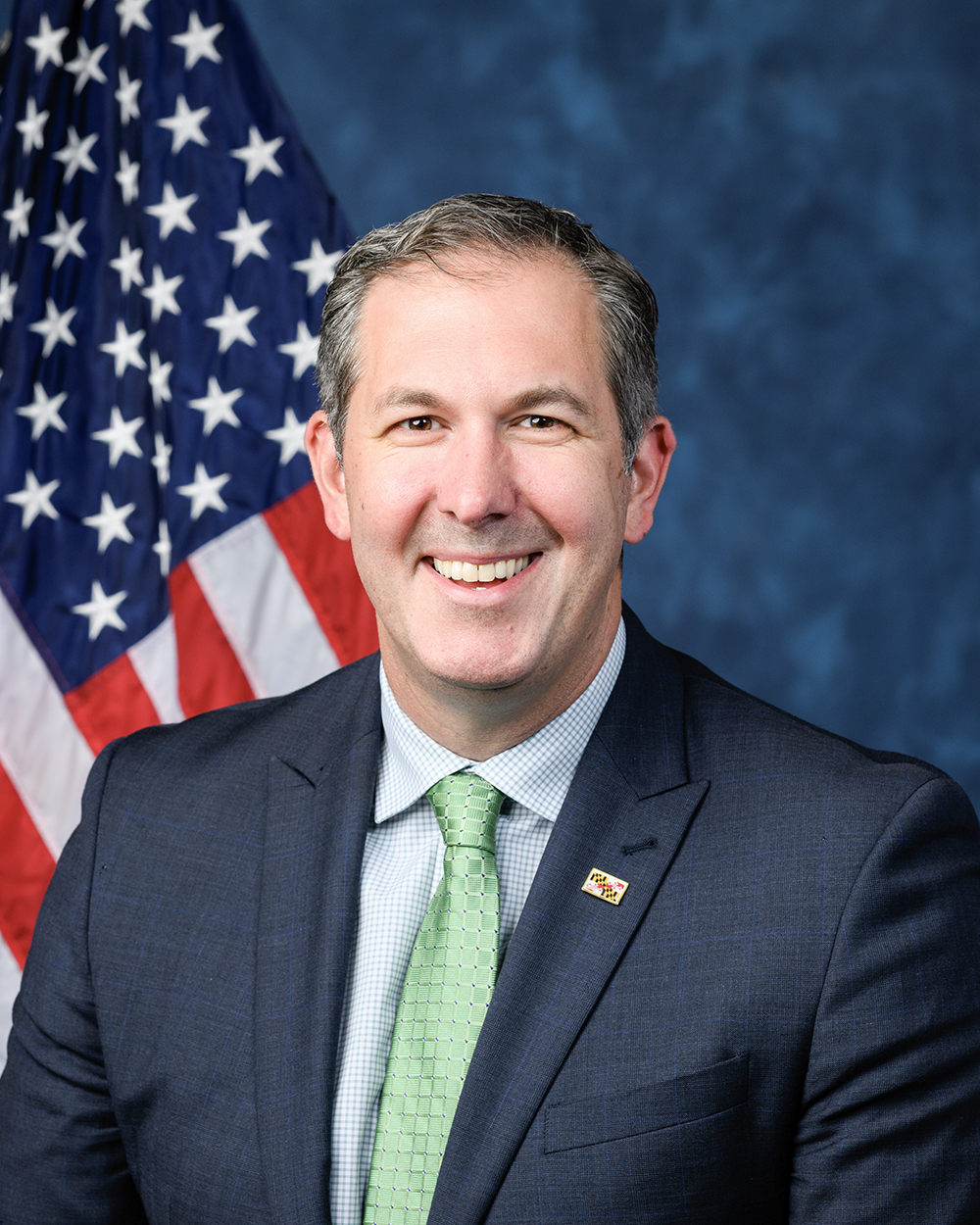
Rep. Johnny Olszewski, Jr.
Sponsored bills
Maddy summaryH.J. Res. 135 proposes a constitutional amendment to limit the President's pardon power. It would require the President to notify Congress within three days of granting any pardon or reprieve, after which Congress could attempt to nullify the action by passing a two-thirds vote in both chambers within 60 days. If Congress fails to act, the pardon becomes effective 90 days after the notification. The amendment also voids any pardon if the President misses the three-day notification deadline and prohibits pardons for offenses previously nullified by Congress.
Maddy summaryThe RESTRICT Act (HR 6879) requires U.S. companies to obtain a license before exporting advanced computer chips to countries listed in a specific export control group (as of January 2025) and to regions like Hong Kong and Macau. It also blocks licenses for exports to entities primarily located in countries of concern (including those same nations plus Hong Kong and Macau). U.S. companies may avoid the license requirement if they meet strict conditions, such as limiting foreign ownership to 10% and implementing security measures to prevent misuse. The law expires five years after enactment.
Maddy summaryThe Antisemitism Response and Prevention Act of 2025 aims to combat rising antisemitism through evidence-based policies rather than political weaponization. It requires universities to designate Title VI coordinators to handle civil rights complaints, establishes a National Coordinator to Counter Antisemitism within the Department of Justice, and creates a Hate Crime Reporting Center at the FBI to improve data collection on hate crimes. The bill prohibits using antisemitism accusations to restrict diversity programs, political advocacy, or immigration policies, and ensures nonprofit security grants for Jewish community centers cannot be tied to unrelated political conditions. The legislation authorizes $280 million annually for the Department of Education's Office for Civil Rights and $50 million for the Hate Crime Reporting Center from 2027-2032.
Maddy summaryHCONRES 61 directs the President to withdraw U.S. military forces from hostilities against any terrorist organization designated by the president in the Western Hemisphere. This bill specifically applies to military operations involving U.S. armed forces in the region targeting such groups. The key provision requires the withdrawal unless Congress has passed a formal declaration of war or specific authorization for that military action. The resolution invokes Section 5(c) of the War Powers Resolution to compel this change in military deployment.
Maddy summaryHR 6731, the "Restore Trust in Government Act," requires Members of Congress, the President/Vice President, and their spouses or dependent children to divest certain financial investments during federal service. It defines "covered investments" broadly (including stocks, commodities, and derivatives) but excludes Treasury bonds, municipal bonds, family farm interests, and some Alaska Native Settlement stock. Covered individuals must sell holdings within 90-180 days of taking office or enacting the law, with limited exceptions for qualified blind trusts or spouses’ occupational trading. Violations incur a 10% fee on the investment value and require returning profits, paid to the Treasury. Ethics offices enforce these rules, publish penalty details, and issue divestiture certificates.
Maddy summaryThe Protect America's Workforce Act cancels an executive order issued on March 27, 2025, that excluded certain groups from federal labor-management relations programs, making it legally unenforceable. It also ensures that all collective bargaining agreements between federal agencies and labor unions, which were active as of March 26, 2025, remain fully effective until their agreed terms expire. This directly affects federal agencies, labor unions, and the employees covered by these agreements. The bill prevents federal funds from being used to implement the canceled executive order while preserving existing labor agreements.
Maddy summaryThis concurrent resolution (HCONRES 65) is a symbolic congressional commendment of state and local governments that have affirmed reproductive rights as human rights. It recognizes efforts by jurisdictions like Carrboro, North Carolina; Austin, Texas; and Fulton County, Georgia, which passed resolutions or proclamations declaring abortion access a human right and condemning criminalization of pregnancy outcomes. The resolution urges states to repeal restrictive abortion laws and protect access to reproductive care, but it does not create new legal requirements or fund programs. As a procedural resolution, it has no binding effect on federal or state law.
Maddy summaryHRES 929 is a House resolution condemning the U.S. President's pardon of former Honduran President Juan Orlando Hernández, who was convicted in a U.S. court for leading a decades-long drug trafficking conspiracy. The resolution reaffirms U.S. commitment to partner with Honduras on counter-narcotics efforts and democratic cooperation, regardless of the outcome of Honduras' November 30, 2025, election. It states the pardon undermines U.S. credibility in anti-corruption and counter-narcotics work, emboldens criminal networks, and signals that political influence can override the rule of law. The resolution urges continued U.S. support for security, economic development, and anti-corruption measures in Honduras.
Maddy summaryThis bill designates the Museum of the Blind People’s Movement (currently located at the National Federation of the Blind Jernigan Institute in Baltimore, Maryland) as the National Museum of the Blind People’s Movement. It formally recognizes the museum, operated by blind individuals, as the first national institution dedicated to preserving and showcasing the history of blind people’s contributions and struggles in the U.S. The museum already collects artifacts, documents, and literature documenting the blind community’s collective achievements and civil rights efforts since the 1940s. The bill’s key provision is this official congressional designation, elevating the existing museum as a national platform for education and awareness about blind people’s movement.