

Maddy summaryHR 2743 prohibits large financial institutions (over $100 billion in assets) from denying banking services to lawful businesses based on subjective political reasons, industry type, or reputational concerns. It requires these institutions to use objective, risk-based assessments for service decisions and provide written justifications for denials. The law applies to banks, credit unions, and payment networks, with civil penalties for violations including fines up to $10,000 per incident. It specifically ensures businesses operating legally under federal law receive fair access to financial services without discrimination. The bill mandates that denials be based on documented risk factors, not political bias or category-based exclusion.
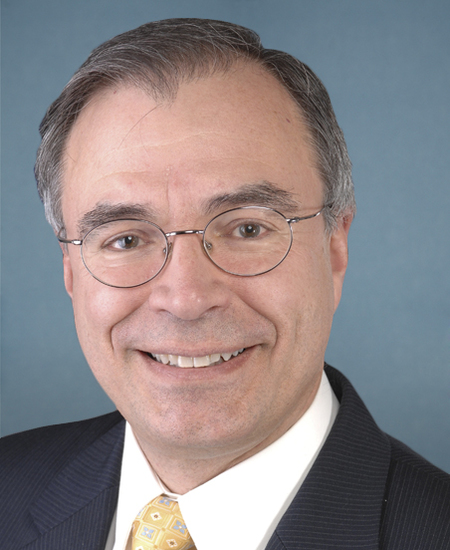
Rep. Andy Harris
Sponsored bills
Maddy summaryThe Range Access Act (HR 1614) requires the Forest Service and Bureau of Land Management to identify existing target shooting ranges on federal lands and establish new ones where feasible. Within five years, agencies must construct or partner to build new ranges meeting specific safety standards (like berms, firing lines, and no user fees) that accommodate rifles, pistols, shotguns, and archery. The bill mandates public consultation with tribes, shooting clubs, and local governments before site selection, prioritizing proximity to recreational shooters while avoiding conflicts with existing private ranges. Annual reports to Congress will track progress toward ensuring public access to these ranges on federal lands.
Capital Loss Inflation Fairness Act This bill increases the allowance for capital losses and adjusts the increased allowance amount for inflation after 2023.
This resolution expresses the sense of the House of Representatives that (1) Congress should conduct investigations to determine the impacts of offshore wind development, (2) Congress should use the findings of the investigations to develop legislation to mitigate potential negative environmental or economic impacts of such development, and (3) a moratorium should be placed on leasing and construction of offshore wind farms along the Atlantic coast until the investigations and their findings are presented to Congress and the public.
Maddy summaryHR 2630, the Safe Step Act, requires group health plans and health insurance issuers to establish a clear, transparent process for patients or their doctors to request exceptions to medication step therapy protocols. These protocols typically force patients to try cheaper drugs first before covering more expensive alternatives. The bill mandates that plans must approve exceptions when prior treatments failed, delay would cause serious harm, a treatment is unsafe, or a patient is stable on a previously approved drug, with strict 72-hour (or 24-hour in emergencies) decision timelines. It also requires plans to publish the exception process online and limit documentation requests to only necessary medical information. This law directly affects health insurers, employers offering health plans, and patients using step therapy for prescription drugs.
Maddy summaryHR 2620, the Federal Firearms Licensee Protection Act of 2023, increases penalties for crimes targeting firearms licensees. It amends Section 924 of Title 18 to impose mandatory minimum sentences of 3 years for burglaries or 5 years for robberies committed at the business premises of licensed firearms dealers, manufacturers, or importers. The bill specifically targets violations of Section 922(u), which prohibits unauthorized access to these premises, and adds "attempts to do so" to the penalties. This directly affects licensed firearms businesses by strengthening legal protections against theft or violence at their locations. The law creates clearer, harsher consequences for crimes committed during burglaries or robberies at these specific business sites.
Maddy summaryHR 1839, the Combating Illicit Xylazine Act, makes the illicit use and distribution of xylazine a federal crime by adding it to the Controlled Substances Act. The bill broadly defines xylazine to cover numerous chemical variants and prohibits human use or non-licit distribution, while preserving legitimate veterinary and pharmaceutical uses. It requires tracking xylazine in drug supply chains and mandates two reports to Congress within 1 and 4 years on its prevalence, sources, and whether it should be rescheduled. The bill directly affects individuals distributing or using xylazine illicitly, including as an additive to drugs like fentanyl, and aims to address its public health risks. Congress declared illicit xylazine an "emerging drug threat" under existing law.
Maddy summaryThis bill amends the SNAP program to prevent retail food stores or wholesale food businesses from being denied authorization to accept benefits solely due to past criminal convictions. It restricts consideration of criminal offenses to those occurring within the last 5 years and establishes pathways for businesses to prove rehabilitation, such as demonstrating 5 years of compliance after a felony conviction or 3 years without reconviction. Businesses may also provide evidence of mitigating circumstances, age at the time of offense, or relevance of the offense to SNAP responsibilities. The changes apply directly to food retailers seeking or maintaining SNAP authorization, aiming to reduce automatic disqualifications based on historical criminal records.
Maddy summaryHR 2427, the Hmong Congressional Gold Medal Act, authorizes Congress to award a gold medal to honor Hmong veterans who served with U.S. forces during the Vietnam War. The bill directs the Treasury Secretary to strike the medal and present it to the Smithsonian Institution for display, recognizing their combat service, heavy casualties, and displacement after the war. Duplicate bronze medals may be sold to cover costs. This procedural bill commemorates the Hmong people's military contributions and their refugee resettlement in the U.S., affecting the Hmong community as a whole.
Maddy summaryHR 1818, the Aviation Workforce Development Act, expands tax-advantaged savings plans (529 plans) to cover costs for specific aviation training programs. It allows funds from these plans to pay for tuition, fees, and required materials at FAA-certified aviation maintenance technician schools (Part 147) or commercial pilot training programs (Part 61 or 141). This directly affects students pursuing careers as aircraft maintenance technicians or commercial pilots by making these training costs more affordable through existing tax-advantaged savings. The bill amends the tax code to include these programs under "qualified higher education expenses" for 529 plan distributions.