

Maddy summary# Summary of the Agriculture, Rural Development, Food and Drug Administration, and Related Agencies Appropriations Act, 2025 This is the fiscal year 2025 appropriations bill for the U.S. Department of Agriculture, Rural Development programs, Food and Drug Administration, and related agencies. **Key Funding Areas:** - Rural Development Loan Fund - Rural Housing Insurance Fund - Rural Utilities Service programs (water, waste disposal, broadband) - Food and Drug Administration (including user fee funding) - Agricultural research and extension programs - Food assistance programs (Child Nutrition, WIC) **Major Restrictions and Provisions:** 1. **Funding Limitations:** - Section 714 limits funds for section 32 of the Act of August 24, 1935 to $1,427,930,000 - Section 705 allows funds for direct and guaranteed loans to remain available until expended - Section 707 extends availability of funds for Federal Crop Insurance 2. **Prohibited Activities:** - Section 744: Prohibits using funds to promote or advance Critical Race Theory - Section 755: Prohibits implementing Executive Order 13985 or related equity plans - Section 758: Prohibits discriminatory actions against persons based on religious beliefs regarding marriage - Section 762: Prohibits using funds to inspect horses under certain provisions - Section 768: Prohibits implementing certain food traceability regulations until pilot projects are completed 3. **Notable Policy Changes:** - Section 760: Amends the definition of "hemp" to exclude certain synthetic cannabinoids - Section 772: Requires inclusion of peanut-containing foods in WIC food packages - Section 773: Requires regular testing of inbound molasses for quality verification 4. **Administrative Rules:** - Section 716 establishes strict requirements for reprogramming funds - Section 710 limits first-class travel for federal employees - Section 713 prohibits blocking access to pornography on government computers - Section 719 prohibits executive branch agencies from producing prepackaged news stories 5. **Rescissions:** - Section 754 rescinds $40 million from previous appropriations - Section 765 rescinds $50 million from prior year conservation funds The Act contains numerous specific restrictions on program implementation, reporting requirements, and funding limitations across various agricultural, food safety, and rural development programs. The document is highly detailed with specific prohibitions on certain types of regulations, research, and activities, reflecting the political priorities of the Congress that passed it.
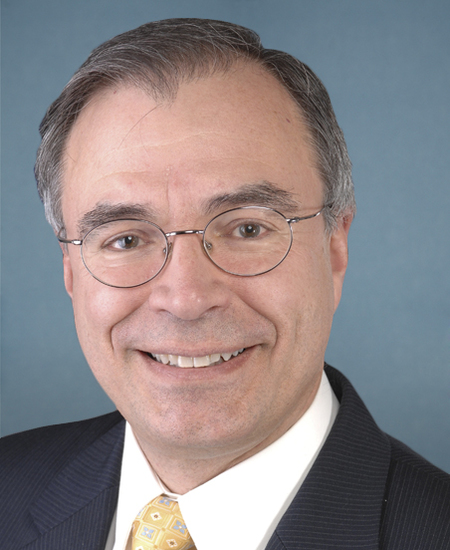
Rep. Andy Harris
Sponsored bills
Maddy summaryHJRES 164 is a congressional resolution seeking to block a rule issued by the Department of Commerce regarding firearms license requirements. It directly targets the rule published in the Federal Register (89 Fed. Reg. 34680), which would have revised licensing procedures for firearms dealers. If passed, the resolution would prevent this rule from taking effect by invoking the congressional disapproval process under federal law. The bill does not create new regulations but aims to halt an existing rule affecting gun license applicants and dealers.
Maddy summaryHR 8985, the Preventing Forced Abortions Act of 2024, prohibits federal courts from enforcing any surrogacy contract clause requiring a surrogate mother to have an abortion at the request of intended parents or their agents. The bill mandates courts to enforce payment to the surrogate for her services, regardless of any contract term tied to abortion, including clauses penalizing refusal (like reduced pay or liquidated damages). It directly affects surrogacy agreements between intended parents and surrogate mothers, ensuring surrogates cannot be forced to undergo abortions against their will while protecting their contractual compensation. The law defines "abortion" as intentionally terminating a pregnancy except in specific medical circumstances, such as after fetal viability or removing a non-viable fetus.
Maddy summaryHJRES 170 is a resolution seeking congressional disapproval of a federal rule that would have required new housing projects financed by the Department of Housing and Urban Development (HUD) or the Department of Agriculture (USDA) to meet specific energy efficiency standards. The rule, published in April 2024, aimed to set these standards for new construction in federally subsidized housing. If passed, this resolution would block the rule under the Congressional Review Act, making it legally void. It directly affects developers and builders of HUD- and USDA-financed housing by removing the requirement to comply with these energy standards.
Maddy summaryThis bill rescinds unspent funds from specific federal programs. It targets leftover money from pandemic relief (like the CARES Act and American Rescue Plan) and certain infrastructure initiatives (including education stabilization funds and transportation programs like the Congestion Mitigation Program). The rescission is limited to amounts already allocated for Israel, Ukraine, and Indo-Pacific security supplements under recent appropriations. Unspent funds must be returned to the Treasury, with no new spending created.
Maddy summaryHR 537 authorizes a Congressional Gold Medal to honor 60 diplomats who saved Jewish lives during the Holocaust by issuing visas and passports against their governments' orders, risking expulsion and personal danger. The medal will be presented to the next of kin of these diplomats, alongside representatives from their home countries, and permanently displayed at the United States Holocaust Memorial Museum. The bill also permits the sale of bronze duplicates to cover production costs, with proceeds going to the U.S. Mint. This legislation recognizes the diplomats' humanitarian actions without creating new government programs or altering existing laws.
Maddy summaryHR 8653 authorizes the posthumous award of a Congressional Gold Medal to Major Thomas D. Howie, a U.S. Army officer who died during the Battle of Normandy in WWII. The bill specifies the medal will be presented to his nephew, Tom Howie, or his next of kin, and then permanently displayed at The Citadel Museum. It also permits the U.S. Mint to produce and sell bronze duplicates to cover costs. This is a commemorative measure honoring Major Howie's military service and sacrifice, with no substantive policy changes.
Maddy summaryThis bill establishes the Aviation Security Checkpoint Technology Fund (ASCT Fund) within the Department of Homeland Security. It directs $250 million annually from aviation security fees (for fiscal years 2025-2029) to fund TSA's procurement, deployment, and maintenance of new security checkpoint technology at airports. The TSA Administrator must provide regular reports to Congress on how these funds are used for technology deployment. The bill also repeals a previous section of aviation security law that previously governed these fees. The fund directly affects TSA operations and airport security technology upgrades.
Maddy summaryHRES 1255 is a non-binding House resolution introduced on May 23, 2024, that calls on all Americans to observe Memorial Day 2024 as a day of remembrance for military personnel who died in service. The resolution specifically honors "the men and women of the Armed Forces who have died in the pursuit of freedom and peace" and urges the public to demonstrate appreciation for their sacrifices. It does not create new laws or policies but serves as a symbolic expression of national gratitude, emphasizing respect for those who died while defending democratic values. The resolution was co-sponsored by multiple House members and aligns with the traditional observance of Memorial Day.
Maddy summaryThis bill amends the Law Enforcement Officers Safety Act (LEOSA) to expand where current and retired law enforcement officers can carry concealed firearms. It specifically allows qualified officers to carry in Federal facilities like post offices and courthouses (previously restricted), clarifies they may carry on public property and transportation, and updates firearms training requirements to accept certification from any state-certified instructor. The key change requires officers to meet recent firearms training standards (using flexible state-based criteria), rather than relying solely on their former agency's standards. This directly affects retired officers seeking to carry in more public spaces and federal buildings without needing prior agency certification.