

Maddy summaryThis bill terminates all federal funding for FEMA's Shelter and Services Program effective upon enactment. It prohibits new appropriations for this program or any similar successor program. Any remaining funds from the program as of the enactment date will be transferred to support disaster relief efforts under the Robert T. Stafford Disaster Relief Act. The change directly affects FEMA's budget operations but redirects existing resources to broader disaster assistance.
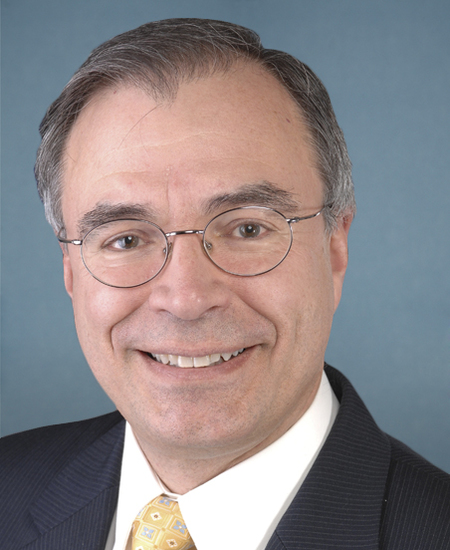
Rep. Andy Harris
Sponsored bills
Maddy summaryThis bill allows states to require certain Medicaid recipients to work or participate in job training to maintain coverage. Specifically, it permits states to impose work requirements on nondisabled, nonelderly, nonpregnant adults (excluding those with children under 6, pregnant women, or individuals under 19). States must implement these requirements 120 days after the bill's enactment, but must exempt pregnant individuals, parents of young children, and others meeting specific criteria. The policy changes Medicaid eligibility rules for this group, giving states an optional pathway to condition benefits on work activity.
Maddy summaryThe Equitable Access to School Facilities Act creates a federal grant program to help states improve charter school access to school facilities and reduce costs. It provides competitive grants to state education agencies to fund charter school facility needs - including acquisition, leasing, renovation, and ongoing costs - with priority given to states that offer tax-exempt financing and treat charter schools equally in land-use policies (like permitting and fees). The bill also updates the federal charter school program to allow states more flexibility in fund allocation and project timelines. This directly benefits charter schools, especially in low-income and rural communities, by addressing disparities in facility access and affordability.
Maddy summaryThis bill removes legal immunity for vaccine manufacturers by allowing individuals injured by vaccines to sue them directly in court after filing a claim with the federal vaccine injury compensation program (VICP). It eliminates time limits for filing VICP claims (previously 24-36 months) and explicitly excludes COVID-19 vaccines from the program's coverage. The changes affect people seeking compensation for vaccine injuries and vaccine manufacturers, who will no longer automatically avoid lawsuits. The bill also repeals provisions that previously restricted legal action after VICP claims.
Maddy summaryHJRES 136 is a resolution seeking to block an Environmental Protection Agency (EPA) rule that would have set new emissions standards for light and medium-duty vehicles sold in 2027 and later model years. The EPA rule, published in April 2024, aimed to require vehicle manufacturers to meet stricter pollution limits for these vehicles. If passed, this resolution would cancel the rule, preventing the EPA from enforcing the new standards. It uses a congressional process that allows Congress to reject agency rules with a simple majority vote.
Maddy summaryHJRES 207 is a congressional disapproval resolution targeting an Equal Employment Opportunity Commission (EEOC) rule implementing the Pregnant Workers Fairness Act. It seeks to block the EEOC's specific guidance (published April 19, 2024) that outlines how employers must provide reasonable accommodations for pregnant workers. If passed, the resolution would make this EEOC rule "have no force or effect," preventing its enforcement. The measure directly affects employers subject to the Pregnant Workers Fairness Act by halting the implementation of the EEOC's regulatory guidance.
Maddy summaryHJRES 144 is a congressional disapproval resolution targeting a specific rule issued by the Bureau of Alcohol, Tobacco, Firearms, and Explosives (ATF) on April 19, 2024. The resolution seeks to block the ATF's rule that redefined the term "engaged in the business" for firearm dealers, which would have affected how federal licensing requirements apply to certain sellers. If enacted, this resolution would nullify the rule, preventing it from taking effect under procedures in Title 5 of the U.S. Code. The bill directly impacts firearm dealers operating under the current regulatory framework and the ATF's enforcement authority.
Maddy summaryThis bill amends U.S. immigration law to add new grounds for inadmissibility and deportability related to sex offenses and domestic violence. It makes non-citizens inadmissible if convicted of, or admitting to, sex offenses (as defined in the Adam Walsh Act) or domestic violence crimes (as defined under the Violent Crime Control Act). It also expands deportability to include these offenses, specifying that domestic violence crimes are deportable regardless of whether the jurisdiction received federal grant funding. The changes apply to non-citizens with prior convictions or admissions for these specific offenses, modifying their immigration status under existing law.
Maddy summaryHR 9617, the KAMALA Act, prohibits federal housing and community development grants from being used to assist individuals who are not U.S. citizens or lawfully present in the U.S. (specifically, those not admitted for permanent residence under immigration law). This directly affects state and local governments, municipalities, and tribal entities receiving federal housing funds under the Housing and Community Development Act of 1974, preventing them from using those funds for housing or community programs aiding undocumented immigrants. The bill amends two sections of the 1974 Act: it blocks grant funds from assisting undocumented people (Section 105) and bars grants to any recipient entity that provides such assistance (Section 103). These changes apply to all fiscal years starting in 2024 and later.
Maddy summaryHR 705, the Veterans 2nd Amendment Protection Act, prohibits the Department of Veterans Affairs (VA) from automatically sending veterans' personal information to the national background check system solely because a fiduciary (like a guardian) manages their benefits. It specifically blocks the VA from sharing this data with the Justice Department without a court order finding the veteran a danger to themselves or others. This directly affects veterans who have a fiduciary appointed due to incapacity but are not deemed dangerous, preventing automatic barriers to firearm purchases based only on their fiduciary status. The bill amends 38 U.S.C. § 5501B to require judicial authorization before such data can be transmitted.