

Maddy summaryThis resolution (HRES 1012) is a symbolic statement by the U.S. House of Representatives condemning Azerbaijan's detention of Dr. Gubad Ibadoghlu, an imprisoned academic and economist. It specifically addresses Azerbaijan's alleged wrongful arrest, beatings in custody, denial of medical care and legal access, and poor prison conditions. The resolution calls for Dr. Ibadoghlu's immediate release and urges the U.S. Secretary of State to prioritize his case in diplomatic engagements with Azerbaijan. As a non-binding resolution, it expresses congressional concern but does not enact new laws or impose sanctions.
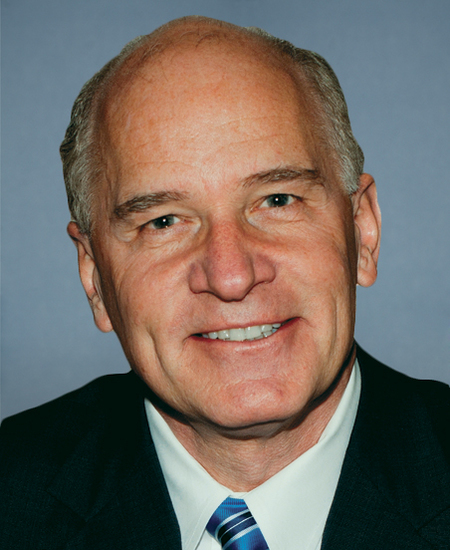
Rep. William R. Keating
Sponsored bills
Maddy summaryHRES 966 is a symbolic resolution condemning alleged sexual violence committed by Hamas during its October 7, 2023, attack on Israel. It specifically references eyewitness accounts, forensic evidence, and Hamas fighters' admissions of ordering gang rape, sexual mutilation, and assault against Israeli civilians. The resolution calls for international condemnation of such acts as weapons of war, urges nations to criminalize sexual violence, and supports investigations into Hamas' actions. As a non-binding resolution, it does not create new laws or directly affect any individuals but formally expresses the House's position on the issue.
End Banking for Human Traffickers Act of 2024 This bill establishes requirements for finance and banking entities to detect and prevent human trafficking. The Financial Institutions Examination Council must review procedures to improve the capability of specified programs to target financial transactions relating to severe forms of human trafficking. The Interagency Task Force to Monitor and Combat Trafficking must submit to Congress recommendations for the revision of anti-money laundering programs specifically targeting severe forms of human trafficking. The bill provides additional criteria to be considered by the Department of State to indicate a foreign country's serious and sustained efforts to eliminate human trafficking for purposes of certain foreign assistance. Specifically, the bill adds criteria regarding whether a foreign country has taken or is taking steps to implement a framework for preventing financial transactions involving severe forms of human trafficking.
Maddy summaryThe Credit for Caring Act of 2024 creates a new federal tax credit for family caregivers. It allows eligible caregivers to claim a credit equal to 30% of qualified caregiving expenses (like home modifications, medical supplies, or respite care) exceeding $2,000 per year, capped at $5,000 annually. To qualify, caregivers must earn over $7,500 in income and provide care for a relative (like a spouse or parent) certified by a healthcare provider as needing long-term care for at least 180 days. The credit phases out for higher earners, with a $75,000 income threshold for single filers and $150,000 for joint returns.
Maddy summaryHR 7132 creates a federal grant program to help state and local governments, tribes, and Native Hawaiian organizations develop and implement housing plans. Grants fund both planning (creating strategies) and implementation (putting strategies into action) to increase housing supply and affordability while avoiding displacement of current residents. At least 10% of funds must support rural communities, and recipients must report annually on progress and submit final evaluations after three years. The program requires comprehensive plans addressing housing needs, land use reforms, and community engagement to expand housing options.
Maddy summaryHR 7127, the FAIR Act, establishes pay adjustments for federal employees in 2025. It increases base pay by 4% for most federal workers under statutory pay systems and for "prevailing rate" employees (like those in specific geographic areas), while raising locality pay rates by 3.4%. The bill directly affects all federal employees receiving pay under these systems, as it modifies their 2025 salary calculations. These changes are based on statutory formulas under Title 5 of the U.S. Code, with no new policy mechanisms beyond the specified percentage increases. The adjustments apply to pay rates in effect as of the end of fiscal year 2024.
Maddy summaryHR 7077 expands the types of assets blocked under U.S. sanctions that can fund relief for Ukraine harmed by Russian aggression. It allows funds from property forfeited due to sanctions against Russia, Belarus, or entities tied to aggression in Ukraine (including Crimea and Donetsk/Luhansk regions) to be used for remediation. The bill clarifies that eligible property includes assets blocked under sanctions related to Russia’s 2014 annexation of Crimea and 2022 invasion, as well as assets involved in violations of export controls. It requires the Treasury and State Departments to submit a 30-day implementation plan and semiannual reports tracking how these funds are used for Ukraine relief.
Maddy summaryHR 7056, the Access to Family Building Act, establishes federal rights for individuals to access assisted reproductive technology (ART) like IVF without unreasonable restrictions, directly affecting patients seeking fertility treatments and health care providers offering ART services. The bill prohibits states from imposing limitations on ART that are more burdensome than those for comparable medical procedures, fail to advance safety, or unduly restrict access, while allowing health and safety regulations that are necessary and least restrictive. It creates federal enforcement mechanisms, including lawsuits by the Attorney General or affected individuals to challenge violating state laws, and preempts conflicting state regulations. The bill explicitly preserves state authority over health/safety regulations and does not alter existing state insurance coverage laws for ART.
Maddy summaryThe Affordable Connectivity Program Extension Act of 2024 allocates $7 billion in funding for the Affordable Connectivity Program (ACP) during fiscal year 2024. The ACP provides subsidies to low-income households to help cover the cost of internet service and connected devices like laptops or tablets. This funding ensures the program can continue supporting eligible households throughout the year, with the money remaining available until fully spent. The bill extends existing program funding without changing eligibility criteria or service requirements.
Maddy summaryHR 6888, the Clean Energy Workforce Act, provides $100 million in federal grants to develop clean energy job training programs. It directly affects local schools, career technical education centers, colleges, and industry partners by funding: (1) new or expanded training programs in clean energy fields (like renewable energy and climate adaptation), designed to be shared with other schools and accessible to diverse students; and (2) upgrades to school facilities to use renewable energy and improve energy efficiency. Grants require partnerships between educational institutions, industry representatives, and community groups to create replicable training that prepares students for jobs in growing clean energy sectors. The bill focuses on concrete workforce development, not environmental outcomes.