

Maddy summaryThe PAST Act of 2025 amends the Horse Protection Act to ban harmful practices known as "soring," which deliberately cause pain to horses to exaggerate their gait for shows. It specifically prohibits devices like action devices (e.g., boots causing friction) and weighted shoes on Tennessee Walking Horses, Racking Horses, and Spotted Saddle Horses at events. The bill increases penalties, including escalating disqualifications for repeat offenses (180 days → 1 year → 3 years) and raises fines for violations to $5,000 per offense. It also requires stricter licensing for inspectors and mandates public posting of violation records to help event organizers enforce rules.
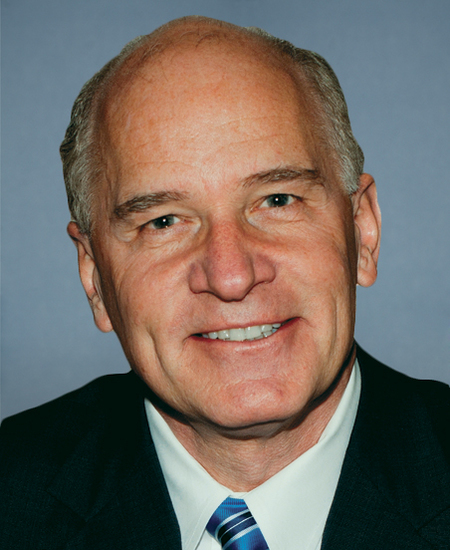
Rep. William R. Keating
Sponsored bills
Maddy summaryThe American Dream and Promise Act of 2025 would create pathways to permanent residency for certain immigrant youth who entered the U.S. as children (Dream Act component) and for individuals from countries with Temporary Protected Status or Deferred Enforced Departure (American Promise Act component). To qualify, applicants must meet continuous physical presence requirements (since January 1, 2021 for Dream Act applicants, and for 3+ years for American Promise applicants), pass background checks, and satisfy educational or employment criteria. Conditional permanent resident status would be granted initially, with the option to convert to full permanent residency after meeting additional requirements like earning a degree, serving in the military for two years, or demonstrating three years of earned income. The bill includes fee exemptions for low-income applicants, establishes a grant program to assist applicants with legal help, and creates specific procedures for background checks and appeals.
Maddy summaryHR 1610, the FIRE Cancer Act of 2025, establishes cancer prevention programs for firefighters, directly affecting firefighting personnel. It authorizes $700 million in grants to fund multi-cancer early detection testing or other preventative tests, with a limit of $1,750 per test. The bill also creates a voluntary program allowing firefighters to share anonymized test results with the CDC and FEMA to identify cancer trends, while protecting their personal information. These provisions aim to proactively address cancer risks linked to firefighting exposure through testing access and research.
Maddy summaryThis bill changes rules for prescribing certain medications used to treat substance use disorders. It allows healthcare providers to use telehealth for the initial patient evaluation instead of requiring an in-person visit, but only for drugs approved by the FDA for addiction treatment (schedules III-V). The telehealth must meet specific standards, including real-time audio/video communication. This affects doctors and other practitioners who prescribe these medications for substance use disorders.
Maddy summaryEthan's Law requires gun owners to store firearms securely in homes where minors live or where residents are legally prohibited from owning guns. It makes it unlawful to leave firearms unsecured if a minor or ineligible person could access them, with fines of $500 per violation and harsher penalties if injury or death occurs. The bill creates a federal grant program to help states implement similar secure storage laws and treats unsafe storage as negligence in legal cases. It directly affects households with children or residents who cannot legally possess firearms, aiming to reduce accidental shootings and unauthorized access.
Maddy summaryHRES 158 is a symbolic House resolution recognizing the third anniversary (February 2022-2025) of Ukraine’s defense against Russia’s full-scale invasion. It condemns Russia’s "unprovoked assault," highlights Ukraine’s resilience amid attacks (including targeting of civilians and infrastructure), and supports continued U.S. aid, sanctions on Russia, and use of frozen Russian assets to assist Ukraine. The resolution does not create new laws or allocate funds but formally reaffirms U.S. solidarity with Ukraine’s sovereignty and democratic efforts.
Maddy summaryHouse Resolution 152 is a symbolic congressional resolution reaffirming the U.S.-Canada partnership. It highlights their $1 trillion annual trade relationship (supporting 8 million U.S. jobs), joint border security efforts against fentanyl trafficking, and energy cooperation - including Canada as the U.S.'s top oil supplier and critical minerals partner. The resolution emphasizes shared security interests, integrated supply chains, and collaboration on defense, Arctic security, and democratic values. It does not create new laws but formally expresses congressional support for strengthening this alliance.
Maddy summaryHRES 155 is a symbolic congressional resolution expressing strong U.S. support for Ukraine during Russia’s third year of invasion. It condemns Russia’s war crimes - including attacks on civilians, forced deportations of children, and infrastructure destruction - and demands Russia’s immediate withdrawal from all Ukrainian territory. The resolution reaffirms U.S. commitment to Ukraine’s sovereignty and territorial integrity within internationally recognized borders, insisting Ukraine must be central to any peace negotiations. It also calls for accountability for Russian leaders and the safe return of kidnapped Ukrainian children. As a non-binding resolution, it does not create new laws but formalizes U.S. diplomatic stance.
New Era of Preventing End-Stage Kidney Disease Act This bill establishes regional centers of excellence, postgraduate fellowships, and training for health professionals relating to the diagnosis and treatment of rare kidney disease. It also requires the Department of Health and Human Services (HHS) to conduct various studies on rare kidney disease. Specifically, it authorizes the National Institute of Diabetes and Digestive and Kidney Diseases to award funding to public and private nonprofit entities for establishing regional centers of excellence that will increase public awareness, conduct research, and develop resources for diagnosing and treating rare kidney diseases. A center may receive such funding for up to five years, unless extended by the institute. The bill also requires health professions schools receiving a grant from the Health Resources and Services Administration (HRSA) Centers of Excellence program to award fellowships for training on preventing, diagnosing, and treating rare kidney disease in disproportionately impacted populations. Also, the bill expands the priorities of HRSA’s Primary Care Training and Enhancement program to include training for health care workers to care for individuals with kidney disease. Additionally, HHS must conduct several studies and report to Congress on topics such as treating rare kidney disease in disproportionately affected populations, eliminating the need for dialysis or kidney transplants, and increasing public awareness of rare kidney disease.
Maddy summaryThe Access Technology Affordability Act of 2025 creates a new tax credit for individuals who purchase technology designed to assist blind people, such as screen readers or braille displays. This credit covers up to $2,000 in expenses per three-year period for qualified access technology used by the taxpayer, their spouse, or a blind dependent. The credit adjusts for inflation after 2026 but does not apply to costs already covered by other tax benefits. The credit expires after 2030, with adjustments for cost-of-living changes starting in 2027.