

Maddy summaryThe Menstrual Equity For All Act of 2025 requires schools, colleges, correctional facilities, and federal buildings to provide free menstrual products to those who need them. It makes menstrual products covered by Medicaid, prohibits states from taxing these products, and creates grant programs to support low-income individuals. Key provisions include mandating free products in educational settings, requiring employers with 100+ employees to provide them, and expanding Medicaid coverage for these items. The bill directly affects students, incarcerated individuals, homeless people, Medicaid beneficiaries, and low-income families by addressing period poverty through concrete access requirements.
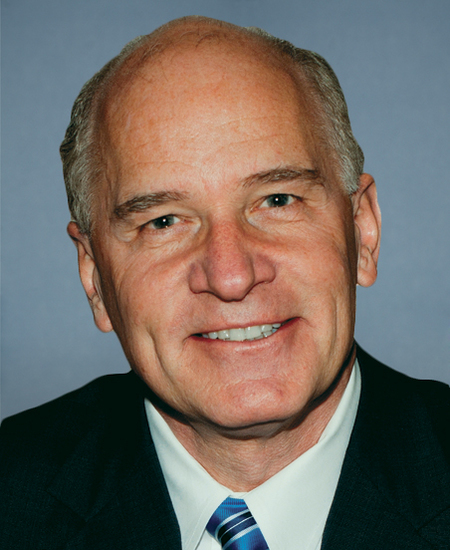
Rep. William R. Keating
Sponsored bills
Maddy summaryHR 3629, the End Banking for Human Traffickers Act of 2025, requires U.S. financial institutions to improve their ability to detect and prevent money laundering linked to human trafficking. It mandates that the Financial Institutions Examination Council (within 180 days) review and enhance staff training, referral procedures, and detection methods for trafficking-related transactions. The bill also directs an interagency task force to analyze anti-trafficking efforts and submit recommendations - such as better information sharing, updated training, and policy changes - to Congress and federal banking agencies within 270 days. The law explicitly prohibits banks from denying services to trafficking victims and amends existing law to require countries to establish financial frameworks preventing trafficking proceeds. This affects all U.S. banks and financial institutions by changing their anti-money laundering protocols.
Maddy summaryThis bill requires colleges and universities to include suicide prevention contact information on student identification cards or their websites. Specifically, institutions must list the 988 Suicide and Crisis Lifeline, Crisis Text Line, and their campus mental health center on student IDs (or post the info online if IDs aren't issued). The requirement applies to all higher education institutions creating student ID cards after the bill's enactment, with a one-year implementation period. It directly affects students by ensuring immediate access to critical mental health resources through a routine campus tool.
Maddy summaryThis bill reorganizes collective bargaining rules for Veterans Health Administration (VHA) employees by removing existing subsections (b), (c), and (d) from Section 7422 of Title 38 and redesignating the current subsection (e) as (b). It directly affects VA health care employees by altering the structure of their collective bargaining framework. The bill explicitly states it does not change the Secretary of Veterans Affairs' existing authorities over incentive pay or expedited hiring under Section 706 of Title 38. The change is purely procedural, focusing on the internal organization of bargaining rules without introducing new employee benefits or obligations.
Maddy summaryThis bill prohibits the U.S. military from discriminating against service members or applicants based on gender identity. It bans policies that would deny service, involuntarily separate members, deny medically necessary healthcare, or require service in a gender different from one's identity. The law defines "gender identity" broadly to include a person's internal sense of gender, appearance, and mannerisms, regardless of sex assigned at birth. It directly affects transgender and gender-diverse individuals currently serving or seeking to serve in the Armed Forces.
Maddy summaryHRES 431 is a symbolic resolution recognizing the Arctic Council’s role as a key forum for international cooperation on Arctic issues. It reaffirms the U.S. commitment to active participation in the Council, highlights the importance of Indigenous involvement, and urges sustained diplomatic engagement - including support for the U.S. Arctic Ambassador role - amid geopolitical shifts like Russia’s suspension from Council activities. The resolution does not create new laws or funding but expresses support for existing U.S. leadership in Arctic diplomacy.
Saving Our Veterans Lives Act of 2025 This bill requires the Department of Veterans Affairs (VA) to implement a program to provide, upon request, a firearm lockbox (or voucher for such item) to eligible individuals. Currently, there is a pilot program under which certain veterans may be prescribed a lockbox by a VA clinician. The VA must also provide information with respect to the benefits of and options for secure firearm storage. The VA must develop an informational video on the secure storage of firearms as a suicide prevention strategy and publish the video on its website. Additionally, the VA must publish information to inform individuals who participate in the lockbox program that such lockboxes are not for resale. The VA must also implement a public education campaign to educate eligible individuals about the availability of lockboxes under the program and that participation in the program does not affect the rights of an individual with respect to the lawful ownership of a firearm.
Maddy summaryThis bill prohibits corporal punishment in schools receiving federal funding, defining it as any physical force causing pain for discipline. It requires schools to notify parents within 24 hours of any corporal punishment incident and mandates states to submit school climate reports detailing efforts to reduce exclusionary discipline practices like suspensions and expulsions. The bill establishes a grant program to help schools implement positive behavioral interventions, such as restorative justice and trauma-informed care, while requiring staff training on these approaches. The bill applies to public schools and other schools receiving federal funds but does not affect private schools or home schools that don't receive federal funding.
Maddy summaryHR 1503, the Stop Forced Organ Harvesting Act of 2025, requires the State Department to deny or revoke passports for individuals convicted of organ trafficking under U.S. law who used passports during the crime. It mandates annual reports assessing forced organ harvesting and trafficking in foreign countries, including definitions of these acts as removal by coercion, abduction, deception, or abuse of power. The bill also directs the President to impose sanctions - including blocking assets and banning visas - on individuals or entities facilitating such trafficking, with limited exceptions for humanitarian aid or international obligations. The law directly affects foreign nationals and entities involved in organ trafficking, not U.S. citizens or medical practices.
Maddy summaryHR 3243, the Therapeutic Fraud Prevention Act of 2025, bans the provision of paid conversion therapy aimed at changing a person's sexual orientation or gender identity, and prohibits advertising such therapy as effective, safe, or without risk. It directly affects LGBTQ+ individuals and their families who might be targeted by these practices, as professionals have determined conversion therapy is ineffective and harmful. The law treats violations as deceptive acts under consumer protection laws, empowering the Federal Trade Commission and state attorneys general to enforce it through civil actions. It explicitly excludes legitimate gender transition support and non-discriminatory counseling from the ban.