

Maddy summaryThe BITE Act establishes a national system to prevent diseases spread by ticks, mosquitoes, and fleas. It requires the Health Secretary to create a system with six key parts: a public vector identification service, an AI-powered early warning system using weather and habitat data, insurance claims monitoring for early outbreak detection, emergency room symptom tracking, targeted public education campaigns, and a goal to reduce Lyme disease by 25% by 2035. This system integrates human, animal, and environmental data (One Health approach) and serves both civilians and military medical facilities. The bill directly affects public health agencies, healthcare providers, and communities in areas with vector-borne diseases. Its key mechanism is using real-time data from multiple sources to predict and prevent disease outbreaks before they spread widely.
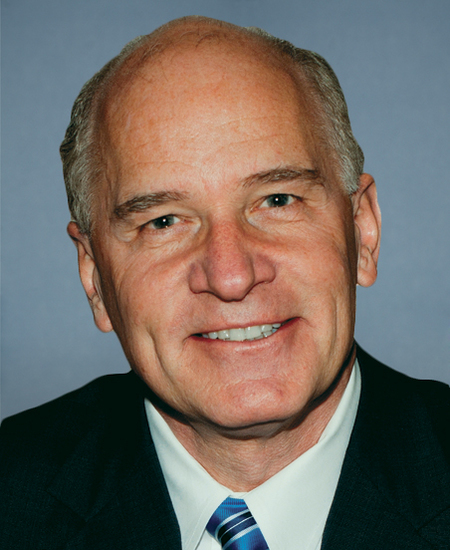
Rep. William R. Keating
Sponsored bills
Maddy summaryThis bill creates a special postage stamp that allows the public to voluntarily contribute to Lyme disease research. All money from stamp sales will go directly to the National Institute of Allergy and Infectious Diseases (NIAID) at the NIH, with proceeds specifically designated for Lyme disease and tick-borne illness research. The funds cannot be used to offset other NIH research funding, and the stamp would be available for at least six years after the law takes effect. It directly affects the public (through voluntary purchases) and NIAID (as the recipient of dedicated research funding).
Maddy summaryHRES 625 is a ceremonial resolution recognizing the 50th anniversary of Cabo Verde's independence from Portugal on July 5, 1975. It specifically celebrates the contributions of Cabo Verdean-Americans to democracy in both Cabo Verde and the United States, highlighting their historical ties and ongoing cultural bridges. As a non-binding resolution, it has no direct policy impact or effect on any group, serving solely to honor this milestone and diaspora contributions. The resolution does not create new laws, allocate funding, or change any existing policies.
Maddy summaryThis bill removes a barrier preventing most low-income students from accessing SNAP benefits. It amends the Food and Nutrition Act to explicitly allow students enrolled at least half-time in recognized higher education programs to qualify for SNAP, reversing a prior exclusion. The key change eliminates the previous requirement that students meet specific exceptions (now deleted) and adds a new eligibility category under Section 3(m)(5). This directly affects low-income undergraduate and graduate students at colleges and training programs who were previously ineligible. The changes take effect January 2, 2026.
Maddy summaryThis bill authorizes the U.S. Secretary of State to establish an annual strategic dialogue with Belarus's democratic movement. It seeks to support free elections, assist Belarusians abroad with essential services, address regional security impacts from Belarus and Russia, impose sanctions on President Lukashenka's regime for human rights abuses and support for Russia's Ukraine invasion, and facilitate the release of political prisoners. The dialogue directly affects Belarus's democratic opposition, citizens inside and outside Belarus, and civil society groups working toward democratic reforms. Key provisions include funding cultural programs, restoring democratic institutions, and coordinating regional responses to political instability.
Maddy summaryThis bill transitions individuals with disabilities from segregated employment under special certificates (which allow subminimum wages) to competitive integrated employment with fair wages. It creates grant programs for states and employers to facilitate this transition, requiring employers to pay at least minimum wage (increasing over time) and providing necessary supports. The bill phases out special certificates entirely within 4 years, while ensuring individuals with disabilities receive ongoing support during the transition. It also establishes evaluation requirements to track progress and ensure compliance with the new standards.
Maddy summaryThis bill updates the TRICARE Young Adult Program to make healthcare coverage more accessible for military dependents. It directly affects young adults (ages 21-26) who are children of active-duty service members, by eliminating a separate premium they previously paid for coverage. Key changes include removing an extra cost for young adults and adjusting eligibility rules to simplify enrollment. These amendments aim to reduce out-of-pocket expenses and streamline access to health insurance under the program.
Maddy summaryThis resolution symbolically designates August 25-29, 2025, as "National Community Health Worker Awareness Week" for the third consecutive year. It recognizes community health workers (CHWs) as trusted frontline staff who connect underserved communities to health services, provide cultural mediation, and support health education - without creating new laws or funding. The resolution encourages federal, state, and local collaboration to highlight CHWs' roles but does not alter existing programs or require government action. It directly affects CHWs and their communities by raising public awareness of their contributions.
Maddy summaryHR 4717 creates a refundable tax credit of up to 10% of a home's purchase price (capped at $15,000) for first-time homebuyers purchasing a principal residence in the United States. The credit is subject to limitations based on modified adjusted gross income (phased out if income exceeds 150% of the area median income) and home price relative to area median purchase prices in the buyer's location. Homebuyers must meet age requirements (at least 18 years old), not have owned a home in the past three years, and purchase with a federally backed mortgage. The credit is subject to a four-year recapture period if the home is sold within that timeframe, and taxpayers may transfer the credit to their mortgage lender as a down payment or closing cost assistance.
Maddy summaryThis bill requires a 3-business-day waiting period before someone can receive a handgun from another person who isn't a licensed gun seller. It applies to most private handgun transfers but includes exceptions for law enforcement, family loans (like between spouses or parents and children), temporary transfers to prevent imminent harm, and transfers for shooting or hunting under specific conditions. The waiting period begins when the recipient first offers to take possession of the gun. The law would take effect 90 days after enactment.