

Maddy summaryThis bill reauthorizes the Dr. Lorna Breen Health Care Provider Protection Act, extending mental health support programs for healthcare professionals through 2030 (previously ending in 2024). It requires funded programs to specifically address reducing administrative burdens on healthcare workers while continuing to promote access to mental health and substance use disorder services. The legislation directly affects healthcare providers across the U.S. who may access these federally supported resources. Key provisions include extending funding periods and mandating that grant recipients focus on easing workplace administrative tasks, alongside maintaining existing awareness initiatives. The bill does not create new programs but continues and refines existing mental health support for the healthcare workforce.
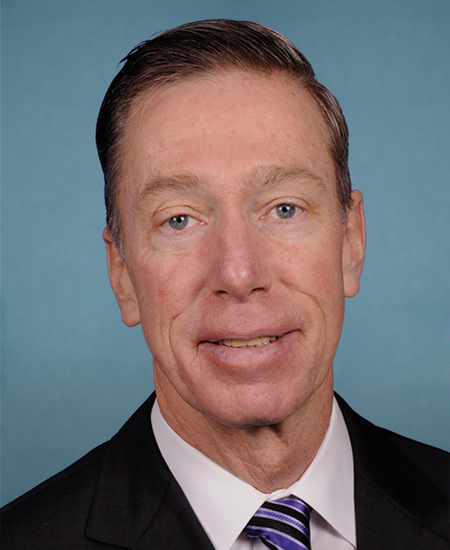
Rep. Stephen F. Lynch
Sponsored bills
This bill provides for the presentation of a Congressional Gold Medal to the Freedom Riders, in recognition of their contribution to civil rights by fighting for equality in interstate travel.
Medicare Patient Access and Practice Stabilization Act of 2025 This bill increases certain payment adjustments under the Medicare physician fee schedule for services furnished between April 1, 2025, and January 1, 2026.
Maddy summaryHR 844, the "Black History is American History Act," amends the Elementary and Secondary Education Act to require that Black history be included in all American history and civics education programs for K-12 students. The bill specifically adds "which shall include Black history" to multiple provisions, ensuring it becomes a standard part of curriculum standards, teacher training, and national assessments like the National Assessment of Educational Progress. This policy change directly affects public school curricula, educators, and students across the U.S. by mandating historically accurate instruction on African American contributions as integral to American history. The bill references the National Museum of African American History and Culture as a resource provider for educators implementing these changes.
Maddy summaryThis resolution expresses the House of Representatives' position that Congress should take steps to prevent the privatization of the United States Postal Service (USPS), ensuring it remains a federal independent agency. It highlights USPS’s constitutional role, self-sustaining nature (relying on service revenue, not taxpayer funds), and critical functions - serving 168 million addresses daily, supporting rural communities, and underpinning e-commerce. The resolution opposes privatization, noting it would raise prices, reduce services, and harm the $1.9 trillion mailing industry. As a non-binding resolution, it reflects the House’s stance but does not create new law or policy.
Sustainable Cardiopulmonary Rehabilitation Services in the Home Act This bill permanently allows services relating to cardiac rehabilitation programs, intensive cardiac rehabilitation programs, and pulmonary rehabilitation programs to be furnished via telehealth at a beneficiary's home under Medicare.
Maddy summaryHRES 68 is a non-binding House resolution expressing strong disapproval of the President’s announcement to withdraw the U.S. from the Paris Agreement. It commends states, businesses, and citizens supporting the Agreement, urges the President to reverse the withdrawal decision, and calls for Congress to prioritize U.S. climate leadership. The resolution does not create new laws or affect specific groups but formally states the House’s position against withdrawing from the international climate accord. It was introduced by 115 co-sponsors and reflects broad congressional concern about reversing U.S. climate commitments.
Maddy summaryHR 609, the Assuring Medicare's Promise Act of 2025, directs revenue from the net investment income tax (currently applied to investment income) into the Medicare Hospital Insurance Trust Fund. It expands the tax base to include certain business income for high-income individuals with modified adjusted gross income exceeding $400,000 ($500,000 for joint filers), with a phase-in to limit the tax increase. The bill ensures this tax revenue directly supports Medicare's hospital insurance program, applying to taxable years beginning after December 31, 2025. The changes do not alter the tax rate but broaden the income types subject to the tax for high earners.
Maddy summaryThe Close the Medigap Act of 2025 would prohibit Medigap insurance issuers from denying coverage or charging higher premiums based on health status, pre-existing conditions, genetic information, or other factors. It requires insurers to spend a minimum percentage of premiums on health care claims and improves the Medicare Plan Finder website to provide clearer information about coverage options, out-of-pocket costs, and guaranteed issue requirements. The bill applies to Medigap policies effective January 1, 2026, with full implementation by 2031, and requires Medigap brokers to disclose payments they receive from insurers. These changes would directly affect Medicare beneficiaries, particularly those with pre-existing conditions who have historically faced barriers to obtaining affordable supplemental coverage.
Supporting Accurate Views of Emergency Services Act of 2025 or the 911 SAVES Act This bill requires the Office of Management and Budget to categorize public safety telecommunicators as a protective service occupation under the Standard Occupational Classification system no later than 30 days after the enactment of this bill. (The Standard Occupational Classification system is a federal statistical standard used by federal agencies to classify workers into occupational categories for the purpose of collecting, calculating, or disseminating data.)