

Maddy summaryThe Conrad State 30 and Physician Access Reauthorization Act extends and reauthorizes a program that allows foreign medical graduates to work in underserved U.S. communities after completing their training. It extends the program through 2021 (with retroactive effect), adds protections for physicians who have completed service requirements, and makes changes to visa requirements to better support physicians working in underserved areas. The bill requires states to maintain a 90% utilization rate of waivers to keep receiving the full allocation, and adds reporting requirements for the program. This bill directly affects foreign physicians seeking to work in underserved areas and the health care facilities that employ them.
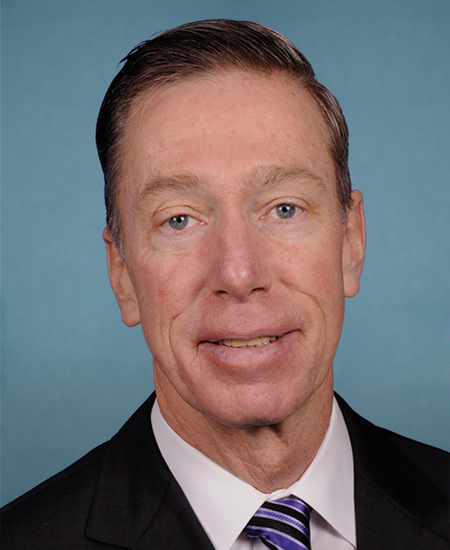
Rep. Stephen F. Lynch
Sponsored bills
Maddy summaryHRES 155 is a symbolic congressional resolution expressing strong U.S. support for Ukraine during Russia’s third year of invasion. It condemns Russia’s war crimes - including attacks on civilians, forced deportations of children, and infrastructure destruction - and demands Russia’s immediate withdrawal from all Ukrainian territory. The resolution reaffirms U.S. commitment to Ukraine’s sovereignty and territorial integrity within internationally recognized borders, insisting Ukraine must be central to any peace negotiations. It also calls for accountability for Russian leaders and the safe return of kidnapped Ukrainian children. As a non-binding resolution, it does not create new laws but formalizes U.S. diplomatic stance.
Maddy summaryHRES 159 is a symbolic resolution expressing the U.S. House of Representatives' support for designating February 24-28, 2025, as "Public Schools Week." It does not create new laws or allocate funds but aims to highlight the importance of public schools in communities. The resolution cites reasons such as public schools serving 90% of U.S. students, fostering critical thinking, and requiring equitable funding - though these are context, not policy changes. It directly affects public schools and their communities by raising awareness of their role in education. As a non-binding resolution, it has no direct impact on school operations or funding.
Maddy summaryHR 1548, the "Leveling the Playing Field 2.0 Act," amends U.S. trade laws to strengthen enforcement of antidumping and countervailing duty regulations. The bill creates new rules for handling multiple investigations on the same merchandise (successive investigations), addresses market distortions in foreign countries that affect production costs, and improves mechanisms to prevent companies from circumventing existing duties. It also establishes procedures for investigating currency undervaluation as a form of subsidy and strengthens requirements for importers to certify compliance with trade laws. These changes primarily affect U.S. importers of foreign goods, foreign exporters, and the Department of Commerce, which administers these trade enforcement mechanisms.
Maddy summaryThis bill would require states to create a simplified process for out-of-state healthcare providers to join Medicaid and CHIP programs. Qualified providers (those already enrolled in Medicare or another state's program with low fraud risk) could enroll without excessive screening and would be approved for five years. It directly affects children under 21 enrolled in Medicaid or CHIP by expanding access to providers outside their state, particularly in underserved areas. The change applies to all states' Medicaid programs but takes effect three years after enactment.
Maddy summaryHR 1484 requires the Federal Aviation Administration (FAA) to commission the National Academies of Sciences to convene experts and issue a report on the health impacts of air traffic noise and pollution within 30 days of the bill's enactment. The report will summarize current scientific knowledge on these health effects and must be submitted to the FAA, Health and Human Services, the Environmental Protection Agency, and specific congressional committees. This bill creates a new study requirement but does not change existing regulations or funding; it solely mandates the collection of expert consensus on the health impacts of aviation noise and emissions.
Maddy summaryHR 1410 expands access to mental health care for 9/11 responders and survivors by allowing licensed mental health providers (not just physicians) to conduct initial health evaluations and certifications under the World Trade Center Health Program. It adjusts the program’s funding formula to account for changing enrollment numbers by linking annual funding to the previous year’s enrollment ratio, and clarifies that deceased individuals are excluded from enrollment counts. The bill also extends the timeframe for adding new health conditions to the program’s list and requires a 2028 report assessing long-term funding needs through 2090. These changes aim to streamline eligibility, improve care access, and ensure sustainable funding for the program.
Maddy summaryHR 1377, the Sarah Keys Evans Congressional Gold Medal Act, authorizes a Congressional Gold Medal to honor Sarah Keys Evans for her pivotal role in ending interstate bus segregation. The bill directs the Treasury Secretary to strike a gold medal (and bronze duplicates for sale) to commemorate her 1952 refusal to give up her bus seat, which led to the ICC ruling that outlawed racial segregation on interstate buses in 1955. This is a ceremonial honor recognizing her civil rights contribution, not a policy change affecting any laws or people.
Maddy summaryThe Food Deserts Act (HR 484) creates a federal grant program to help establish grocery stores in underserved communities by providing capitalization grants to states. States would use these grants to build revolving funds that make low-interest loans to grocery stores meeting specific criteria, such as offering unprocessed foods, affordable pricing, and local hiring. The program prioritizes stores that source from local farms, provide nutrition education, and commit to keeping healthy foods in stock, while requiring applicants to contribute 20% of loan costs from non-federal funds. It authorizes $150 million for fiscal year 2026 to support these loans, which must be repaid over up to 30 years to replenish the revolving fund for future use.
Goldie's Act This bill expands enforcement provisions under the Animal Welfare Act (AWA). Specifically, the bill directs the Department of Agriculture (USDA) to document and record detailed descriptions of violations of the act observed during inspections and investigations. USDA must provide a copy of all records documenting violations to state, local, and municipal animal control or law enforcement officials within 24 hours of such inspections or investigations. Inspections must be held at least once a year of each research facility, the premises of each animal dealer, and each exhibitor of animals. If violations are found during inspections, then USDA must conduct any necessary follow-up inspections until all the violations are corrected. Inspectors must confiscate or destroy in a humane manner animals found to be suffering physical or psychological harm as a result of failure to comply with the AWA. Violators are subject to civil penalties as outlined in the bill.