

Brake for Kids Act of 2025 This bill directs the Department of Transportation (DOT) to produce and distribute a national public safety campaign on the dangers of illegally passing stopped school buses. Specifically, the campaign must increase awareness and education about the issue through a variety of media, including television, radio, and social media advertising. DOT must use Infrastructure Investment and Jobs Act funds to produce and distribute the campaign.
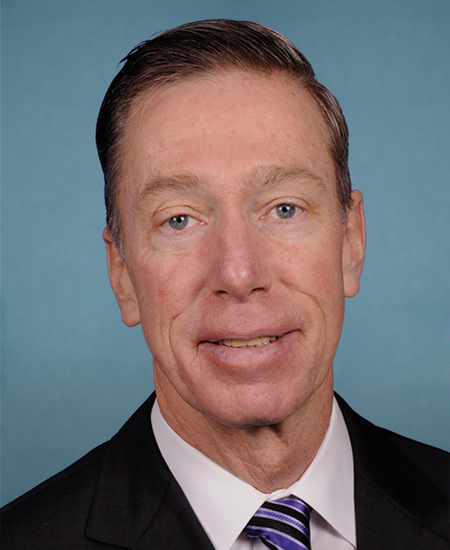
Rep. Stephen F. Lynch
Sponsored bills
Maddy summaryThis bill adds Medicare coverage for home-based treatment of Alpha-1 Antitrypsin Deficiency Disorder (a rare genetic condition causing lung and liver damage). It specifically covers "augmentation therapy" (replacement protein therapy) delivered at home by qualified suppliers to Medicare Part A and B enrollees with this diagnosis who aren't in Medicare Advantage plans. The bill establishes payment for intravenous kits and up to 2 hours of nursing services per session, set at 80% of the lesser of actual cost or a defined rate. It amends Medicare rules to include this treatment under coverage, effective January 2027.
Maddy summaryThis bill authorizes the President to award Doris Miller the Medal of Honor posthumously for her heroic actions during the Pearl Harbor attack in 1941. It directly affects Miller, an African American Navy cook who was initially recognized with a Navy Cross for saving lives and operating a machine gun under fire while serving in a role typically restricted to Black sailors. The bill overrides standard time limits for awarding the Medal of Honor, enabling the upgrade from her existing Navy Cross citation. This would correct the historical oversight where Miller - unlike other Pearl Harbor heroes - was denied the Medal of Honor despite her documented valor.
Maddy summaryThe Paycheck Fairness Act strengthens equal pay protections by expanding the definition of "sex" to include pregnancy, childbirth, sexual orientation, gender identity, and sex characteristics. It modifies employer defenses for pay disparities to require proof that any pay difference is job-related, not based on sex, and accounts for the entire pay gap. The bill prohibits employers from asking about salary history, enhances penalties for violations, and requires employers with 100+ employees to collect and report detailed pay data by race, sex, and job category. It also establishes training programs for employers on eliminating pay bias and creates a National Equal Pay Enforcement Task Force to coordinate enforcement efforts. This legislation directly affects employers, particularly those with 100+ employees, and aims to address pay disparities impacting women, people of color, and other underrepresented groups.
Maddy summaryH.J. Res. 80 would declare the Equal Rights Amendment (ERA) part of the U.S. Constitution, asserting it has been ratified by 38 states (three-fourths of the states) despite the original 1972 deadline. If passed, this resolution would formally establish the ERA as a constitutional amendment, requiring all federal and state laws to align with its gender equality protections. The bill does not create new laws but confirms the ERA's status as part of the Constitution, affecting how laws are interpreted and enforced. It is a procedural step to resolve the legal dispute over the ERA's validity after decades of debate.
Maddy summaryThis resolution (HRES 195) requests the President to provide the House of Representatives with specific documents and communications related to the Social Security Administration (SSA) after January 20, 2025. It seeks information about the Department of Government Efficiency’s (DOGE) access to SSA systems, visits to SSA offices, compliance with certain executive orders, call volumes, office closures, and staff reductions. The request covers documents like IT access logs, correspondence, audit trails, and operational metrics, all to be provided within 14 days of the resolution's adoption. As a procedural oversight measure, it does not change laws but aims to gather facts about SSA operations.
Maddy summaryThe Air America Act of 2025 authorizes one-time payments of $40,000 to individuals who worked for Air America or its affiliated companies for at least five years during 1950-1976, or to their surviving spouses, children, or dependents. Additional payments of $8,000 per full year beyond five years are allowed. The program is capped at $60 million total funding, with claims required within two years of final regulations. Payments are a single lump sum with no ongoing benefits, and the bill explicitly states it does not create new entitlements beyond this one-time award.
Maddy summaryHR 2105, the Preventing Illegal Weapons Trafficking Act of 2025, requires federal agencies (Attorney General, Homeland Security, and Treasury) to develop a strategy within 120 days to stop the illegal trafficking of machinegun conversion devices - parts that turn standard firearms into automatic weapons. The strategy must improve detection at ports, coordinate federal and local law enforcement (including ATF and FBI), trace devices used in crimes, train officers, and address 3D-printed devices. It also amends tax law to forfeit profits from illegal machinegun trafficking and mandates annual reports tracking crimes involving these devices and their origins (U.S. or foreign). The bill directly affects federal, state, and local law enforcement agencies responsible for weapons enforcement.
Homes for Every Local Protector, Educator, and Responder Act of 2025 or the HELPER Act of 2025 This bill establishes a program administered by the Department of Housing and Urban Development to provide mortgage assistance to law enforcement officers, elementary and secondary school teachers, firefighters, or other first responders. Specifically, these individuals may be eligible for a first-time mortgage on a primary family residence with no down payment. Instead, the mortgage is subject to a one-time, up-front mortgage insurance premium.
Maddy summaryHR 2029, the "Stop Comstock Act," amends federal obscenity laws to remove outdated restrictions on abortion and contraception. It deletes references to "indecent" materials and abortion-related language from Title 18 (e.g., removing "or means for procuring abortion" from section 552 and revising definitions in sections 1461 and 1462). The bill clarifies that federal law does not prohibit the distribution of materials related to abortion or contraceptives, updating how "obscene" is defined. These changes directly affect federal enforcement of obscenity laws, particularly regarding medical information and devices. The bill focuses on modernizing statutory language to align with current legal standards for protected speech and healthcare access.