

Safe Hydration is an American Right in Energy Development Act of 2021 This bill requires hydraulic fracturing operations to test for and report on underground sources of drinking water that are contaminated by such operations. Hydraulic fracturing, or fracking, is a process to extract underground resources such as oil or gas from a geologic formation by injecting water, a propping agent (e.g., sand), and chemical additives into a well under enough pressure to fracture the formation. Specifically, this bill revises requirements governing state underground injection control programs. In order to obtain primary enforcement responsibility for such programs, states must prohibit the underground injection of fluids or propping agents pursuant to hydraulic fracturing operations related to oil, gas, or geothermal production activities unless the hydraulic fracturing operations agree to test for and report on contamination of drinking water. Hydraulic fracturing operations are exempted from those testing and reporting requirements if there is no accessible underground source of drinking water within a radius of one mile of the site where the operations occur. The Environmental Protection Agency must establish and maintain a publicly accessible and searchable database of the testing results.
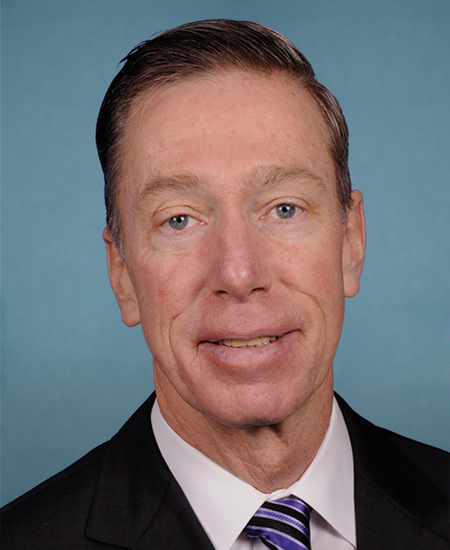
Rep. Stephen F. Lynch
Sponsored bills
Ensuring Parity in MA and PACE for Audio-Only Telehealth Act of 2021 This bill allows audio-only diagnoses that are made via telehealth to be used for purposes of determining risk adjustments to payments under Medicare Advantage. Additionally, the bill requires payments for Medicare telehealth services that are furnished during the public health emergency relating to COVID-19 (i.e., coronavirus disease 2019) to be made in the same amounts as those for in-person services.
Focused Reduction of Effluence and Stormwater runoff through Hydrofracking Environmental Regulation Act of 2021 or the FRESHER Act of 2021 This bill addresses stormwater runoff from mining, oil, or gas operations. Specifically, it eliminates a prohibition on the Environmental Protection Agency from requiring a permit under the National Pollutant Discharge Elimination System for discharges of certain collected, uncontaminated stormwater runoff from mining operations or oil and gas operations. In addition, the Department of the Interior must study stormwater runoff associated with oil or gas operations, including an analysis of (1) measurable contamination, (2) groundwater resources, and (3) the susceptibility of aquifers to contamination from stormwater runoff associated with the operations.
CLEANER Act of 2021 or the Closing Loopholes and Ending Arbitrary and Needless Evasion of Regulations Act of 2021 This bill eliminates the exemption of waste associated with the exploration, development, or production of crude oil, natural gas, or geothermal energy from regulations governing the disposal of hazardous waste. Within a year of enactment, the Environmental Protection Agency (EPA) must determine whether such waste meets the criteria for hazardous waste, promulgate regulations concerning the disposal of such waste if the EPA determines it is hazardous, and revise regulations applicable to solid waste management and disposal facilities (e.g., landfills) to address such waste that is nonhazardous.
Southern New England Regional Commission Act This bill establishes the Southern New England Regional Commission. (Federal regional commissions address perceived regional economic underdevelopment.) The commission is given the same structure and duties as the Southeast Crescent Regional Commission, Southwest Border Regional Commission, and Northern Border Regional Commission. The bill authorizes those commissions, in addition to their current authorities, to (1) support the maritime economy, (2) assist in developing defense manufacturing industries, and (3) promote the adoption of innovative materials in public transportation.
This resolution recognizes the disparity between wages paid to men and women, and its impact on women, families, and the nation and reaffirms Congress' commitment to supporting equal pay and to narrowing the gender wage gap.
This joint resolution eliminates the deadline for the ratification of the Equal Rights Amendment, which prohibits discrimination based on sex. The amendment was proposed to the states in House Joint Resolution 208 of the 92nd Congress, as agreed to in the Senate on March 22, 1972. The amendment shall be part of the Constitution whenever ratified by the legislatures of three-fourths of the states.
Safe Step Act This bill requires a group health plan to establish an exception to medication step-therapy protocol in specified cases. A medication step-therapy protocol establishes a specific sequence in which prescription drugs are covered by a group health plan or a health insurance issuer. A request for such an exception to the protocol must be granted if (1) an otherwise required treatment has been ineffective, (2) such treatment is expected to be ineffective and delaying effective treatment would lead to irreversible consequences, (3) such treatment will cause or is likely to cause an adverse reaction to the individual, (4) such treatment is expected to prevent the individual from performing daily activities or occupational responsibilities, (5) the individual is stable based on the prescription drugs already selected, or (6) there are other circumstances as determined by the Employee Benefits Security Administration. The bill requires a group health plan to implement and make readily available a clear process for an individual to request an exception to the protocol, including required information and criteria for granting an exception. The bill further specifies timelines under which plans must respond to such requests.
Improving Child Care for Working Families Act of 2021 This bill increases the limitation on the exclusion from employee gross income for employer-paid dependent care assistance from $5,000 to $10,500.
Ethan's Law This bill establishes a framework to regulate the storage of firearms on residential premises at the federal, state, and tribal levels. At the federal level, the bill establishes statutory requirements for firearms on residential premises to be safely stored if a minor is likely to gain access without permission or if a resident is ineligible to possess a firearm. An individual who violates the requirements is subject to criminal penalties. A firearm stored in violation of the requirements is subject to seizure and forfeiture. At the state and tribal levels, the bill requires the Department of Justice to award grants to implement functionally identical requirements for the safe storage of firearms.