

Keeping All Students Safe Act This bill prohibits the use of seclusion and limits the use of physical restraint in schools and Head Start programs that receive federal funding. Specifically, the bill prohibits the use of seclusion, which is the involuntary confinement of a student alone in a room or area from which the student is physically prevented from leaving. The term does not include a time out, which may involve separating the student from others in a non-locked setting. The bill prohibits the use of mechanical or chemical restraints or physical restraints that restrict breathing or are life threatening. The bill outlines the requirements for the use of physical restraint, including that the student's behavior must pose an imminent danger of serious physical injury to the student or other individual. Each state must ensure that a sufficient number of program personnel are trained and certified by a state-approved crisis intervention training program. Additionally, each program must establish procedures to follow after an incident involving physical restraint. Further, the bill establishes enforcement provisions, including a private right of action for a student who has been subjected to unlawful seclusion or restraint. The Department of Education and the Department of Health and Human Services must withhold payments from a program for unlawful seclusion or restraint. Finally, the bill requires each state educational agency (SEA) to establish, implement, and enforce policies and procedures required by the bill. It also creates a grant program to assist SEAs with these activities.
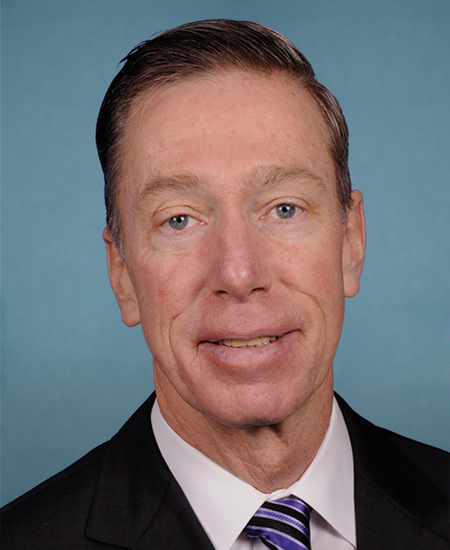
Rep. Stephen F. Lynch
Sponsored bills
Postal Service Electric Fleet Authorization Act of 2021 This bill establishes requirements for U.S. Postal Service (USPS) acquisition of vehicles and the infrastructure required to operate a fleet of electric vehicles. The bill's provisions only apply if specified funding is appropriated. Specifically, the bill requires the USPS to ensure that at least 75% of the total number of next generation delivery vehicles purchased using such funds are electric or zero-emission vehicles. The bill provides for a phase-out of medium- and heavy-duty vehicles that are not electric or zero-emission vehicles. The USPS must provide by January 1, 2026, at each postal facility accessible to the public, at least one electric vehicle charging station for use by the public or USPS officers and employees.
Air America Act of 2021 This bill establishes the service of Air America employees as qualifying service for purposes of the Civil Service Retirement System. (Air America was a government-owned airline that provided air transport for certain covert operations in Southeast Asia, including Laos and Vietnam, between 1950 and 1976.) The bill applies to U.S. citizens who were employees of Air America or another affiliated company, as specified, between January 1, 1950 and December 31, 1976. Benefit applications must be filed within two years of the date of enactment of this bill.
Civics Learning Act of 2021 This bill expands the use of American History and Civics Education—National Activities grants to prioritize innovative civics learning and teaching. Specifically, the bill expands the allowable uses of these grants to include before-, during-, and after-school activities and extracurricular activities; activities that include service learning and community service projects that are linked to school curriculum; activities that encourage and support student participation in school governance; and online and video game-based learning. Further, the Department of Education must ensure that specified percentages of grant funds are awarded on a diverse basis to eligible entities (e.g., institutions of higher education) that serve students and teachers at elementary schools, middle schools, and high schools.
SOS: Sustaining Outpatient Services Act This bill allows for payment under the Medicare prospective payment system for hospital outpatient department services of certain items and services that are furnished at off-campus outpatient departments. Specifically, the bill allows for payment of items and services for which payments to physician specialists (under the Medicare physician fee schedule) did not exceed $2 million during the previous year.
This resolution condemns the acts of gun violence that led to the tragic loss of eight lives in Georgia on March 16, 2021.
Enhanced Whistleblower Engagement Act This bill modifies requirements with respect to whistleblower protections for employees of an office of inspector general (OIG). The bill specifies that the whistleblower protection coordinator in each OIG shall educate that office's employees on specified matters, including prohibitions against retaliation for protected disclosures and rights and remedies against such retaliation. The bill also specifies that best practices developed by the Council of the Inspectors General on Integrity and Efficiency shall include best practices for the handling and consideration of protected disclosures and allegations of reprisal that are internal to an OIG.
Promoting Service in Transportation Act This bill directs the Department of Transportation to establish and administer a transportation workforce outreach program to (1) increase awareness of transportation career opportunities; and (2) increase diversity such as race, gender, ethnicity, and socioeconomic status of professionals in the transportation sector.
Real Education and Access for Healthy Youth Act of 2021 This bill requires the Department of Health and Human Services (HHS) to establish grants to support sex education and sexual health services for young people (ages 10 through 29) and repeals requirements that apply to certain federally funded sex education programs. HHS must award grants, in coordination with the Department of Education, to (1) provide sex education to young people through elementary and secondary schools, institutions of higher education, and youth-serving organizations; and (2) train education professionals to effectively teach, and otherwise support, sex education. Sex education refers to high quality teaching and learning that follows, to the maximum extent practicable, specified educational standards; covers a variety of topics concerning sex and sexuality; explores values and beliefs about those topics; and helps young people gain skills to navigate relationships and manage sexual health. Additionally, HHS must award grants for the provision of sexual health services to marginalized youth to youth-serving organizations and health care entities that are eligible to receive covered outpatient drugs at reduced prices through the 340B drug discount program. Recipients of any of these grants must comply with certain nondiscrimination requirements. In addition, they may not use funds for sex education programs or sexual health services that provide incomplete or inaccurate medical information or fail to address specified issues. The bill also eliminates prohibitions regarding the content of specified federally funded sexual health education and information programs and repeals the Abstinence Only Until Marriage program.
America Wins Act This bill imposes an excise tax on the carbon dioxide content of coal, petroleum and petroleum products, and natural gas sold by the manufacturer, producer, or importer and requires the revenues to be used for infrastructure, an energy refund program to provide payments to certain low-income households, and other purposes. Refunds or credits for the tax must be issued for carbon substances that are (1) not emitted due to use as a feedstock or through carbon capture and sequestration, or (2) previously taxed carbon substances used to make another taxable carbon substance. The bill includes border adjustment provisions that require certain fees, credits, or refunds for carbon-intensive goods that are exported or imported. The bill also establishes a Build America Trust Fund and appropriates to the fund amounts equal to the increase in revenues attributable to the tax. Specified amounts of the funds must be used, without further appropriation, for infrastructure related to transportation, water, broadband, education, health care, housing, and energy. Specified portions of the funds must also be used for providing assistance to workers and communities reliant on industries that primarily produce taxable carbon substances or carbon-intensive goods, providing assistance to individuals and communities disproportionately impacted by climate change and greenhouse gas pollutants as well as groups underrepresented in the energy sector, an energy refund program to provide payments to certain low-income households, and a refundable tax credit for households that meet specified income requirements.