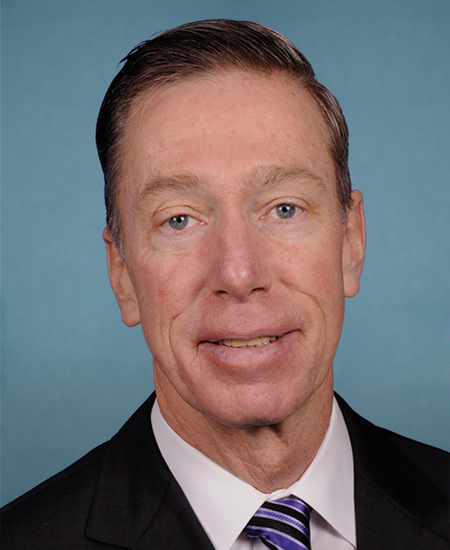
Photo of Stephen F. Lynch
D United States House · District 8 · Massachusetts On the 2026 ballot

Rep. Stephen F. Lynch

Compare
Total votes
2,837
all sessions
Attendance
98%
68 missed
Lower than 81% of chamber peers
With party
97%
of cast votes
Near the chamber average
Bipartisan score
2%
crosses aisle rarely
Near the chamber average
Sponsored
1,646
bills & resolutions
Higher than 84% of chamber peers
Committees
7
assignments
1,646 bills and resolutions

Sponsored bills

Total
1,646
Primary
61
Co-sponsor
1,585
This page
1,646
matching current filters
Co-sponsor HR 3906
In committee · Indiana House · Co-sponsor
Blue Carbon Protection Act

Blue Carbon Protection Act This bill establishes programs, grants, and requirements to protect and restore marine and blue carbon ecosystems, which are vegetated coastal habitats and include mangroves, tidal marshes, and other tidal or salt-water wetlands that have the capacity to sequester and store carbon.

In committee Jun 22, 2021 1 co-sponsor
Co-sponsor HR 1915
In committee · Indiana House · Co-sponsor
Water Quality Protection and Job Creation Act of 2021

Water Quality Protection and Job Creation Act of 2021 This bill addresses water infrastructure and the discharge of pollution (e.g., wastewater or stormwater) into waters of the United States, including by reauthorizing through FY2026 and revising the Clean Water State Revolving Fund (SRF) program. The clean water SRF program provides communities low-cost financing for water quality infrastructure projects.

In committee Jun 22, 2021 1 co-sponsor
Co-sponsor HR 2840
In committee · Indiana House · Co-sponsor
Puppy Protection Act of 2021

Puppy Protection Act of 2021 This bill requires the Department of Agriculture to expand standards that govern the humane handling, care, treatment, and transportation of animals to include new requirements for commercial dog dealers. Specifically, the standards must require dog dealers to provide to dogs adequate housing, exercise, and veterinary care; appropriate and nutritious food; continuous access to potable water; and meaningful socialization with humans and compatible dogs for at least 30 minutes each day. The standards must also include requirements for breeders to use safe breeding practices and make all reasonable efforts to find humane placement for retired breeding dogs.

In committee Jun 21, 2021 1 co-sponsor
Co-sponsor HR 3981
In committee · Indiana House · Co-sponsor
Senior Legal Hotline Act of 2021

Senior Legal Hotline Act of 2021 This bill permits the Administration on Aging to award competitive grants to certain nonprofit organizations or partnerships to establish or maintain statewide senior legal hotlines to provide free services to older individuals.

In committee Jun 17, 2021 1 co-sponsor
Co-sponsor HR 3940
In committee · Indiana House · Co-sponsor
Local Journalism Sustainability Act

Local Journalism Sustainability Act This bill allows individual and business taxpayers tax credits for the support of local newspapers and media. Specifically, individual taxpayers may claim an income tax credit up to $250 for a local newspaper subscription. The bill also allows local newspaper employers a payroll tax credit for wages paid to an employee for service as a local news journalist and certain small businesses a tax credit for local newspaper and media advertising expenses.

In committee Jun 16, 2021 1 co-sponsor
Co-sponsor HR 3946
In committee · Indiana House · Co-sponsor
Pell Grant Preservation and Expansion Act of 2021

Pell Grant Preservation and Expansion Act of 2021 This bill makes various changes to the Federal Pell Grant program, including by expanding student eligibility for Pell Grants. The bill also revises student eligibility for federal student-aid programs. Specifically, the bill provides funding to increase the maximum Pell Grant award for each eligible student. Further, the bill requires the award amount to be adjusted for inflation. Next, the bill allows students who receive means-tested federal benefits (e.g., Medicaid) to automatically qualify for the maximum Pell Grant award plus an additional award amount. In addition, the bill moves the Iraq and Afghanistan Service Grant program into the Pell Grant program. Next, the bill raises from 12 to 18 the total number of semesters during which a student may receive a Pell Grant. The bill makes Dreamer students (i.e., students who have been granted Deferred Action for Childhood Arrivals status) who entered the United States before the age of 18 and who meet certain educational criteria eligible for federal financial aid. The bill also revises satisfactory academic progress requirements for federal student-aid programs, including by allowing a student who has not been enrolled in an institution of higher education for two years to regain eligibility for federal student aid.

In committee Jun 16, 2021 1 co-sponsor
Co-sponsor HR 2811
In committee · Indiana House · Co-sponsor
Shark Fin Sales Elimination Act of 2021

Shark Fin Sales Elimination Act of 20 21 This bill addresses the sale of shark fins and the inclusion of rays and skates in the Seafood Traceability Program. The Seafood Traceability Program has data reporting and recordkeeping requirements at the time of entry for imported fish or fish products entered into U.S. commerce. The bill makes it illegal to possess, buy, or sell shark fins or any product containing shark fins, except for certain dogfish fins. A person may possess a shark fin that was lawfully taken consistent with a license or permit under certain circumstances. Penalties are imposed for violations under the Magnuson-Stevens Fishery Conservation and Management Act. The Department of Commerce must revise its regulations to include rays and skates as species that are subject to the Seafood Traceability Program.

In committee Jun 16, 2021 1 co-sponsor
Co-sponsor HR 2127
In committee · Indiana House · Co-sponsor
TEAM Act

Toxic Exposure in the American Military Act or the TEAM Act This bill requires the Department of Veterans Affairs (VA) to expand health care, benefits, and resources for veterans with conditions related to exposure to toxic substances. Specifically, the bill expands eligibility for VA hospital care, medical services, and nursing home care to include veterans who (1) were exposed to toxic substances, radiation, or other conditions, and were awarded certain medals (e.g., the Armed Forces Service Medal); (2) are eligible for inclusion in the Airborne Hazards and Open Burn Pit Registry; or (3) have been identified by the Department of Defense to have been possibly exposed during service to an open burn pit, toxic substance, or specified hazardous sites. (A burn pit is an area used for burning solid waste in open air without equipment.) The bill establishes a presumption of service-connection for diseases associated with exposure to certain toxic substances and that become manifest within a certain time period; the VA must specify such diseases and requirements through regulations. Under a presumption of service-connection, specific conditions diagnosed in certain veterans are presumed to have been caused by the circumstances of their military service. Health care benefits and disability compensation may then be awarded. The bill also requires the VA to take specified actions to (1) evaluate scientific evidence regarding associations between diseases and exposure to toxic substances; (2) train its health care personnel on identifying, treating, and assessing illnesses related to such exposure; and (3) provide resources to veterans exposed to toxic substances.


In committee Jun 16, 2021 1 co-sponsor
Co-sponsor HR 2060
In committee · Indiana House · Co-sponsor
Federal Building Clean Jobs Act of 2021

Federal Building Clean Jobs Act of 2021 This bill establishes additional energy-efficiency requirements and programs for federal buildings, with a particular focus on reducing energy and water consumption and greenhouse gas emissions by FY2030 through partnerships with the private sector. Specifically, the bill requires federal agencies to reduce the following for their facilities by FY2030: average building energy intensity (by at least 25%, relative to FY2018); average potable water consumption intensity (by 54%, relative to FY2007); industrial, landscaping, and agricultural water consumption (by 20%, relative to FY2018); and specified categories of greenhouse gas emissions (by at least 40%, relative to FY2018). Federal agencies must also implement retrofit projects that reduce the energy consumption of their facilities by at least 35%. Additionally, the General Services Administration, the Department of Defense, the Department of Homeland Security, and the Department of Veterans Affairs must develop plans that ensure that at least 50% of certain facilities offer zero-emission vehicle charging or fueling by December 31, 2030. The bill directs agencies to work with the private sector through partnerships and financing opportunities in order to implement the bill's requirements. The bill also makes several other changes relating to federal building standards and related authorities, including (1) requiring lessors (i.e., property owners) to disclose data on the utility consumption of leased spaces; (2) requiring federal agencies to assess and mitigate area flood risks, based on climate science; and (3) authorizing long-term contracts for federal purchases of renewable energy.

In committee Jun 16, 2021 1 co-sponsor
Co-sponsor HR 1257
Passed · Indiana House · Co-sponsor
Homeless Veterans CREDIT Act

Homeless Veterans Credit Repair, Enhancement, and Debt Improvement for Tomorrow Act or the Homeless Veterans CREDIT Act This bill requires the Department of Veterans Affairs to conduct a comprehensive study on access to, and use and effects of, financial and credit counseling for homeless veterans and veterans experiencing housing instability.

Passed Jun 16, 2021 1 co-sponsor
Showing 1,401 to 1,410 of 1,646 bills