

Safer Seas Act This bill addresses sexual assault and sexual harassment in the U.S. maritime industry. Among other provisions, the bill requires the U.S. Coast Guard to revoke or suspend a license, certificate of registry, or merchant mariner's document to an individual who has been convicted of sexual assault within the previous 10 years and to revoke or suspend such credentials to an individual who has been convicted of sexual harassment within the previous 5 years; provides protection of seaman against discrimination for those who report or intend to report sexual assault or sexual harassment incidents; directs the Coast Guard to promulgate regulations related to possession and consumption of alcohol by crewmembers aboard documented vessels; requires non-passenger carrying, ocean-going, commercial vessels to install and maintain a video surveillance system with audio capability in areas adjacent to bedrooms and limit access to the surveillance to law enforcement officials and victims of sexual assault or sexual harassment; and creates new reporting mandates and procedures for crew and vessel owners to report sexual assault or sexual harassment.
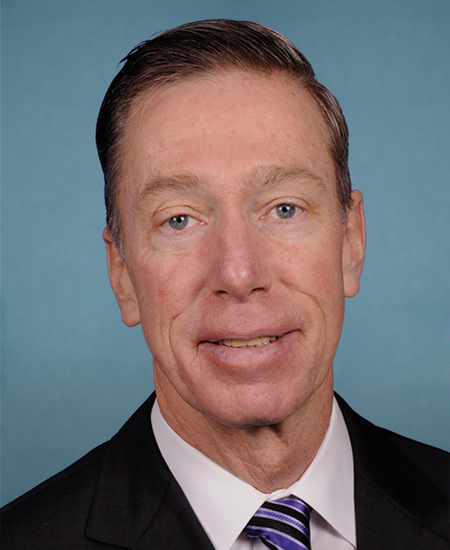
Rep. Stephen F. Lynch
Sponsored bills
This bill sets forth requirements related to amphibious passenger vessels operating in U.S. waters. The U.S. Coast Guard must issue regulations for amphibious passenger vessels, including to require that operators provide reserve buoyancy for the vessels through passive means, such as watertight compartmentalization, built-in flotation, or other means, to ensure that the vessels remain afloat and upright in the event of flooding. The bill also sets forth requirements for amphibious passenger vessels that are not in compliance with the regulations, including a requirement remove the canopies and window coverings of such vessels for waterborne operations, or to install in such vessels canopies that do not restrict either horizontal or vertical escape by passengers in the event of flooding or sinking.
Women's Health Protection Act of 2021 This bill prohibits governmental restrictions on the provision of, and access to, abortion services. Specifically, governments may not limit a provider's ability to prescribe certain drugs, offer abortion services via telemedicine, or immediately provide abortion services when the provider determines a delay risks the patient's health. Furthermore, governments may not require a provider to perform unnecessary medical procedures, provide medically inaccurate information, comply with credentialing or other conditions that do not apply to providers whose services are medically comparable to abortions, or carry out all services connected to an abortion. In addition, governments may not (1) require patients to make medically unnecessary in-person visits before receiving abortion services or disclose their reasons for obtaining such services, or (2) prohibit abortion services before fetal viability or after fetal viability when a provider determines the pregnancy risks the patient's life or health. The bill also prohibits other governmental measures that are similar to the bill's specified restrictions or that otherwise single out and impede access to abortion services, unless a government demonstrates that the measure significantly advances the safety of abortion services or health of patients and cannot be achieved through less restrictive means. The Department of Justice, individuals, or providers may bring a lawsuit to enforce this bill, and states are not immune from suits for violations. The bill applies to restrictions imposed both prior and subsequent to the bill's enactment.
Original Black History Month Resolution of 2022 This resolution recognizes the importance of commemorating Black History Month to acknowledge the achievements of Black Americans throughout history.
America's Call To Improve Opportunities Now for National Service Act or the ACTION for National Service Act This bill (1) converts the Corporation for National and Community Service into the AmeriCorps Administration and revises its membership, leadership, and authority; (2) reauthorizes programs carried out by the administration; (3) establishes a National Service Foundation to accept and administer gifts on behalf of the administration; (4) modifies the calculation of national service educational awards; and (5) otherwise modifies provisions related to national and volunteer service programs. Additionally, the bill creates an interagency Civilian Climate Corps, operated by the administration, to conduct service projects addressing climate change.
Maddy summaryHRES 939 is a symbolic House resolution expressing support for designating February 21-25, 2022, as "Public Schools Week." It does not create new policies, allocate funding, or impose requirements on schools or students. The resolution uses supportive language to acknowledge public education's role in democracy but has no legal effect. It was introduced by multiple representatives as a non-binding gesture of appreciation for public schools.
Environmental Justice Air Quality Monitoring Act of 2022 This bill requires the Environmental Protection Agency to implement a pilot program to award, on a competitive basis, grants or contracts to state, local, and tribal air agencies to carry out specified projects for hyperlocal air quality monitoring systems in environmental justice communities (i.e., communities with significant representation of communities of color, low income communities, or tribal and indigenous communities that experience, or are at risk of experiencing, higher or more adverse human health or environmental effects). A project carried out using a grant or contract awarded under the pilot program may not exceed five years in duration.
This resolution expresses that the House of Representatives stands in solidarity with the people of Afghanistan and with vulnerable groups, including women and children; religious and ethnic minorities; lesbian, gay, bisexual, transgender, queer, and intersex (LGBTQI) persons; civil society actors; journalists; and other at-risk populations in Afghanistan; calls on the Taliban to uphold the protection of universal human rights, including the commitments set forth in the Universal Declaration of Human Rights and enshrined in the International Covenant on Civil and Political Rights, to which Afghanistan is a party; calls for the international community to condemn human rights violations committed by the Taliban; and calls on the U.S. government to work closely with the international community and nongovernmental organizations, particularly such organizations based in Afghanistan, to support at-risk Afghan minority populations and other vulnerable communities.
This resolution extends collective bargaining rights prescribed in the Congressional Accountability Act of 1995 to employees of the House of Representatives.
First Rhode Island Regiment Congressional Gold Medal Act This bill provides for the award of a single Congressional Gold Medal to the First Rhode Island Regiment, collectively, in recognition of their dedicated service during the Revolutionary War.