

Maddy summaryHRES 1106 is a non-binding House resolution honoring the life and legacy of Rev. Jesse Louis Jackson, Sr., a prominent civil rights leader and activist. The resolution recognizes his lifelong work in advancing equality through organizations like Operation PUSH, his leadership in the anti-apartheid movement, and his historic presidential campaigns in 1984 and 1988. It expresses condolences to his family and calls on all Americans to continue his legacy of promoting civil rights and unity. As a commemorative resolution, it does not create new laws or affect any policies.
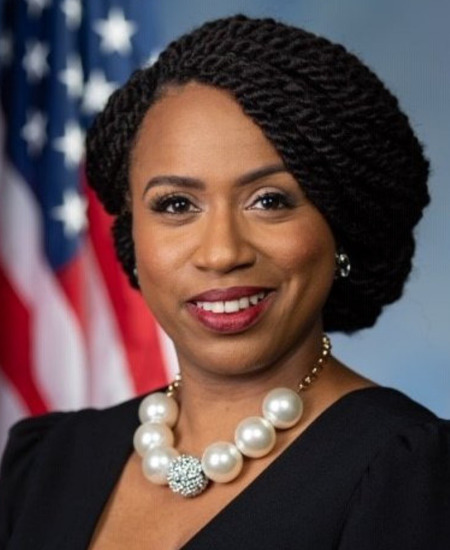
Rep. Ayanna Pressley
Sponsored bills
Maddy summaryThis bill directs the Secretary of Labor to modernize how the Bureau of Labor Statistics collects and reports unemployment data. It requires the agency to publicly release unemployment statistics online by the first Friday of each month and to include detailed demographic breakdowns by geography, race, ethnicity, and gender in all reports. The legislation also updates legal language to clarify that the Secretary must perform these duties and report in a manner they deem appropriate. These changes apply directly to the Bureau of Labor Statistics and affect how unemployment data is made available to the public.
Maddy summaryThis bill, known as the Direct File Act of 2026, would establish a government-run online system allowing taxpayers to prepare and file their individual income tax returns for free. The legislation prohibits the Treasury Department from entering into agreements that restrict its ability to provide tax preparation or filing services, and it voids any existing contracts with such restrictions. The program would use IRS data to simplify filing, include customer support, be available in multiple languages, and allow users to file even if they are not required to. It also enables taxpayers in participating states to file state and local returns alongside their federal returns, with funding provided to states that meet certain standards.
Maddy summaryThe DISCLOSE Act of 2026 aims to increase transparency in election spending and prevent foreign influence. It expands the ban on foreign money to cover federal, state, and local elections, including ballot initiatives and judicial nominations, and criminalizes using corporations to conceal these funds. The bill mandates that organizations spending over $10,000 on campaign-related activities, such as independent expenditures or judicial nomination advocacy, disclose their beneficial owners and top donors. Additionally, it establishes new "Stand By Every Ad" disclaimers for political communications, requiring the highest-ranking official to approve the message and, for certain ads, list their top funders. These provisions directly affect non-candidate organizations, individuals involved in political and judicial nomination spending, and foreign nationals.
Maddy summaryThis resolution (HRES 1088) is a non-binding House of Representatives measure recognizing the importance of Black history museums and cultural institutions. It formally acknowledges their role in preserving Black American history and contributions, particularly in relation to the 2026 100th anniversary of Black History Month and the U.S. 250th anniversary. The resolution urges the House to affirm that Black history is foundational to American history and calls for federal agencies to support these institutions through funding and partnerships. It also encourages the public to visit these museums, support them financially, and engage with their educational resources. The resolution does not create new laws or allocate funding, but serves as a symbolic endorsement of these institutions' cultural and historical significance.
Maddy summaryHR 7740, the African American History Act of 2026, authorizes $4 million annually for the National Museum of African American History and Culture to develop educational resources and support teaching about African American history. The bill directs the museum to create digital and print materials, provide teacher training, and expand access to curriculum resources for K-12 and college classrooms. It requires annual reports to Congress on fund usage and expires in 2030. This program directly affects educators and students by enhancing classroom materials and professional development on African American history.
Maddy summaryHRES 1080 is a symbolic resolution recognizing and celebrating Black History Month 2026, focusing on its theme "A Century of Black History Commemorations." It highlights historical figures and events central to Black history, including Carter G. Woodson’s founding of Negro History Week (the precursor to Black History Month), Juneteenth, and key moments like the 1865 Charleston commemoration. The resolution emphasizes how Black history commemorations counter historical erasure and affirm Black contributions to U.S. history, referencing figures like Mary McLeod Bethune and W.E.B. Du Bois. As a ceremonial resolution, it has no binding effect but aims to raise awareness of Black achievements through official recognition.
Maddy summaryHR 7685, the Healthy Hair Act, amends the Federal Food, Drug, and Cosmetic Act to classify hair straightening or smoothing products containing formaldehyde (or formaldehyde-releasing substances) as "adulterated" when sold across state lines after an 180-day grace period. It directly affects hair product manufacturers, salons, and workers who use or handle these products. The bill mandates a two-part study by the FDA and NIOSH on health impacts like cancer and respiratory issues for salon workers exposed to formaldehyde, requiring an initial report within one year and a final report within two years and two months. The study will inform future regulatory actions but does not ban formaldehyde products immediately.
Maddy summaryHR 7608, the Southeast Asian Deportation Relief Act of 2026, prevents the deportation of eligible Cambodian, Laotian, and Vietnamese nationals who entered the U.S. before January 1, 2008, and have continuously resided here since. The bill halts removals for these individuals, grants them permanent work authorization with 5-year permits renewable indefinitely, and eliminates in-person check-ins for immigration supervision. It also requires immigration authorities to reopen past deportation cases for eligible individuals, allowing them to seek relief under the Act’s provisions without retroactive penalties. This directly affects approximately 15,000 long-term Southeast Asian residents, many of whom arrived as child refugees following conflicts the U.S. was involved in.
Maddy summary# Summary of the Workplace Discrimination and Harassment Bill This comprehensive legislation aims to strengthen protections against workplace discrimination and harassment, with several key provisions: ## Key Provisions ### 1. Expanded Protections for Workers - Extends protections to independent contractors, interns, and volunteers - Clarifies that domestic service workers in households are covered under interstate commerce - Prohibits nondisclosure and nondisparagement clauses that cover harassment or discrimination ### 2. Nondisclosure Agreement Restrictions - Makes it unlawful for employers to require nondisclosure or nondisparagement clauses covering harassment or discrimination - Establishes specific requirements for valid settlement agreements: - Requires mutual agreement - Limits scope to statements with knowledge of falsity - Requires written advice to consult an attorney - Provides 21-day consideration period and 7-day revocation period - Prohibits enforcement of such clauses against workers reporting discrimination ### 3. Federal Contractor Compliance - Requires federal contractors to disclose labor and civil rights violations from the past 3 years - Establishes Labor Compliance Advisors within executive agencies - Creates procedures for pre-award and post-award compliance monitoring - Mandates annual reporting on contractor compliance ### 4. Nationwide Grant Programs - **National Grants**: For preventing and addressing employment discrimination through education, outreach, and complaint assistance - **Legal Assistance Grants**: For low-income workers facing employment discrimination - **State Advocacy System**: Creates state-level systems to protect workers' rights, with: - Independent lead entities - Authority to investigate discrimination - Annual reporting requirements - Coordination with federal and state agencies ### 5. Enforcement Mechanisms - Empowers the Equal Employment Opportunity Commission to enforce the bill - Establishes clear procedures and remedies for violations - Requires employers to provide specific information about their compliance with labor laws The bill represents a comprehensive approach to workplace rights, focusing on prevention, reporting, and enforcement mechanisms while ensuring workers can seek redress without fear of retaliation or silencing through restrictive agreements.