

Maddy summaryHR 5697, the Passenger Rail Liability Adjustment Act of 2025, sets the effective date for adjustments to the liability cap for passenger rail operators. Specifically, any adjustment to the liability cap under federal law that occurs during 2026 must take effect 90 days after a required notice is issued. This procedural bill does not change the liability cap amount itself but establishes a clear timeline for when such adjustments become effective. It directly affects passenger rail operators subject to the liability cap under 49 U.S.C. § 28103.
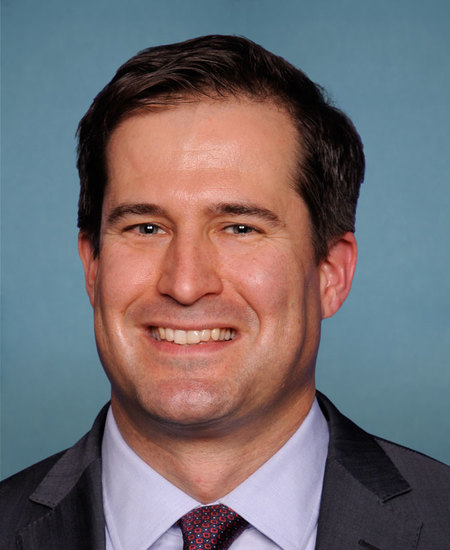
Rep. Seth Moulton
Sponsored bills
Maddy summaryThe RIDE FAST Act extends the deadline for using federal grants supporting intercity passenger rail projects from 2026 to 2032. This change directly affects states and rail operators eligible for these grants, giving them six additional years to plan and implement rail improvements. The bill amends Section 22106(a) of the Infrastructure Investment and Jobs Act to adjust the authorization period without creating new funding. It focuses solely on extending existing grant availability for rail projects.
Maddy summaryHRES 912 is a ceremonial resolution recognizing the 75th anniversary of the Battle of the Chosin Reservoir (November 27-December 13, 1950) during the Korean War. It commemorates the military campaign involving U.S. and UN forces, highlighting their resilience against Chinese forces amid extreme cold, the evacuation of over 105,000 troops, and the valor of units like the 1st Marine Division. The resolution urges the House to honor the sacrifices of service members who suffered over 10,500 battle casualties and 7,310 nonbattle casualties (primarily from frostbite). As a non-binding commemorative measure, it does not create new policies or affect any individuals or entities.
Maddy summaryHR 6249, the "Addressing Addiction After Disasters Act," updates federal disaster relief guidelines to explicitly include substance use and alcohol use disorders in crisis counseling services. It amends the Robert T. Stafford Disaster Relief Act to allow FEMA-funded programs to address these issues alongside mental health needs for disaster survivors. The bill requires FEMA to revise application forms and guidance within 180 days to reflect these changes and mandates a GAO report on program duration and compliance with using funds only for disaster-related substance/alcohol issues. This directly affects disaster survivors facing substance use or alcohol challenges by expanding access to covered support services.
Maddy summaryHR 6215, the Small Business RELIEF Act, exempts small businesses from import duties imposed under Executive Order 14257 (90 Fed. Reg. 15041) for goods they import or use. It requires the President to refund duties paid by small businesses within 90 days of the bill's enactment. The bill defines "small business concern" using the standard Small Business Act criteria (15 U.S.C. 632). This directly affects small businesses importing goods, providing immediate cost relief by removing a specific tariff and refunding past payments.
Maddy summaryThe Support Our Troops Shipping Relief Act of 2025 exempts care packages sent by qualified nonprofits to U.S. military personnel overseas from customs tariffs, duties, and detailed reporting requirements like individual product codes or country-of-origin data. This bill directly affects nonprofits (such as Operation Troop Support) that send comfort items - like snacks, hygiene products, and letters - to troops stationed outside the continental U.S. The key provision simplifies documentation by allowing organizations to use broad categories (e.g., "snack foods" instead of specific codes) and treats these shipments as domestic mail for processing. It requires the U.S. Postal Service and Customs to implement this exemption within 180 days, reducing delays and costs while maintaining security screening.
Maddy summaryThe Electricity Transmission Scorecard Act (HR 6176) requires electricity transmission owners and regional grid operators to publicly report on their performance using standardized metrics. It mandates biannual reports from transmission owners (TIAPS) and annual reports from regional grid operators (RIAPS) covering affordability, investment effectiveness, system reliability, interconnection fairness, and other key performance indicators. The bill establishes a framework for transparent, comparable data that would be publicly accessible through a government portal, allowing ratepayers and stakeholders to evaluate transmission service quality. This applies to all entities operating transmission facilities, including those not previously subject to FERC reporting requirements, aiming to improve transparency and accountability in electricity transmission.
Maddy summaryThe Healthy MOM Act (HR 6242) would require health insurance plans to provide a special enrollment period for pregnant individuals beginning when pregnancy is reported to the insurer. It mandates that group health plans and health insurance issuers cover maternity care, including childbirth and postpartum care, for all dependents regardless of age. The bill would extend Medicaid coverage for pregnant individuals and infants to 12 months postpartum (instead of ending at 60 days postpartum) and make this 12-month coverage permanent. These provisions would directly affect pregnant individuals, women with dependent children who are pregnant, and health insurance plans and Medicaid programs.
Maddy summaryThe Grid Research and Development Act (HR 6177) requires transmission utilities and grid operators to report standardized data to the Federal Energy Regulatory Commission (FERC) on transmission projects, including costs, project timelines, system performance, and interconnection expenses. FERC must create a public, searchable data repository and an Interconnection Data Dashboard displaying real-time queue data, project statuses, and system costs to improve transparency. The Department of Energy will use this data to research transmission cost drivers, efficiency, and affordability, publishing annual reports on grid investment impacts. These requirements directly affect transmission utilities, grid operators, and ratepayers by standardizing reporting and enabling public analysis of grid investments.
Maddy summaryHR 6181, the John Lewis Every Child Deserves a Family Act, prohibits child welfare agencies receiving federal funds from discriminating against children, youth, or prospective foster/adoptive parents based on religion, sex (including sexual orientation and gender identity), or marital status. It directly affects LGBTQ youth in foster care - overrepresented at 30% of the system - who face higher risks of trauma, group home placements, and suicide attempts compared to non-LGBTQ peers. Key provisions require agencies to collect data on sexual orientation and gender identity, establish a National Resource Center for LGBTQ youth support, provide cultural competency training, and eliminate discriminatory practices. The law aims to improve safety, permanency, and placement stability by expanding access to family-based care and ensuring equitable services for all children in the system.