

Miracle on Ice Congressional Gold Medal Act This act provides for the award of Congressional Gold Medals to the members of the 1980 U.S. Olympic men's ice hockey team in recognition of the team's achievement at the 1980 Winter Olympic Games.
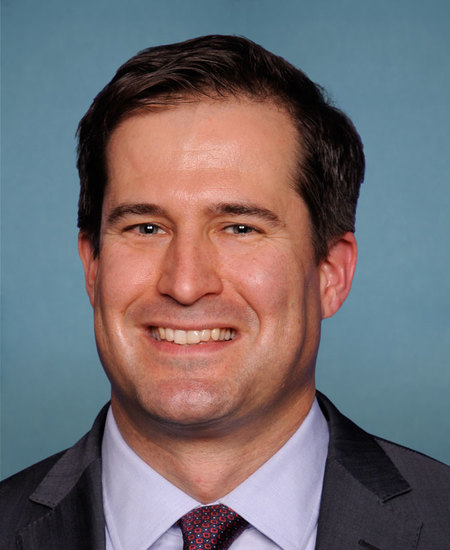
Rep. Seth Moulton
Sponsored bills
Maddy summaryHR 6682, the Endometriosis CARE Act, requires federal agencies to advance research, improve treatment access, and increase awareness for people with endometriosis - a chronic condition causing pelvic pain and fertility challenges affecting an estimated 10% of reproductive-age individuals. The bill mandates $50 million annually for NIH research on endometriosis treatments and cures, directs HHS to analyze barriers like insurance coverage and provider shortages in accessing care, and funds public education campaigns targeting underserved racial, ethnic, and minority groups. It also requires HHS to develop provider training materials on diagnosis and care, and to commission a National Academies study on disparities in endometriosis treatment across race, geography, and insurance status. The legislation focuses on data collection, education, and research rather than altering existing insurance coverage or treatment protocols.
Maddy summaryThe Keeping All Students Safe Act prohibits the use of unlawful seclusion and restraint in schools receiving federal funding, including physical restraint that restricts breathing or blood flow, chemical restraint not prescribed for medical treatment, and mechanical restraint. The bill requires schools to use less restrictive interventions first, mandates that staff using physical restraint be trained and certified through State-approved programs, and requires immediate parent notification after any restraint incident. States must develop plans to monitor compliance, collect and report data on restraint incidents (disaggregated by race, disability status, and school type), and implement positive behavioral interventions. The bill provides $40 million annually for five years to support states in implementing these requirements and improving school climate through evidence-based approaches.
Maddy summaryThis bill amends the Higher Education Act to extend the loan limits for graduate and professional students indefinitely. It removes the previous expiration date (June 30, 2026) for these limits, meaning graduate and professional students will continue to have access to the same federal loan amounts without a set end date. The key change modifies Section 455(a) by eliminating the sunset provision and updating the effective date language in the law. This directly affects students pursuing advanced degrees who rely on federal loans for tuition and living expenses. The bill makes a technical adjustment to existing student loan policy without creating new benefits or altering eligibility criteria.
Maddy summaryThis bill establishes new requirements for pharmacy benefit managers (PBMs) working with Medicare Part D prescription drug plans and Medicaid programs. It mandates that PBMs pay pharmacies a specific reimbursement amount based on drug acquisition costs plus a fixed fee, pass through manufacturer rebates directly to beneficiaries at the point of sale, and prohibits steering practices that direct patients to specific pharmacies. The bill applies to Medicare Part D plans and Medicaid managed care organizations beginning January 1, 2027, affecting how PBMs interact with pharmacies and handle drug rebates. Violations could result in criminal penalties of up to $1 million or 10 years in prison for willful noncompliance. The bill aims to increase transparency and fairness in pharmacy drug pricing for Medicare and Medicaid beneficiaries.
Maddy summarySammy's Law requires large social media platforms (those with over 100 million monthly users or $1 billion in annual revenue) to create real-time tools allowing parents or third-party safety software providers to help protect children under 17 from online harms. Platforms must provide secure access to children's account data for safety software providers that register with the Federal Trade Commission and meet strict security and privacy requirements. Third-party providers can only use the data to address specific risks like cyberbullying, trafficking, or abuse, and must delete data after 14 days unless needed for a safety concern. The law creates a federal standard that prevents states from making their own rules about this type of platform access.
Maddy summaryThis concurrent resolution (HCONRES 65) is a symbolic congressional commendment of state and local governments that have affirmed reproductive rights as human rights. It recognizes efforts by jurisdictions like Carrboro, North Carolina; Austin, Texas; and Fulton County, Georgia, which passed resolutions or proclamations declaring abortion access a human right and condemning criminalization of pregnancy outcomes. The resolution urges states to repeal restrictive abortion laws and protect access to reproductive care, but it does not create new legal requirements or fund programs. As a procedural resolution, it has no binding effect on federal or state law.
Maddy summaryThis bill increases federal student loan limits for graduate and professional students. Starting July 1, 2026, it sets a $50,000 annual limit and a $200,000 total aggregate limit (beyond undergraduate borrowing) for unsubsidized Federal Direct Stafford loans. These changes directly affect graduate and professional students pursuing advanced degrees who rely on federal loans for education costs. The provisions aim to provide higher borrowing capacity for these students' educational expenses under the Higher Education Act.
Maddy summaryHR 6589, the Ranked Choice Voting Act, would require all states to implement ranked choice voting for elections of U.S. Senators and Representatives, including primaries and general elections. Under this system, voters would rank candidates in order of preference, with ballots tabulated by eliminating the least preferred candidate in successive rounds until a candidate achieves a majority. The bill prohibits separate runoff elections for these offices and provides federal funding to states to cover implementation costs, with payments due by June 1, 2026. The law would apply to federal elections held on or after January 1, 2030, and would not affect state or local elections.
Maddy summaryHR 6493, the NOEM Act, amends Section 1983 of federal law to explicitly allow civil lawsuits against individuals acting under federal immigration enforcement authority. The bill adds "or of any Federal immigration enforcement authority" to the existing language, expanding the scope of Section 1983 to include federal immigration officers. This change directly affects federal immigration enforcement personnel by enabling individuals to sue them under this civil rights provision for misconduct. The bill focuses solely on clarifying the legal pathway for such lawsuits, with no additional provisions or mechanisms described in the provided text.