

This concurrent resolution supports the goals and ideals of the International Transgender Day of Visibility. It celebrates the accomplishments and leadership of transgender, nonbinary, and gender nonconforming people.
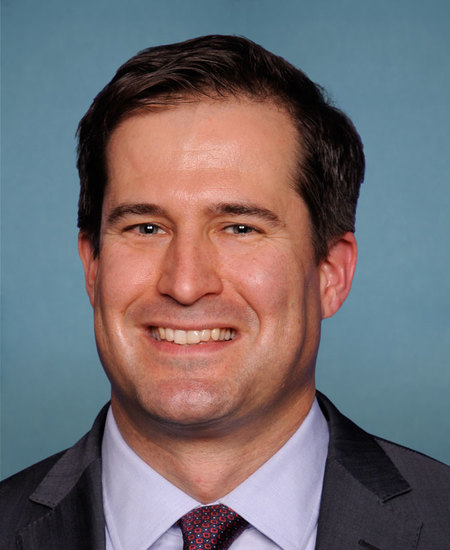
Rep. Seth Moulton
Sponsored bills
Physician Assistant Higher Education Modernization Act of 2021 This bill assists qualified individuals in receiving the education and training needed to become a physician assistant. Graduate students enrolled in physician assistant education programs are eligible for (1) Direct Subsidized Stafford Loans, and (2) loan forgiveness programs for those who serve in areas of national need upon graduation. The bill also requires the Department of Education to provide historically Black colleges and universities and predominantly Black institutions with grants to fund physician assistant studies at the masters level, prioritize the awarding of grants for physician assistant education programs at the postbaccalaureate level that will benefit Hispanic and low-income students, and allow certain grants to be used to support student matriculation and establish physician assistant education programs at rural-serving institutions of higher education.
Resident Physician Shortage Reduction Act of 2021 This bill increases the number of residency positions eligible for graduate medical education payments under Medicare for qualifying hospitals, including hospitals in rural areas and health professional shortage areas. Current law provides for an increase of up to 200 positions per fiscal year beginning in FY2023, with a total increase of 1,000 positions; each hospital may receive up to 25 additional positions. The bill provides for an additional increase of 2,000 positions per fiscal year from FY2023-FY2029; during this period, each hospital may receive up to 75 additional positions in total under the bill and current law. Additionally, one-third of the positions that are made available under the bill must be allocated to hospitals that are already operating above applicable resident limits. The bill also requires the Government Accountability Office to report on strategies to increase the diversity of the health professional workforce, including with respect to representation from rural, low-income, and minority communities.
Healthy Food Access for All Americans Act This bill allows tax credits and grants for activities that provide access to healthy food in food deserts, which are communities that have limited or no access to grocery stores and meet income requirements. For entities that are certified by the Department of the Treasury as special access food providers using specified criteria, the bill allows tax credits for operating a new grocery store or renovating an existing grocery store in a food desert. The bill also authorizes grants for a portion of (1) the construction costs of building a permanent food bank in a food desert, and (2) the annual operating costs of temporary access merchants (mobile markets, farmers markets, and food banks). Treasury, in coordination with the Department of Agriculture (USDA), must annually allocate the tax credits and grants to special access food providers. Grants authorized by this bill are not considered gross income for tax purposes. The bill also requires USDA to update the Food Access Research Atlas at least annually to account for food retailers that are placed in service during that year.
Willie O'Ree Congressional Gold Medal Act This bill provides for the award of a Congressional Gold Medal to Willie O'Ree or, if unavailable, to a member of his family, in recognition of his contributions and commitment to hockey, inclusion, and recreational opportunity.
Military Retiree Survivor Comfort Act This bill addresses the overpayment of retired or retainer pay to a joint account (bearing the name of the decedent and the decedent's designated beneficiary) during the month of the death of a retired member of the armed forces. Specifically, the bill authorizes the Department of Defense (DOD) to forgive or offset the overpayment if the decedent was enrolled in the Survivor Benefit Plan (SBP). In the case of an offset, each of the first 12 SBP annuity payments after the death of the retired service member must be reduced by one-twelfth of the overpayment. If the decedent was not enrolled in the SBP, DOD is authorized to forgive the overpayment.
Emmett Till and Mamie Till-Mobley Congressional Gold Medal Act of 2021 This bill provides for the posthumous presentation of a Congressional Gold Medal in commemoration of Emmett Till and Mamie Till-Mobley. After the award the medal shall be given to the National Museum of African American History and Culture.
This bill directs the Department of State to include additional information in its annual reports concerning Taiwan's participation at the World Health Organization's World Health Assembly (WHA) as an observer. The report shall describe changes and improvements to the State Department's plan to support Taiwan's observer status at the WHA, following any meetings at which Taiwan did not participate under such status. (China has opposed Taiwan's participation in the WHA.)
Protecting Americans from Dangerous Algorithms Act This bill limits a social media company's immunity from liability if it promotes certain content on its platform. Specifically, the bill removes this immunity from a social media company with more than 10 million monthly users if it utilizes an algorithm, model, or other computational process to amplify or recommend content to a user that is directly relevant to a claim involving (1) interference with civil rights, (2) neglect to prevent interference with civil rights, or (3) acts of international terrorism.
Southern New England Regional Commission Act This bill establishes the Southern New England Regional Commission. (Federal regional commissions address perceived regional economic underdevelopment.) The commission is given the same structure and duties as the Southeast Crescent Regional Commission, Southwest Border Regional Commission, and Northern Border Regional Commission. The bill authorizes those commissions, in addition to their current authorities, to (1) support the maritime economy, (2) assist in developing defense manufacturing industries, and (3) promote the adoption of innovative materials in public transportation.