Lady Liberty Act of 2021 This bill sets a floor of 125,000 for the maximum number of refugees who may be admitted into the United States each fiscal year. Under current law, the President sets the annual cap on refugee admissions at the beginning of each fiscal year. (The cap for FY2021 is 15,000, and the cap for FY2020 was 18,000.)
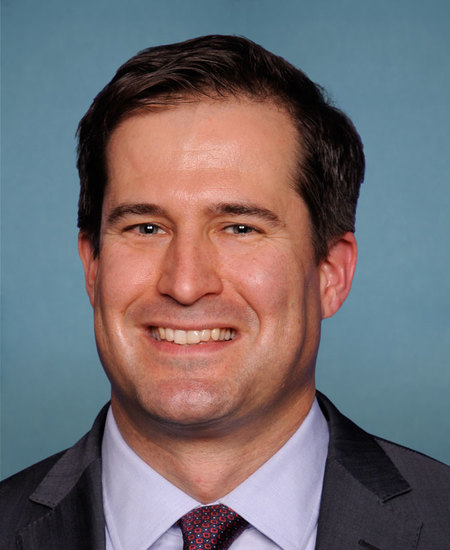
Rep. Seth Moulton
Sponsored bills
Black Maternal Health Momnibus Act of 2021 This bill directs multi-agency efforts to improve maternal health, particularly among racial and ethnic minority groups, veterans, and other vulnerable populations. It also addresses maternal health issues related to COVID-19 (i.e., coronavirus disease 2019). The Department of Health and Human Services (HHS) and other specified departments must address the social determinants of maternal health, which include child care, housing, food security, transportation, and environmental conditions. The bill also extends to 24 months postpartum eligibility for the Special Supplemental Nutrition Program for Woman, Infants, and Children. Additionally, HHS and other agencies must take actions to grow and diversify the maternal health workforce. To increase access to maternity care, HHS and other agencies must (1) award specified grants; (2) test an alternative payment model for perinatal care under Medicaid and the Children's Health Insurance Program (CHIP); and (3) support training, technology, and telehealth initiatives. The bill also increases research and data collection on maternal morbidity and mortality, particularly among tribal populations and minority groups. The Bureau of Prisons and the Department of Justice must establish programs to improve maternity care for incarcerated populations. The Medicaid and CHIP Payment and Access Commission must also report on the impact of Medicaid ineligibility for pregnant and postpartum prisoners. Additionally, as a condition for certain grants, states and territories must have laws limiting the use of restraints on pregnant individuals in prisons. The bill also directs activities to mitigate adverse maternal health outcomes associated with climate change and to improve maternal vaccination rates.
Justice for Incarcerated Moms Act of 2021 This bill establishes new requirements related to grants, programs, and reports to improve the treatment and care of pregnant and postpartum women who are incarcerated. Specifically, the bill requires the following: states must restrict the use of restraints on pregnant women in prison in order to receive full funding under the Edward Byrne Memorial Justice Assistance Grant program; the Bureau of Prisons must establish programs to optimize maternal health outcomes for pregnant and postpartum women in federal prisons; the Bureau of Justice Assistance must award state grants for programs to support pregnant and postpartum women in state and local prisons and jails; the Government Accountability Office must report on adverse maternal and infant health outcomes among incarcerated individuals and infants born to such individuals, with a particular focus on racial and ethnic disparities; and the Medicaid and CHIP Payment and Access Commission must report on the impact of Medicaid ineligibility for pregnant and postpartum women in prison.
Jamal Khashoggi Press Freedom Accountability Act of 2021 This bill establishes measures to protect the human rights of journalists. Specifically, the bill (1) expands the scope of required reports related to violations of the human rights of journalists, (2) requires the President to impose certain property- and visa-blocking sanctions on persons responsible for gross violations of the human rights of journalists, and (3) prohibits certain foreign assistance to a governmental entity of a country if an official acting under authority of the entity has committed a gross violation of human rights against a journalist.
Child Care for Working Families Act This bill provides funds and otherwise revises certain child care and early learning programs for low- to moderate-income families. Specifically, the bill provides funds for the Child Care and Development Block Grant program and reestablishes it as a child care and development assistance program. The bill also allocates program funds for states to provide services and supports to infants, toddlers, and children with disabilities. Further, the bill revises the program to require each state to create a tiered and transparent system for measuring the quality of child care providers, which must include evidence-based standards and payment rates that are based on a certain cost estimation model; ensure that copayments are based on a sliding scale and that no family receiving assistance pays more than 7% of its household income on child care; and use quality child care amounts for certain activities, such as increasing the supply of child care providers. The bill also provides funds and establishes grants for states to create preschool programs for low- to moderate-income children between the ages of three and five years. The Department of Health and Human Services (HHS) must make grants to Head Start agencies to provide children with access to full-school-year and full-school-day services, provide access to additional service hours for migrant and seasonal agencies, or enhance the quality of existing services. Finally, the bill requires, and provides funds for, HHS to assist Head Start agencies with ensuring their teachers and staff are paid a living wage.
Washington, D.C. Admission Act This bill provides for admission into the United States of the state of Washington, Douglass Commonwealth, composed of most of the territory of the District of Columbia. The commonwealth shall be admitted to the Union on an equal footing with the other states. The Mayor of the District of Columbia shall issue a proclamation for the first elections to Congress of two Senators and one Representative of the commonwealth. The bill applies current District laws to the commonwealth and continues pending judicial proceedings. The commonwealth (1) shall consist of all District territory, with specified exclusions for federal buildings and monuments, including the principal federal monuments, the White House, the Capitol Building, the U.S. Supreme Court Building, and the federal executive, legislative, and judicial office buildings located adjacent to the Mall and the Capitol Building; and (2) may not impose taxes on federal property except as Congress permits. District territory excluded from the commonwealth shall be known as the Capital and shall be the seat of the federal government. The bill maintains the federal government's authority over military lands and specified other property. The bill provides for expedited consideration of a joint resolution repealing the Twenty-third Amendment to the Constitution, which provides for the appointment of electors of the President and Vice President. The bill continues certain federal authorities and responsibilities, including regarding employee benefits, agencies, courts, and college tuition assistance, until the commonwealth certifies that it is prepared to take over the authorities and responsibilities. The bill establishes the Statehood Transition Commission to advise the President, Congress, and District and commonwealth leaders on the transition.

Access to Contraception for Servicemembers and Dependents Act of 2021 This bill addresses Department of Defense (DOD) contraceptive care and family planning services. Specifically, the bill prohibits cost-sharing with respect to TRICARE beneficiaries for specified prescription contraceptives. Additionally, the bill prohibits cost-sharing for TRICARE Select and TRICARE Prime beneficiaries in relation to any in-network method of contraception or contraceptive care (including with respect to insertion, removal, and follow-up), any sterilization procedure, or any related patient education or counseling service. The bill requires DOD to provide information on all methods of emergency contraception and care to sexual assault survivors at its medical treatment facilities. Upon request by a sexual assault survivor, DOD must provide such emergency contraception or a prescription for emergency contraception. Finally, DOD must establish a uniform standard curriculum for education programs on family planning for all members of the Armed Forces. Such education programs must be provided to service members during their first year of service and at other appropriate times, as determined by each military department.
This resolution condemns the actions taken by the governments of China and Hong Kong to put in place national security legislation that violates the freedoms and rights guaranteed to the people of Hong Kong. (Hong Kong is a part of China but, by agreement, has operated a legal and economic system largely separate from China's.)
Workplace Violence Prevention for Health Care and Social Service Workers Act This bill requires the Department of Labor to address workplace violence in health care, social service, and other sectors. Specifically, Labor must issue an interim occupational safety and health standard that requires certain employers to take actions to protect workers and other personnel from workplace violence. The standard applies to employers in the health care sector, in the social service sector, and in sectors that conduct activities similar to those in the health care and social service sectors. In addition, Labor must promulgate a final standard within a specified time line.
Fire Fighters and EMS Employer-Employee Cooperation Act This bill requires the Federal Labor Relations Authority to determine whether a state substantially provides fire and emergency medical services (EMS) personnel the right to form and join a labor organization; recognition by fire and EMS employers of the employees' labor organization, agreement to bargain with the organization, and reduction of any agreements to writing in a contract or memorandum of understanding; the right to bargain over hours, wages, and terms and conditions of employment; and arbitration or other mechanisms to resolve an impasse in collective bargaining negotiations. The bill makes the authority responsible for (1) determining the appropriateness of units for labor representation; (2) supervising elections; (3) conducting hearings and resolving complaints of unfair labor practices; and (4) protecting the right of employees to form, join, or assist any labor organization, or to refrain from doing so. An employer, fire and EMS personnel, or labor organization may not engage in a lockout, sickout, work slowdown, strike, or any other organized job action that will measurably disrupt the delivery of emergency services and is designed to compel an employer, fire and EMS personnel, or labor organization to agree to the terms of a proposed contract.