

Healthy Maternity and Obstetric Medicine Act or the Healthy MOM Act This bill expands health insurance coverage availability for pregnant individuals. It requires health insurers, health insurance exchanges, and group health plans to offer a special enrollment period to pregnant individuals. The special enrollment period offered by an insurer or exchange must begin when the pregnancy is reported to the insurer or exchange. The special enrollment period offered by a group health plan must begin when the pregnancy is reported to the plan or is confirmed by a health care provider. The bill also makes pregnancy a qualifying life event for the purpose of enrolling in a federal employee health benefit plan. Additionally, a group health plan or health insurer that covers dependents must provide coverage for maternity care to all covered individuals. Any individual who is eligible for Medicaid and is, or becomes, pregnant maintains such eligibility for one year after the end of the pregnancy. The bill revises the range in which a state must establish a maximum level of family income for pregnant women and infants to be eligible for Medicaid. The upper limit of the range is eliminated and the lower limit is set to the level in place on January 1, 2014.
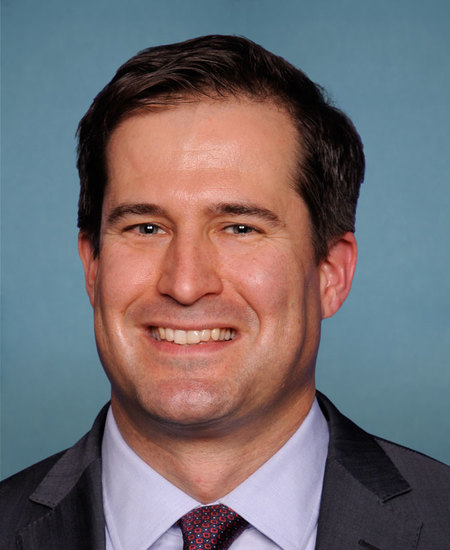
Rep. Seth Moulton
Sponsored bills
Interstate Rail Compacts Advancement Act of 2021 This bill establishes a grant program and makes other changes to support interstate rail compacts with improving and enhancing intercity passenger rail transportation systems. The Department of Transportation (DOT) must award up to 10 matching grants each fiscal year to interstate rail compacts or commissions for administrative costs related to the compact. In awarding the grants, DOT must consider (1) the amount of funding from and participation of railroads and other stakeholders, (2) whether the compact seeks to restore routes formerly operated by Amtrak, and (3) other factors. Additionally, DOT must give preference to compacts that are initiating, restoring, or enhancing intercity rail passenger transportation. Further, DOT must publish on its website a list of interstate rail compacts, as well as annuallly updated information for the public about how states may establish compacts. The bill also repeals a prohibition on the use of funds made available for Amtrak to carry out interstate rail compacts.
Military Child Care Expansion Act of 2021 This bill modifies and implements policies to update child care facilities and administration at the Department of Defense (DOD). Specifically, the bill removes certain requirements for members of the Armed Forces to receive funding for an in-home child care provider under the DOD pilot program that provides financial assistance to such members who pay for in-home child care. The bill also allows DOD to expand the pilot program to additional locations (currently it is authorized for five). DOD must establish a 10-year pilot program to expand access to child care for members of the Armed Forces by entering into agreements with public or private child care facilities or development centers. Under the bill, DOD must determine the (1) root causes contributing to poor or failing facility conditions at its child development centers, and (2) total cost to improve the conditions of such centers. The Government Accountability Office must review the determinations and make recommendations on how to improve DOD child development center conditions. Lastly, DOD must utilize its existing authority to carry out minor military construction projects to construct child development centers.
Servicemember Parental Leave Equity Act This bill modifies Department of Defense parental leave provisions for members of the Armed Forces. Specifically, the bill increases parental leave for primary caregivers to 18 weeks (currently 12) following the birth of a child and to 12 weeks (currently 6) following the adoption of a child. The bill increases parental leave for a secondary caregiver from 21 days to 12 weeks in connection with the birth or adoption of a child. Primary or secondary caregivers of a long-term foster child are authorized to take up to 12 weeks of leave in connection with such placement. Parental leave for a primary or secondary caregiver for a birth, adoption, or foster child placement may be taken in more than one increment. For primary caregivers, the leave must be utilized within one year of the event. The bill authorizes up to 12 weeks of leave to certain service members who would have been secondary caregivers but for a miscarriage, stillbirth, or infant death. The following activities required of an active-duty member within a 12-month postpartum period must have the approval of a health care provider and be at the election of the member or in the interest of national security: (1) an order of temporary duty overnight travel or to participate in physically demanding field training exercises, (2) meeting of body composition standards, or (3) passing a physical fitness test. The bill also reduces the service commitment required for participation in the Career Intermission Program.
Public Health Service Ready Reserve Improvement Act of 2021 This bill entitles members of the Ready Reserve Corps of the Public Health Service to certain rights and benefits concerning leave and pay that are provided to members of the Army Reserve and the National Guard who are employed by the federal government or the government of the District of Columbia. The Ready Reserve Corps provides trained personnel to respond to health emergencies and improve access to health services.
Motor Carrier Safety Selection Standard Act This bill establishes a standard of care for the selection of brokers and other entities that contract with motor carriers for the shipment of goods or household goods. A broker is a person, other than a motor carrier or an employee or agent of a motor carrier, that as a principal or agent sells, offers for sale, negotiates for, or holds itself out by solicitation, advertisement, or otherwise as selling, providing, or arranging for, transportation by motor carrier for compensation. Specifically, the bill requires such entities to verify that a transporting motor carrier (1) is properly registered with the Department of Transportation (DOT); (2) has obtained the minimum required insurance coverage; and (3) is not determined unfit to safely operate commercial motor vehicles, or otherwise ordered to discontinue operations by the Federal Motor Carrier Safety Administration or a state. DOT must prescribe by regulation a process for revoking the registration of an owner or operator determined unfit to safely operate a commercial motor vehicle.
Military Moms Matter Act of 2021 This bill addresses Department of Defense (DOD) policies regarding parental leave and postpartum care for service members. The bill authorizes primary caregivers to take 12 weeks of parental leave, and up to 6 weeks of medical convalescent leave (which may not be considered in calculating the 12 weeks of parental leave), in connection with the birth of a child. Additionally, primary caregivers are authorized to take up to 12 weeks of parental leave in connection with the adoption of a child. Under the bill, secondary caregivers are authorized to take up to 12 weeks of parental leave in connection with the birth or adoption of a child. The bill also removes the requirement that secondary caregivers must take such leave in one increment. Among other requirements, DOD must also provide at least four postpartum mental health assessments and other medical care in the year after a service member (or their dependent) gives birth, ensure that a service member (or their dependent) who gives birth at a military medical treatment facility has the option to schedule a postpartum follow-up appointment concurrent with the date of the follow-up appointment for postnatal care for the newborn infant, develop a standardized policy prohibiting each military branch from requiring a service member to take a physical fitness test until one year after giving birth, and issue guidance on the development and implementation of standard protocols for the treatment of obstetric hemorrhages.
This resolution supports the designation of Mental Health Awareness Month and declares mental health a national priority.
Accessible Voting Act of 2021 This bill addresses voting accessibility for individuals with disabilities and older individuals. First, the bill establishes the Office of Accessibility within the Election Assistance Commission (EAC). The office must serve as the advocate on behalf of voters with access needs, ensure state and local election officials are maintaining voting systems that meet Department of Justice accessibility standards, and make payments to states to implement the accessibility requirements outlined by the bill. In addition, the office must establish and operate a National Resource Center on Accessible Voting to provide state and local election officials, poll workers, and volunteers with the information and technical assistance needed to provide accessible voting. The office must also work with state and local election officials to collect data and administer a public national voter accessibility website. The bill requires each state to (1) ensure election websites are accessible and meet specified requirements, (2) designate a single office to provide information on federal elections to individuals with disabilities and older individuals, (3) notify the public of changes to voting practices, (4) expand access to absentee registration procedures and no-excuse mail-in absentee voting in federal elections, and (5) ensure all polling places and voter drop boxes are accessible. The EAC must coordinate with specified agencies to make grants to eligible entities to study, test, and develop accessible voting options. The bill also permanently reauthorizes and expands a Department of Health and Human Services grant program for increasing accessibility to polling places.
Creating Opportunities Now for Necessary and Effective Care Technologies (CONNECT) for Health Act of 2021 or the CONNECT for Health Act of 2021 This bill expands coverage of telehealth services under Medicare. Among other provisions, the bill allows the Centers for Medicare & Medicaid Services (CMS) to waive certain restrictions, such as restrictions on the types of technology that may be used; permanently removes geographic restrictions on originating sites (i.e., the location of the beneficiary) and allows the home of the beneficiary to serve as the originating site for all services; permanently allows federally qualified health centers and rural health clinics to serve as the distant site (i.e., the location of the health care practitioner); and allows the CMS to generally waive coverage restrictions during any public health emergency. Additionally, the CMS must report on the effects of expanded telehealth services during the COVID-19 public health emergency, including with respect to the utilization, quality, and outcomes of services. The Center for Medicare and Medicaid Innovation may also test alternative payment models relating to expanded telehealth services.