

Manufacturing Abilities Determine Economies in The Americas Act or the MADE in The Americas Act This bill establishes certain manufacturing incentives to increase trade between the United States and other countries in the Western Hemisphere. Specifically, the bill requires the President to develop a strategy to reduce reliance on concentrated supply chains for covered articles (including those essential to U.S. critical infrastructure) and protect against any threats from countries of concern relating to supply chains for these articles. Additionally, the bill establishes within the Executive Office of the President the Manufacturing Security and Resilience Council. The functions of the council include (1) implementing the President's strategy, (2) establishing and maintaining a database of information on manufacturing companies that manufacture a covered article or maintain facilities that may be converted to manufacture covered articles during an emergency, and (3) establishing and carrying out a manufacturing resilience grant program. An eligible manufacturing company may use grant funds to relocate manufacturing facilities and operations out of a country of concern into the United States or another country in the Western Hemisphere. The bill authorizes the President to provide duty-free treatment to any eligible article from any beneficiary Western Hemisphere country. This treatment shall apply to any article (1) that is the growth, product, or manufacture of a beneficiary Western Hemisphere country; and (2) that is needed to support the critical infrastructure of the United States. The bill also includes certain tax incentives, including by establishing an American security product tax credit.
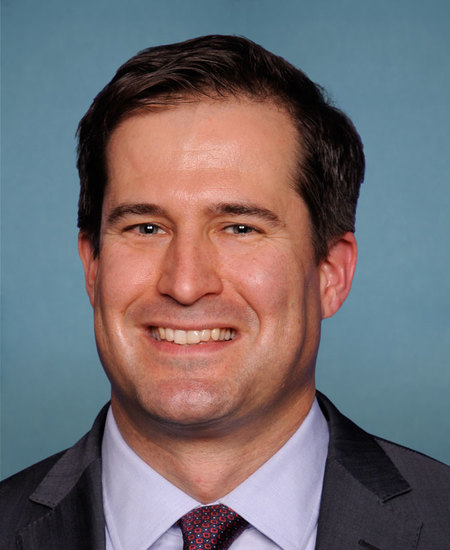
Rep. Seth Moulton
Sponsored bills
Ghost Army Congressional Gold Medal Act This bill directs the Speaker of the House of Representatives and the President pro tempore of the Senate to award a Congressional Gold Medal to the 23rd Headquarters Special Troops and the 3133d Signal Service Company, known as the Ghost Army , collectively, in recognition of its service during World War II.
This resolution supports the goals and ideals of an International Day Against Homophobia, Transphobia, and Biphobia. The resolution encourages (1) health care providers to offer culturally and clinically competent care to the lesbian, gay, bisexual, transgender, queer, or questioning (LGBTQ+) community; (2) schools to support the creation of gender and sexuality alliances; (3) individuals to learn about national resources for those who identify as LGBTQ+; and (4) funding organizations, aid efforts, and governments to prioritize the health and human rights of LGBTQ+ people.
This resolution expresses support for the designation of DIPG Awareness Day. DIPG is diffuse intrinsic pontine glioma, a terminal childhood brain cancer.
Credit for Caring Act of 2021 This bill allows an eligible caregiver a tax credit of up to $5,000 for 30% of the cost of long-term care expenses that exceed $2,000 in a taxable year. The bill defines eligible caregiver as an individual who has earned income for the taxable year in excess of $7,500 and pays or incurs expenses for providing care to a spouse or other dependent relative with long-term care needs.
Institutional Grants for New Infrastructure, Technology, and Education for HBCU Excellence Act or the IGNITE HBCU Excellence Act This bill establishes a grant program to support long-term improvements of historically Black colleges and universities (HBCUs) and graduate programs at HBCUs. Specifically, the bill requires the Department of Education (ED) to award grants to HBCUs to improve campus facilities. A recipient must use grant funds for certain activities, such as constructing or renovating facilities, carrying out major repairs, and strengthening the safety and security of a campus. Any new construction, modernization, or renovation projects must meet building code and energy and water conservation requirements. Further, HBCUs must seek to procure contracts from certain small businesses, including those owned and controlled by veterans and service-disabled veterans. The bill prohibits the use of grant funds for specified activities, including for the payment of routine and predictable maintenance costs, minor repairs, and utility bills. The Government Accountability Office must study the implementation of the grant program. The bill also requires ED to repay the outstanding balance of principal, interest, fees, and costs and any related reimbursements for certain capital financing loans.
Protect Drinking Water from PFAS Act of 2021 This bill requires the Environmental Protection Agency (EPA) to address the level of perfluoroalkyl and polyfluoroalkyl substances (PFAS) in drinking water. PFAS are man-made and may have adverse human health effects. A variety of products contain PFAS, such as nonstick cookware or weatherproof clothing. In addition, the EPA must publish a maximum contaminant level goal (MCLG) and promulgate a national primary drinking water regulation for PFAS. The MCLG and regulation must be protective of the health of subpopulations that may be at greater risk than the general population of adverse health effects from exposure to PFAS in drinking water.
COVID - 19 Hate Crimes Act This bill requires a designated officer or employee of the Department of Justice (DOJ) to facilitate the expedited review of COVID-19 (i.e., coronavirus disease 2019) hate crimes and reports of COVID-19 hate crimes. It defines COVID-19 hate crime as a violent crime that is motivated by two things: (1) the actual or perceived characteristic (e.g., race or ethnicity) of any person, and (2) the actual or perceived relationship to the spread of COVID-19 of any person because of that characteristic. The bill requires DOJ to issue guidance for state and local law enforcement agencies on (1) the establishment of online hate crime reporting processes and the availability of online reporting in multiple languages, and (2) the expansion of culturally competent education campaigns. Additionally, DOJ and the Department of Health and Human Services must issue guidance on best practices for mitigating racially discriminatory language in describing the COVID-19 pandemic.
Journalism Competition and Preservation Act of 2021 This bill creates a four-year safe harbor from antitrust laws for print, broadcast, or digital news companies to collectively negotiate with online content distributors (e.g., social media companies) regarding the terms on which the news companies' content may be distributed by online content distributors.
Emmett Till and Will Brown Justice for Victims of Lynching Act of 2021 This bill establishes a new criminal civil rights violation for lynching. Specifically, a person who conspires to commit certain civil rights offenses (e.g., a hate crime act) is subject to criminal penalties.