

Averting Loss of Life and Injury by Expediting SIVs Act of 2021 or the Allies Act of 2021 This bill increases the number of special immigrant visas available to qualified Afghan nationals who worked for the U.S. government or the North Atlantic Treaty Organization (NATO) missions in Afghanistan. The bill also relaxes certain qualifications for such visas. Specifically, this bill makes available an additional 8,000 visas for principal aliens under this special visa program, to be available until all such visas have been issued. (The numerical limitations in this program apply only to the principal alien who applies for the visa, not to any accompanying spouse or child.) Under this bill, an alien may qualify based on a credible basis for concern about the possibility of an ongoing serious threat in Afghanistan due to their work with the U.S. government or a NATO mission, where currently the alien must have experienced such a threat. The bill also eliminates a requirement for each applicant to submit a credible sworn statement describing that threat. Furthermore, for an applicant qualifying for a visa by performing duties for U.S. military personnel stationed with a NATO mission, this bill eliminates a requirement that the duties performed qualify as sensitive and trusted duties. If an alien submits a visa application that included an accompanying spouse or child but the alien passes away before the application is granted, the surviving spouse or child shall remain eligible to receive a visa under that application. Currently, a surviving spouse or child retains eligibility only if the application was approved before the alien passed away.
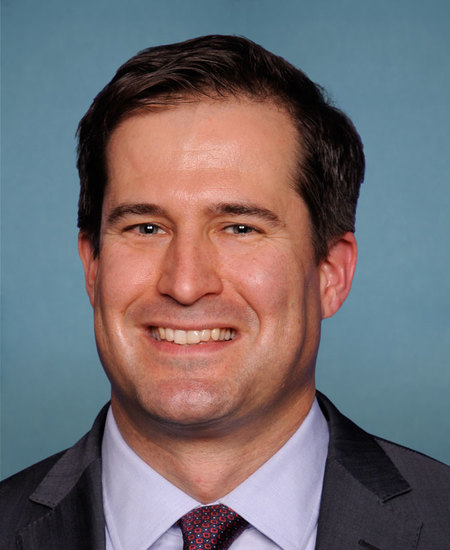
Rep. Seth Moulton
Sponsored bills
Home for the Brave Act of 2021 This bill excludes from income veterans' service-connected disability or death benefits for purposes of determinations made in connection with the Department of Housing and Urban Development's housing assistance programs.
Facilitating Innovative Nuclear Diagnostics Act of 2021 This bill establishes separate payment requirements for diagnostic radiopharmaceuticals under the Medicare prospective payment system for hospital outpatient department services. The bill's requirements apply to diagnostic radiopharmaceuticals that have an average daily cost of $500 or more in 2022 and as adjusted based on a specified fee schedule factor in each year thereafter.
Data to Save Moms Act This bill expands data collection and research on maternal morbidity and mortality among minority populations. Specifically, the bill adds requirements to a program within the Centers for Disease Control and Prevention (CDC) that supports maternal mortality review committees. To the extent practicable, the committees must use the most up-to-date indicators of severe maternal morbidity; review deaths caused by suicide, overdose, or other behavioral health conditions attributed to or aggravated by pregnancy or childbirth; and consult with representatives of communities about nonclinical factors that may contribute to adverse maternal outcomes. The CDC may also award grants to committees to increase their engagement with local communities, such as by bringing on community representatives as committee members. Additionally, the Centers for Medicare & Medicaid Services and the Agency for Healthcare Research and Quality must consult with diverse stakeholders to review maternal health data collection processes and quality measures and make recommendations to improve them. The Indian Health Service and the Department of Health and Human Services must also arrange for studies on adverse maternal health outcomes among tribal and minority populations, respectively.
Veterans Preventive Health Coverage Fairness Act This bill eliminates veterans' copayments for medication, hospital care, and medical services related to preventive health services provided by the Department of Veterans Affairs. The bill expands the definition of preventive health services to include (1) evidence-based items or services that have an A or B rating in the recommendations of the United States Preventive Services Task Force; (2) immunizations that have a recommendation from the Advisory Committee on Immunization Practices of the Centers for Disease Control and Prevention with respect to the individual involved; and (3) with respect to women, the preventive care and screenings provided for in the Health Resources and Services Administration Preventive Services Guidelines in effect as of January 1, 2017.
SFC Heath Robinson Burn Pit Transparency Act This bill implements reporting requirements and policies related to the treatment and documentation of veterans who have been exposed to open burn pits. A burn pit is an area used for burning solid waste in open air without equipment. First, the bill requires the Department of Veterans Affairs (VA) to submit quarterly reports on veterans' burn pit exposure The bill also requires the VA to collaborate with the Department of Defense to submit an annual report detailing specified information about veterans who have been exposed to open burn pits, such as the number of claims for disability compensation approved and denied (including the rationale for denials). The bill authorizes the survivor of a deceased veteran to report a veteran's exposure to toxic substances from an open burn pit in the Airborne Hazards and Open Burn Pit Registry, even if the veteran was not included prior to their death. VA medical professionals must inform veterans of the registry if they present at a medical facility for treatment related to exposure to toxic chemicals by open burn pits. Finally, the Government Accountability Office must report on the effectiveness of any memorandum of understanding entered into by the VA with respect to the processing of reported cases of burn pit exposure and the coordination of care and provision of health care related to such cases at VA and non-VA facilities.
Veterans Burn Pits Exposure Recognition Act of 2021 This bill requires the Department of Veterans Affairs (VA) to concede, for the purposes of health care benefits and wartime disability compensation, that a veteran was exposed to certain toxic substances, chemicals, and hazards from burn pits if such veteran served on active duty in a covered location during a specified time frame (unless there is affirmative evidence to establish that the veteran was not exposed during such service). A burn pit is an area used for burning solid waste in open air without equipment. Specifically, the bill covers the following locations and corresponding time periods: Iraq between August 2, 1990, and February 28, 1991, as well as from March 19, 2003, until burn pits are no longer used in this location; Somalia and Southwest Asia (including Kuwait, Saudi Arabia, Oman, and Qatar) from August 2, 1990, until burn pits are no longer used in these locations; and Afghanistan, Syria, Jordan, Egypt, Lebanon, Yemen, Uzbekistan, the Philippines, and Djibouti from September 11, 2001, until burn pits are no longer used in these locations. Under the bill, if an exposed veteran submits insufficient evidence to establish a service-connection for purposes of disability compensation, the VA shall provide a medical examination and request a medical opinion regarding a causal link between the disability and a toxin, chemical, or hazard.
Preserving Rules Ordered for The Entities Covered Through 340B Act of 2021 or the PROTECT 340B Act of 2021 This bill prohibits pharmacy benefit managers (PBMs) and health insurance plans from discriminating against health providers participating in the 340B drug pricing program, including pharmacies contracted with such providers to dispense 340B drugs. The 340B program allows certain providers to receive covered outpatient drugs at reduced prices from manufacturers. Specifically, PBMs and insurance plans may not reimburse 340B participants at a lower rate than other entities not participating in the program; impose differing terms (such as fees, charge-backs, or audits) on 340B participants; interfere with an individual's choice to receive drugs from a 340B participant; require 340B participants to identify which drugs fall within the program; or refuse to contract with a 340B participant on the basis that they utilize the program. Violations of this bill are subject to a civil penalty of not more than $5,000 per violation per day. These prohibitions also apply to prescription drug (Part D) sponsors under Medicare. The bill also provides for a process to prevent duplicate 340B drug discounts to states under Medicaid.
Safe Schools Improvement Act of 2021 This bill requires states to direct their local educational agencies (LEAs) to establish policies that prevent and prohibit bullying and harassment of elementary and secondary school students. In particular, these policies must prohibit bullying and harassment based on race, color, national origin, sex, sexual orientation, gender identity, disability, or religion. Further, LEAs must provide (1) students, parents, and educational professionals with annual notice of the conduct prohibited in their disciplinary policies; (2) students and parents with grievance procedures that target such conduct; and (3) the public with annual data on the incidence and frequency of that conduct at the school and LEA level. The Department of Education must conduct and report on an independent biennial evaluation of programs and policies to combat bullying and harassment in elementary and secondary schools. The National Center for Education Statistics must collect state data to determine the incidence and frequency of the conduct prohibited by LEA disciplinary policies.
America's Red Rock Wilderness Act This bill designates specified lands in the following areas of Utah as components of the National Wilderness Preservation System: (1) Great Basin, (2) Grand Staircase-Escalante, (3) Moab-La Sal Canyons, (4) Henry Mountains, (5) Glen Canyon, (6) San Juan-Anasazi, (7) Canyonlands Basin, (8) San Rafael Swell, and (9) Book Cliffs and Uinta Basin. The bill sets forth administrative requirements for (1) the exchange of state-owned lands within such areas, (2) federal reservation of water rights, (3) measurement of setbacks for roads with adjacent wilderness, (4) authorized livestock grazing, and (5) withdrawal of such lands from disposition under certain public land laws.