

Digital Services Oversight and Safety Act of 2022 This bill establishes the Bureau of Digital Services Oversight and Safety within the Federal Trade Commission to provide oversight for content moderation by online platforms (e.g., social media companies). Content moderation includes actions taken by a platform to detect and address user content that is illegal or incompatible with the platform's community standards. Specifically, the commission and the bureau may conduct investigative studies concerning the dissemination of illegal content or goods through the platforms, discrimination of individuals by the platforms, and the risk of harm caused by the malfunction or intentional manipulation of the platforms. The bill also provides whistleblower protections for individuals who assist with federal investigations related to such platforms. Further, platforms must include in their community standards the policies and procedures for content moderation, and they must publish transparency reports about the platform's content moderation. Additionally, platforms with at least 10 million average monthly users must provide a complaint-handling system that allows users to appeal content moderation actions by the platform. Platforms with at least 66 million average monthly users must conduct risk assessments and report on the measures taken to minimize the risk of the potential widespread dissemination of illegal content or content that violates the platform's community standards. The bill also provides for the regulation of automated content recommendations to users of these large platforms. The bill provides for enforcement by the commission. The bill also provides for various research activities related to online content moderation.
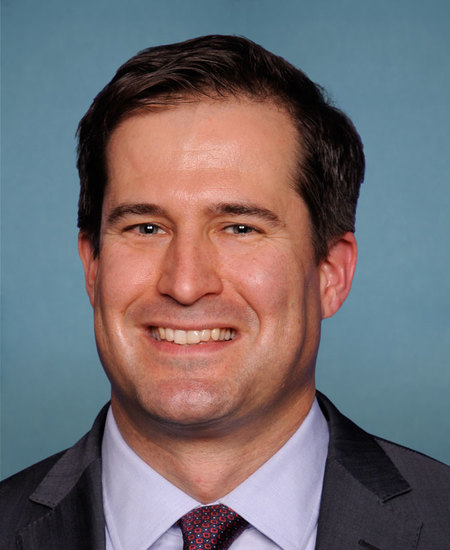
Rep. Seth Moulton
Sponsored bills
Portable Benefits for Independent Workers Pilot Program Act This bill requires the Department of Labor to award grants for FY2022, on a competitive basis, to states, local governments, or nonprofit organizations to support broad innovation and experimentation with respect to portable benefits. Portable benefits are work-related benefits that are provided to workers who are not traditional full-time employees in a manner that allows the worker to maintain the benefits upon changing jobs. The grants must be used for (1) the evaluation, or improvement to the design or implementation, of existing models or approaches for providing portable benefits; or (2) the design, implementation, and evaluation of new models or approaches for providing such benefits. The grants may not be used for a model or approach that provides only retirement-related benefits. The Government Accountability Office must evaluate and report to Congress on the outcome of the grants awarded pursuant to this bill.
National Institute of Standards and Technology for the Future Act of 2021 This bill reauthorizes the National Institute of Standards and Technology (NIST) through FY2026 and establishes programs and activities. The bill sets forth requirements for supporting basic measurement science, technology research for engineering biology, biomanufacturing, and biometrology; developing standards to measure greenhouse gas emissions; carrying out research on identity management, cybersecurity, biometric identification, and communications measurement; assessing identified vulnerabilities with open-source software; operating the National Advanced Spectrum and Communications Test Network; a strategic plan concerning the Center for Neutron Research; establishing in NIST an organization to facilitate the development of forensic science standards; activities in support of green and sustainable chemistry (i.e., clean, safe, and economic alternatives, technologies, and methodologies to traditional chemical products and processes); information exchange and coordination among federal agencies and with the private sector to ensure federal engagement in the development and use of international technical standards; and establishing a five-year pilot program to award grants to support increased participation by small business and academic interests in international standards organizations. The Government Accountability Office must conduct a study of NIST's policies and protocols to protect its research and combat undue foreign influence. NIST shall establish, as a part of the Hollings Manufacturing Extension Partnership, a pilot program of expansion awards among manufacturing extension centers or a consortium of centers to develop and support training and job placement services. NIST shall establish a National Supply Chain Database to assist the federal government and industry sectors in minimizing disruptions to the United States' supply chain.
This resolution expresses that the House of Representatives stands in solidarity with the people of Afghanistan and with vulnerable groups, including women and children; religious and ethnic minorities; lesbian, gay, bisexual, transgender, queer, and intersex (LGBTQI) persons; civil society actors; journalists; and other at-risk populations in Afghanistan; calls on the Taliban to uphold the protection of universal human rights, including the commitments set forth in the Universal Declaration of Human Rights and enshrined in the International Covenant on Civil and Political Rights, to which Afghanistan is a party; calls for the international community to condemn human rights violations committed by the Taliban; and calls on the U.S. government to work closely with the international community and nongovernmental organizations, particularly such organizations based in Afghanistan, to support at-risk Afghan minority populations and other vulnerable communities.
This resolution extends collective bargaining rights prescribed in the Congressional Accountability Act of 1995 to employees of the House of Representatives.
Due Process Continuity of Care Act This bill allows an otherwise eligible individual who is in custody pending disposition of charges (i.e., pretrial detainees) to receive Medicaid benefits at the option of the state. The bill also provides funds for state planning grants to support the provision of such benefits.
Saudi Arabia Legitimate Self Defense Act This bill imposes restrictions on exports of defense services for maintaining or servicing U.S.-provided aircraft belonging to Saudi Arabian military units conducting offensive airstrikes in Yemen. Specifically, the President may not authorize (and must suspend authorizations issued before this bill's enactment) exporting such defense services for aircraft that, in the preceding year, have undertaken offensive airstrikes in Yemen not directly related to preventing or degrading the ability of Houthi (Ansar Allah) to launch missile and unmanned aircraft strikes on the territory of Saudi Arabia or the United Arab Emirates. This restriction shall be in effect for two years starting from this bill's enactment. The Department of State must report quarterly to Congress on airstrikes by the Saudi Air Force in Yemen, including (1) information about strikes in the past three months that the U.S. government considers to be legitimate self-defense, internal security, or for preventing the proliferation of weapons of mass destruction; (2) information about strikes that do not meet such criteria; and (3) a certification that the State Department is investigating any indications that U.S.-sourced defense articles are not being used against anything other than legitimate military targets in Yemen.
Keeping School Meals Flexible Act This bill extends authority through June 30, 2023, for the Department of Agriculture (USDA) to waive certain requirements for the school meal programs to address COVID-19. The bill extends the authority for USDA to issue a single waiver of child nutrition program requirements to all states under the National School Lunch Program for purposes of providing meals and snacks with appropriate safety measures with respect to COVID-19; grant waivers of requirements to allow non-congregate feeding in the Child and Adult Care Food Program for purposes of providing meals and snacks with appropriate safety measures with respect to COVID-19; and grant waivers related to the nutritional content of meals served in child nutrition programs if it determines the waiver is necessary to provide meals and snacks, and there is a food supply chain disruption due to COVID-19.
Stop the Wait Act of 2022 This bill allows individuals with disabilities to begin receiving Social Security Disability Insurance (SSDI) benefits in the month they become eligible for the benefits. It also allows these individuals to immediately enroll in Medicare if they cannot afford minimum essential coverage. (Under current law, an individual must generally wait 5 months after the onset of disability to begin receiving SSDI benefits and an additional 24 months to become eligible for Medicare.)
Promoting Responsive Inclusion and Diverse Engagement Act of 2022 or the PRIDE Act of 2022 This bill requires federal banking and finance agencies to expand the efforts of their existing Offices of Minority and Women Inclusion to include individuals who are lesbian, gay, bisexual, transgender, queer, and other related identities. These offices are responsible for all matters related to such diversity in management, employment, and business activities.