

Maddy summaryThe American Electric Rail Mapping Act of 2026 directs the Federal Railroad Administration to conduct a study on the feasibility of electrifying passenger and freight rail lines across the United States. This study will identify existing and planned rail corridors, determine how current systems are powered, and assess which segments could adopt clean rail technologies. The Administrator must consult with railroad operators, state and local governments, and other relevant entities while using existing resources to minimize costs. The agency is required to submit an initial progress report to Congress within one year of enactment, followed by a final report on the study's results a year later.
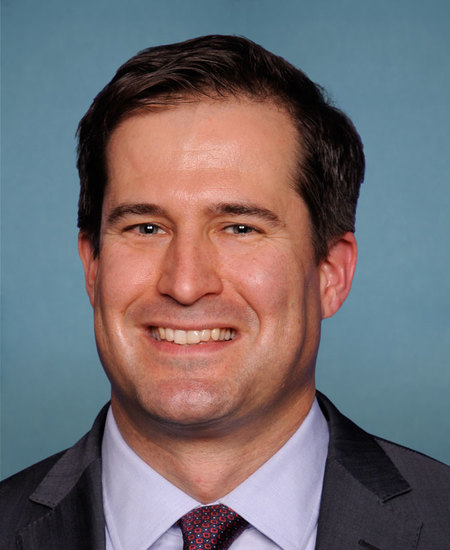
Rep. Seth Moulton
Sponsored bills
Maddy summaryThis bill, known as the Alice Cogswell and Anne Sullivan Macy Act, amends the Individuals with Disabilities Education Act to improve special education services for children who are deaf, hard of hearing, deafdisabled, blind, visually impaired, or deafblind. It requires states to identify these students regardless of how they are currently classified, ensuring they receive specialized instruction in their primary language and access to qualified professionals. Key provisions mandate that state plans include specific strategies for language development, Braille instruction, and the use of assistive technologies, while also establishing a new national center to support research and training for educators of students with visual disabilities. Additionally, the legislation clarifies definitions for deafblindness and interveners, updates data reporting requirements to track these populations more accurately, and ensures early intervention services are delivered in natural environments to support language and communication milestones.
Maddy summaryThis resolution expresses support for designating June 5, 2026, as National Gun Violence Awareness Day and June 2026 as National Gun Violence Awareness Month. The bill calls on the public to wear orange on the designated day to honor victims and promote awareness of gun safety. It highlights statistics on gun-related deaths and injuries to underscore the need for community discussions on making neighborhoods safer.
Maddy summaryThe American High-Speed Rail Act expands federal funding and streamlines regulations to support the development of high-speed and higher-speed rail projects across the United States. It authorizes billions of dollars in grants for corridor planning, technology improvements, and construction, while allowing the federal government to cover up to 100% of project costs under specific conditions. The bill also introduces new provisions to facilitate land acquisition, prioritize border projects, and extend labor protections to workers involved in federally funded rail infrastructure. Additionally, the legislation defines higher-speed rail as trains traveling between 110 and 186 miles per hour and includes tax incentives for rail carriers that sell or lease property to support these projects.
Maddy summaryThe RESTORE Third Spaces Act of 2026 establishes a three-year federal pilot program to provide grants for renovating and developing community gathering places known as "third spaces," which are public areas distinct from home and work. Administered by the Department of Commerce, the program offers up to $200 million to local governments, nonprofits, and other eligible entities to support projects that strengthen local economies and reduce social isolation. A key requirement of the bill is that at least 60% of the funding must go to low-income and underserved communities, and the resulting spaces must remain free or low-cost for the public. To ensure accountability, recipients must engage the community in the design process and report on attendance, economic impact, and social benefits, with a final report submitted to Congress after the pilot period concludes.
Maddy summaryThis joint resolution seeks to officially reject a final rule issued by the Department of Education regarding federal student loan programs. If passed, the measure would prevent the new regulations from taking effect, leaving the previous rules in place. The bill directly impacts borrowers, lenders, and the Department of Education by nullifying the specific changes outlined in the "Reimagining and Improving Student Education" proposal. It is a procedural action that uses the Congressional Review Act to disapprove the agency's policy without altering the underlying law.
Maddy summaryThis bill prevents the United States Postal Service from finalizing or enforcing a proposed rule that would allow the mailing of concealable firearms. Directly affecting the Postal Service, the legislation blocks the implementation of regulations scheduled for April 2, 2026, which would have changed how handguns are shipped through the mail. By prohibiting the enforcement of these specific rules, the bill ensures that the current mailing standards for firearms remain in place without the new restrictions or allowances proposed in the document.
Maddy summaryThis bill, titled the No Presidential Self-Serving Lawsuits Act of 2026, prevents the current or former President of the United States from filing civil lawsuits against the federal government. It specifically invalidates an existing settlement agreement between a former President and the Internal Revenue Service and bars the use of federal funds to create compensation for such lawsuits. Additionally, the legislation authorizes the Treasury Secretary to recover any money already spent in violation of these new restrictions. The primary goal is to stop a President from using taxpayer money to settle legal disputes with the government they lead.
Maddy summaryThis bill authorizes the U.S. Mint to produce commemorative $5 gold and $1 silver coins marking the 25th anniversary of the September 11, 2001, terrorist attacks. The coins must feature designs honoring victims and first responders (including the inscription "Never Forget") and will be sold only during 2027-2028. All surcharges ($35 per gold coin, $10 per silver coin) collected from sales will fund the National September 11 Memorial and Museum at the World Trade Center, with no net cost to the federal government. The coins are legal tender but primarily intended for collectors, not circulation.
Maddy summaryThis bill, known as the Department of Energy Drone Defense Act, expands the authority of the U.S. Secretary of Energy to manage certain drone systems. Specifically, it allows the Secretary to procure, operate, and use federal funds for drones that are classified as "covered" and originate from "covered foreign entities." These changes modify existing restrictions found in the National Defense Authorization Act for Fiscal Year 2024, which previously limited such activities primarily to the Secretary of State. By adding the Department of Energy to the list of authorized agencies, the legislation enables the department to participate in these drone-related activities without violating current prohibitions.