

Medicaid VBPs for Patients Act or the MVP Act This bill provides statutory authority for regulations that allow for the use of varying best price points under value-based purchasing arrangements for purposes of the Medicaid Drug Rebate Program. ( Value-based purchasing arrangements refer to arrangements in which the price of a drug is linked to clinical outcomes; such arrangements are particularly used for new high-cost treatments, such as gene therapies.) The Government Accountability Office must study the impact of value-based purchasing arrangements on federal health care programs, including with respect to the bill's changes.
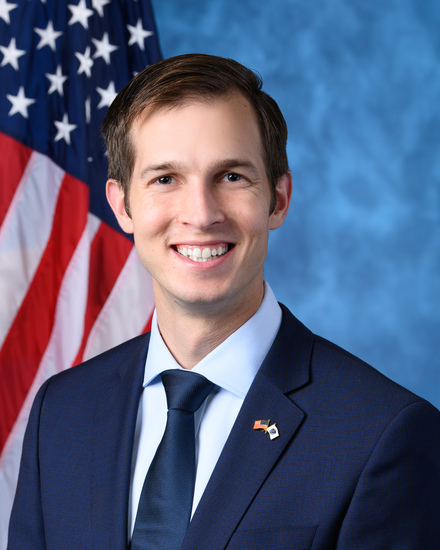
Rep. Jake Auchincloss
Sponsored bills
Ensuring Lasting Smiles Act This bill requires private health insurance plans to cover diagnosis and treatment of congenital anomalies and birth defects, such as reconstructive services and items. Coverage must include services and items that functionally improve, repair, or restore any body part that is medically necessary for normal bodily functions or appearance, as determined by the treating physician. Coverage limits and cost-sharing requirements for such services and items may not be more restrictive than those applicable to all medical and surgical benefits under the plan.
Strengthen Kids' Mental Health Now Act of 2022 This bill establishes several requirements to support the provision of behavioral health services under Medicaid and other programs, particularly for children. For example, the bill temporarily requires payment for pediatric mental, emotional, and behavioral health services under Medicaid to align with Medicare payments to providers. The bill provides for a 100% Federal Medical Assistance Percentage (i.e., federal matching rate) for any associated additional expenditures. The Centers for Medicare & Medicaid Services must issue guidance on how state Medicaid programs may expand the availability of telehealth services and mental, emotional, and behavioral health services. In addition, the Health Resources and Services Administration must award grants to support (1) pediatric behavioral health care integration in communities, (2) pediatric mental health and substance use disorder workforce training, and (3) the infrastructure of pediatric hospitals and rural health clinics with respect to behavioral health services.
Anna Westin Legacy Act of 2022 This bill requires the Substance Abuse and Mental Health Services Administration to maintain the National Center of Excellence for Eating Disorders (NCEED). The bill specifies required activities for NCEED, including providing training for frontline health care providers and other professionals.
Emmett Till Antilynching Act This bill makes lynching a federal hate crime offense. Specifically, the bill imposes criminal penalties—a fine, a prison term of up to 30 years, or both—on an individual who conspires to commit a hate crime offense that results in death or serious bodily injury or that includes kidnapping or an attempt to kidnap, aggravated sexual abuse or an attempt to commit aggravated sexual abuse, or an attempt to kill.
9-8-8 Implementation Act of 2022 This bill modifies provisions to increase access to behavioral health services, with a focus on crisis services and the 9-8-8 telecommunication system. (The 9-8-8 system provides callers with mental health or suicide crisis support and resources through the existing National Suicide Prevention Lifeline and is scheduled to take effect by July 16, 2022.) The bill reauthorizes through FY2027 and revises the National Suicide Prevention Lifeline program and requires a national suicide prevention media campaign. In addition, the Substance Abuse and Mental Health Services Administration (SAMHSA) must establish standards for a behavioral health crisis continuum of care that health care providers and communities may use in responding to individuals experiencing a behavioral health crisis. The continuum must include emergency treatment, stabilization, and related services. The bill expands Medicaid and other insurance coverage for such services. The bill further expands Medicaid coverage for behavioral health services. This includes permanently allowing coverage of certain community-based mobile crisis services and exempting some short-term stabilization services from coverage restrictions that apply to institutions for mental diseases. Additionally, the bill establishes (1) an office within SAMHSA to coordinate behavioral health activities; and (2) various grants, including a pilot program for mobile crisis care teams that respond to behavioral health crises rather than law enforcement and a capital improvement program for certain behavioral health facilities. The bill also reauthorizes through FY2027 and expands certain workforce programs for behavioral health providers. It also addresses training for emergency services dispatchers and coordination of the 9-1-1 system with the 9-8-8 system.
Yachts for Ukraine Act This bill authorizes the President to provide humanitarian assistance to Ukraine by using the assets seized from sanctions on individuals who are oligarchs of Russia or senior foreign political figures of Russia.
Forced Arbitration Injustice Repeal Act of 2022 or the FAIR Act of 2022 This bill prohibits a predispute arbitration agreement from being valid or enforceable if it requires arbitration of an employment, consumer, antitrust, or civil rights dispute.
Dr. Lorna Breen Health Care Provider Protection Act This bill establishes grants and requires other activities to improve mental and behavioral health among health care providers. Specifically, the Department of Health and Human Services (HHS) must award grants to hospitals, medical professional associations, and other health care entities for programs to promote mental health and resiliency among health care providers. In addition, HHS may award grants for relevant mental and behavioral health training for health care students, residents, or professionals. Additionally, HHS must conduct a campaign to (1) encourage health care providers to seek support and treatment for mental and behavioral health concerns, and (2) disseminate best practices to prevent suicide and improve mental health and resiliency among health care providers. HHS must also study and develop policy recommendations on improving mental and behavioral health among health care providers, removing barriers to accessing care and treatment, and identifying strategies to promote resiliency. Furthermore, the Government Accountability Office must report on the extent to which relevant federal grant programs address the prevalence and severity of mental health conditions and substance use disorders among health care providers.
This resolution urges the government of Argentina to bring the perpetrators of the March 17, 1992, terrorist attack on the Embassy of Israel in Buenos Aires to justice (in 1999 the Supreme Court of Argentina found that the transnational terrorist organization Hezbollah was responsible for the attack). The resolution commends the Argentinian government for designating Hezbollah as a terrorist organization and urges other U.S. allies and partners in Latin America and the Caribbean to do the same. The resolution urges these allies and partners to condemn and counter regional governments in the hemisphere that aid and abet Iran and Hezbollah. The resolution also commends the Argentinian government for adopting the International Holocaust Remembrance Alliance working definition of antisemitism and encourages other partners and allies to do the same. Finally, the resolution commends the Secretary General of the Organization of American States for appointing a Commissioner to Monitor and Combat Anti-Semitism in the Western Hemisphere.