

Maddy summaryThe Dignity for Detained Immigrants Act establishes new standards for Department of Homeland Security detention facilities, requiring them to meet or exceed the American Bar Association's Civil Immigration Detention Standards. The bill mandates annual, unannounced inspections by the DHS Inspector General, public reporting on facility compliance, and a phased-out timeline for private detention facilities (phasing out by 3 years after enactment). It prohibits solitary confinement for all detainees, requires community-based alternatives to detention for vulnerable individuals, and mandates detailed public reporting on facility conditions, staffing, and detainee demographics. The legislation directly affects all immigrants held in DHS custody, including children, vulnerable persons, and primary caregivers, with specific protections for these groups in detention procedures.
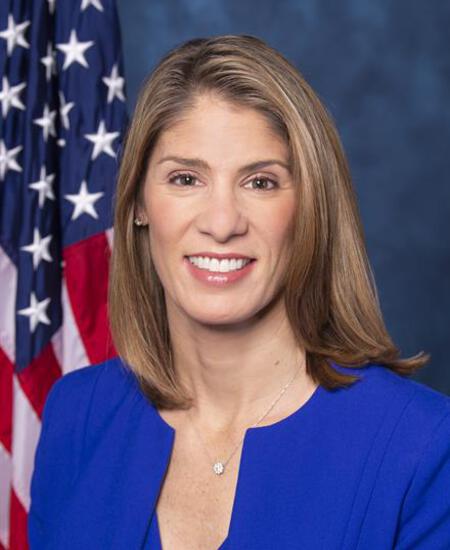
Rep. Lori Trahan
Sponsored bills
Maddy summaryThe SAD Act prohibits crisis pregnancy centers (CPCs) from making deceptive claims about offering abortion services, contraception, or employing licensed medical personnel. It directly affects CPCs nationwide - over 2,500 of which operate under false pretenses, often outnumbering abortion clinics by 3:1 in many states. The Federal Trade Commission (FTC) would enforce this by imposing civil penalties up to $100,000 or 50% of a CPC’s annual revenue for violations. The law requires CPCs to provide accurate information about reproductive health services, aiming to prevent misleading patients from accessing abortion care.
American Innovation and R&D Competitiveness Act of 2023 This bill eliminates the five-year amortization requirement for research and experimental expenditures, thus allowing continued expensing of such expenditures in the taxable years in which they are incurred.
Maddy summaryHRES 269 is a non-binding resolution passed by the U.S. House of Representatives on March 30, 2023. It recognizes the federal government's duty to develop and implement a Transgender Bill of Rights to protect transgender and nonbinary people. The resolution outlines key provisions, including ensuring access to gender-affirming medical care, ending discrimination in employment and housing, and improving legal recognition of gender identity on government documents. It also calls for addressing systemic barriers in education, safety, and economic security faced by transgender and nonbinary individuals.
Maddy summaryHR 2725, the "Do No Harm Act," amends the Religious Freedom Restoration Act (RFRA) to clarify that RFRA does not apply when federal laws protect against discrimination or promote equal opportunity. It specifically exempts protections under the Civil Rights Act, Americans with Disabilities Act, workplace benefits like leave, child labor safeguards, and healthcare access from RFRA challenges. The bill also clarifies that RFRA does not block private lawsuits between individuals, applying only to cases involving government entities. This amendment ensures that existing federal civil rights and workplace protections remain enforceable under RFRA.
Maddy summaryThe Latonya Reeves Freedom Act of 2023 strengthens the Americans with Disabilities Act's requirement that individuals with disabilities receive long-term services and supports in community settings rather than institutions. It defines "community-based" services to include specific housing options where individuals with disabilities can live independently with maximum control over their lives, including access to integrated housing, employment, and community participation. The bill requires states to develop transition plans to move people from institutional settings to community-based services within 12 years, with measurable annual targets for reducing institutionalization. It establishes enforcement mechanisms through the Department of Justice and Department of Health and Human Services to ensure compliance with these requirements.
Maddy summaryThis bill amends federal health law to include Middle Eastern and North African (MENA) populations - such as Lebanese, Iranian, Egyptian, and Palestinian communities - as a recognized racial and ethnic minority group for the first time. It updates definitions in the Public Health Service Act to ensure MENA individuals can access health programs designed for marginalized communities, which they were previously excluded from due to being grouped with non-Hispanic White populations in federal data. The bill also requires the Department of Health and Human Services to conduct a comprehensive health study of MENA communities, disaggregating data by subgroups to analyze specific health conditions, access barriers, and outcomes. Results will be published in a public online portal and reported to Congress within two years. This change directly affects MENA individuals by enabling targeted health initiatives and data collection previously unavailable to them.
Maddy summaryThe Puppy Protection Act of 2023 sets new standards for businesses that sell dogs (dealers), directly affecting pet stores and breeders operating under the Animal Welfare Act. It requires specific housing with space allowances based on dog size (e.g., 12-30 square feet per dog), temperature control (45-85°F), clean food twice daily, and daily exercise or socialization with humans/dogs for at least 30 minutes. The bill also mandates annual veterinary exams including dental care, strict breeding limits (e.g., age restrictions, maximum 2 litters in 18 months), and efforts to place retired breeding dogs in homes instead of selling them to other breeders. Regulations must be finalized within 18 months of enactment.
Maddy summaryHR 2665 delays Medicaid payment reductions for safety net hospitals by two years, changing the effective date from 2024 to 2026 under Section 1923(f)(7)(A) of the Social Security Act. This bill directly affects hospitals that serve high numbers of low-income and uninsured patients, providing them with additional time before facing reduced federal Medicaid payments. The key mechanism is a technical amendment to existing law, postponing an already scheduled payment adjustment without altering funding levels or eligibility. As a procedural bill, it does not create new programs or change hospital requirements.
Maddy summaryHR 2584, the SAVE Act, creates a new federal criminal offense for assaulting or intimidating hospital employees while they're performing their duties, punishable by up to 10 years in prison, with enhanced penalties for using weapons, causing injury, or during public emergencies. The bill authorizes $25 million annually in federal grants to hospitals for violence prevention programs, including staff training, security technologies like panic buttons and video surveillance, and coordination with law enforcement. It defines "hospital" broadly to include various medical facilities such as long-term care hospitals, rehabilitation facilities, and critical access hospitals. The legislation directly affects hospital workers and medical facilities by establishing federal criminal penalties for violence against employees and providing funding to improve workplace safety. The law aims to address the rising problem of workplace violence against healthcare workers, which the bill states has increased since 2011.