

Relief for Restaurants and other Hard Hit Small Businesses Act of 2022 This bill addresses support for restaurants, arts and entertainment venues, and small businesses impacted by the COVID-19 pandemic. The bill provides an additional $42 billion in FY2021 for the Restaurant Revitalization Fund and gives priority to previous applicants who have not received a grant. The Small Business Administration (SBA) must provide to applicants an explanation for denied applications, establish a reconsideration process for denied applications, and institute an audit and oversight plan with respect to grant recipients. Additionally, the bill establishes the Hard Hit Industries Award Program for small businesses that suffered a pandemic-related revenue loss of 40% or more. Aggregate grant amounts are capped at $1 million. Funds may be used for expenses including mortgage, rent, and utility payments and payroll. SBA must prioritize entities that have experienced significant pandemic-related revenue loss, with first priority going to those that experienced a loss of at least 80%, and second priority going to those that experienced a loss of at least 60%. Finally, the bill extends to March 11, 2023 (or a later date as determined by the SBA), the time frame during which Shuttered Venue Operators Grant recipients may use grant funds to cover their expenses.
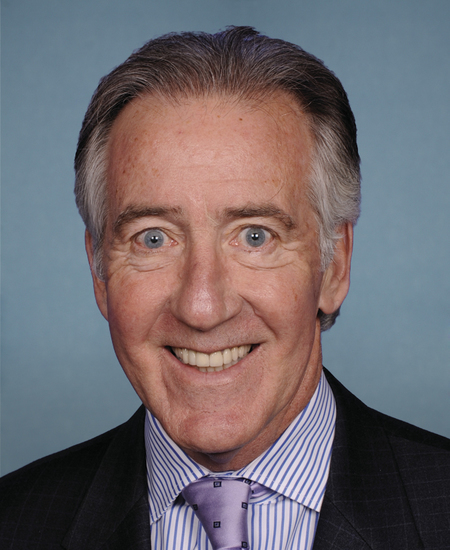
Rep. Richard E. Neal
Sponsored bills
Access to Baby Formula Act of 2022 This bill authorizes the Department of Agriculture (USDA) to take certain actions to address emergencies, disasters, and supply chain disruptions (particularly the shortage of infant formula in the United States) affecting participants of the Special Supplemental Nutrition Program for Women, Infants, and Children (WIC). The bill directs USDA to require each infant formula cost containment contract to include remedies in the event of an infant formula recall, including how an infant formula manufacturer would protect against disruption to WIC participants in the state. USDA must, within 30 days, ensure there is a memorandum of understanding with the Department of Health and Human Services that includes procedures for coordination and information sharing regarding any supply chain disruption, including a supplemental food recall. The bill also authorizes USDA to waive or modify any WIC qualified administrative requirement during emergencies, disasters, and supply chain disruptions. Specifically, USDA may waive or modify such a requirement for one or more state agencies if (1) the requirement cannot be met by state agencies during the emergency, disaster, or disruption; and (2) the modification or waiver is necessary to provide assistance to WIC participants and does not substantially weaken the nutritional quality of supplemental foods. For example, USDA may waive the maximum monthly allowance for infant formula. The bill establishes notification requirements for USDA and state agencies related to supply chain disruptions.
Rights for the Transportation Security Administration Workforce Act of 2022 or the Rights for the TSA Workforce Act of 2022 This bill modifies the workplace rights, protections, and benefits applicable to Transportation Security Administration (TSA) personnel. Specifically, the bill by December 31, 2022, eliminates personnel authorities of the Department of Homeland Security (DHS) and the Department of Transportation governing the conditions of employment for TSA employees, thus making TSA employees subject to the personnel management system applicable to other federal employees; sets forth transition rules that protect the pay rates, leave rights, and other rights of TSA employees; and requires DHS to consult with the exclusive representative of TSA screening employees to carry out the conversion of those positions. The bill also permits the TSA to consult with organizations representing federal air marshals to address concerns, including mental health and suicide rates; directs the TSA to ensure its employees are provided proper guidance regarding prevention and protections against COVID-19; requires the TSA to provide a one-time bonus payment of $3,000 to each TSA employee carrying out duties that require substantial contact with the public during the COVID-19 national emergency; and requires the Government Accountability Office to report on implementation of the bill, TSA recruitment efforts, and specified TSA personnel policies.
Clean Water Standards for PFAS 2.0 Act of 2022 This bill directs the Environmental Protection Agency to develop requirements to (1) limit the discharge of perfluoroalkyl and polyfluoroalkyl substances (PFAS) into certain waters of the United States, and (2) publish human health water quality criteria for PFAS. PFAS are man-made and may have adverse human health effects. A variety of products contain the compounds, such as nonstick cookware or weatherproof clothing.
Benjamin Berell Ferencz Congressional Gold Medal Act This bill provides for the award of a Congressional Gold Medal to Benjamin Berell Ferencz in recognition of his service to the United States and the international community during the post-World War II Nuremberg trials and his lifelong advocacy for international criminal justice and the rule of law.
United States Innovation and Competition Act of 2021 This bill addresses U.S. technology and communications, foreign relations and national security, domestic manufacturing, education, trade, and other matters. Among other provisions, the bill provides funding for FY2022-FY2026 to support U.S. semiconductor manufacturing, research and development, and supply chain security; provides funding for wireless supply chain innovation; establishes a Directorate for Technology and Innovation in the National Science Foundation; extends through 2025 the authority of the National Aeronautics and Space Administration (NASA) to lease its non-excess real property and related personal property; authorizes various programs and policies related to space exploration; authorizes various international affairs programs and activities, including foreign assistance for the Indo-Pacific region; requires federal infrastructure programs to provide for the use of materials produced in the United States; imposes sanctions on China for cybersecurity and human rights abuses; requires the Department of Health and Human Services to consider national security risks associated with sensitive genetic information; includes initiatives related to elementary and secondary education, including those to increase computer science education; contains provisions related to higher education, including those reauthorizing through FY2027 international education programs and addressing China's influence on institutions of higher education; modifies and expands the schedule for graduated merger filing fees; prohibits federal funding for the Wuhan Institute of Virology; requires the U.S. Trade Representative to take certain actions related to digital trade and censorship practices; and extends through 2027 the Generalized System of Preferences.
Suspending Normal Trade Relations with Russia and Belarus Act This bill suspends normal trade relations with Russia and Belarus. It also permanently authorizes the President to impose visa- and property-blocking sanctions based on violations of human rights. Specifically, the bill authorizes the President to proclaim increases in the rates of duty applicable to products of Russia or Belarus. This authority terminates on January 1, 2024. The President may restore normal trade relations with Russia and Belarus, subject to congressional disapproval. The bill directs the U.S. Trade Representative to (1) condemn the recent aggression in Ukraine, (2) encourage other World Trade Organization (WTO) members to suspend trade concessions to Russia and Belarus, (3) consider steps to suspend Russia's participation in the WTO, and (4) seek to halt the accession process of Belarus.
Energy Conservation Opportunities on Campus Act or the ECO Campus Act This bill directs the Department of Energy to establish a grant program to support energy efficiency, renewable energy, and climate resilience improvements at certain public institutions of higher education.
Securing a Strong Retirement Act of 2022 This bill makes various changes with respect to employer-sponsored retirement plans, including providing for the automatic enrollment of employees in certain plans and increasing the age at which participants are required to begin receiving mandatory distributions.
This resolution supports the designation of National Sikh Day to honor and celebrate the important role played by the Sikh community in strengthening and inspiring the people of the United States.