

Maddy summaryThe Automatic IRA Act of 2024 would require most employers (with more than 10 employees) to automatically enroll workers in retirement savings plans with default contribution rates starting at 6% and increasing to 10% over time. The bill establishes default investment options that protect principal and requires employers to provide clear notice about the retirement plan options to employees. Employers who fail to implement these automatic retirement plans would face a $10 daily penalty, while small employers would receive a $500 annual tax credit for the first three years of offering these plans. The law would apply to plan years beginning after December 31, 2026, with the tax credit effective for taxable years beginning after December 31, 2024.
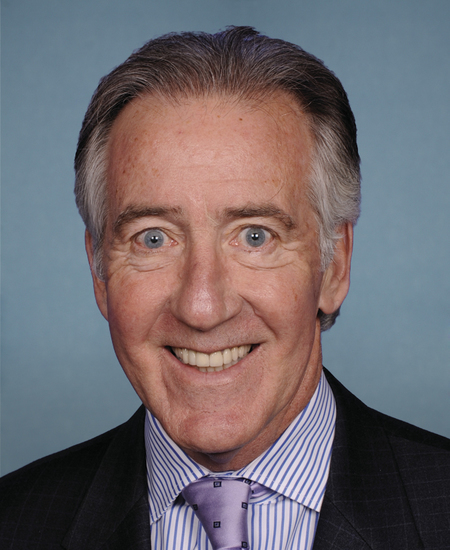
Rep. Richard E. Neal
Sponsored bills
Maddy summaryThis ceremonial resolution (HRES 985) expresses the U.S. House of Representatives' support for Catholic schools during the 50th anniversary of National Catholic Schools Week. It acknowledges Catholic schools' contributions to education, diversity, and community values - highlighting their 1.7 million students, 98.9% high school graduation rate, and role in serving diverse communities - while applauding the National Catholic Educational Association and the United States Conference of Catholic Bishops for organizing the event. The resolution has no binding effect or policy changes; it solely serves as a symbolic gesture of recognition.
Maddy summaryThe Stronger Communities through Better Transit Act establishes a new federal grant program to improve public transportation service. It provides funding to urban areas, states, and Indian tribes to cover up to 50% of public transit operating costs (up to 80% in persistent poverty areas and 100% for Indian tribes), with requirements to report on service frequency, access to jobs, and conduct community surveys. The program mandates that a majority of funds must benefit underserved communities and areas of persistent poverty, defined as census tracts with high poverty rates or minority populations. Recipients must maintain their transit funding levels and report on improvements in access to essential services. The bill authorizes $20 billion annually for fiscal years 2024-2027.
Maddy summaryHRES 932 is a ceremonial resolution recognizing the 120th anniversary of diplomatic relations between the United States and Bulgaria, established on September 19, 1903. It contains no new policies, funding, or obligations - it simply affirms the historical partnership through symbolic language and acknowledges shared values like democracy and NATO cooperation. The resolution has no direct effect on citizens, legislation, or government operations. As a procedural resolution, it serves only to commemorate a milestone in U.S.-Bulgaria relations.
Maddy summaryThis bill establishes tax relief for qualified residents of Taiwan earning income in the United States by reducing tax rates on interest, dividends, and royalties to 10% or 15% (instead of the standard 30%). It also exempts certain wages and income from entertainment activities under $30,000 from U.S. taxation. To qualify, individuals must meet specific residency requirements, and entities must demonstrate substantial business activity in Taiwan. The bill modifies withholding tax procedures to implement these new rates and requires reciprocal tax benefits from Taiwan to be in place.
Maddy summaryThe SHIP Act imposes sanctions on foreign entities that knowingly handle Iranian petroleum, targeting those involved in port operations, transportation, refining, or ship-to-ship transfers of Iranian oil. Starting 90 days after enactment, the President must block assets, deny visas, and impose penalties on individuals or companies engaging in these activities, including family members or owners of sanctioned entities. It requires annual reports tracking Iran's oil exports, revenues, and key players like shipping companies and ports. The sanctions terminate if the President certifies Iran has stopped supporting terrorism and dismantled weapons programs.
Maddy summaryHRES 771 is a non-binding resolution expressing the U.S. House of Representatives' support for Israel following Hamas' October 7, 2023, attack. It condemns Hamas' actions, affirms Israel's right to self-defense, and calls for the immediate release of hostages. The resolution also urges enforcement of existing laws restricting aid to terrorists and sanctions against Iran for supporting Hamas. It does not create new policies or allocate funds, as it is a symbolic statement of congressional support.
Maddy summaryThis bill authorizes a one-time $40,000 payment to former Air America employees who served at least five years during 1950-1976, or to their survivors (widows/widowers, dependents, or children). Additional $8,000 payments are provided for each full year of service beyond five years. The total funding is capped at $60 million, with claims due within two years of regulations being finalized. It does not create ongoing benefits or change Air America’s legal status, and payments are issued as a single lump sum.
Maddy summaryThis bill removes a previous exclusion that prevented temporary federal employees (including U.S. Postal Service staff and Members of Congress) from counting service after January 1, 1988, toward their retirement benefits. It allows these workers to have their post-1988 temporary service counted toward retirement eligibility if they pay a deposit to the retirement system. The change applies to anyone employed by the federal government on or after the bill's enactment date. The Office of Personnel Management must notify affected employees and create rules to implement this change.
Maddy summaryThe Better CARE for Animals Act of 2023 amends the Animal Welfare Act to strengthen enforcement of animal welfare standards. It gives the Attorney General authority to bring civil cases for violations, including seeking penalties up to $10,000 per day per violation and injunctions to remove or relocate animals. The bill also requires the Secretary of Agriculture and Attorney General to coordinate through a new Memorandum of Understanding, focusing on repeat violators. These changes directly affect dealers, exhibitors, and enforcement agencies by expanding civil enforcement tools and clarifying jurisdiction over rule violations.