

Port Cranes for America Act This bill requires the U.S. Maritime Administration to provide grants to eligible applicants for the procurement of container cranes with a lifting capacity in excess of 50 tons for use at ports located in the United States. The funds may be used to procure such a crane, including to pay for any manufacturing costs associated with the procurement, provided that the entity manufacturing the crane is not associated with a country that is a nonmarket economy, fails to protect intellectual property rights, and violates foreign trade agreements. For cranes in use before this bill's enactment, funds may also be used to replace any software from such a country.
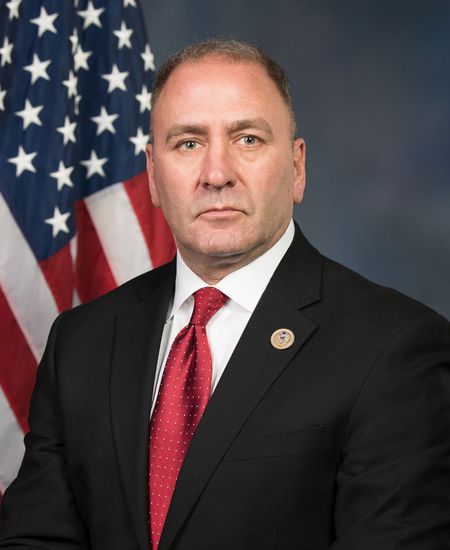
Rep. Clay Higgins
Sponsored bills
Port Crane Security and Inspection Act of 2022 This bill limits the operation at U.S. ports of foreign cranes. Foreign cranes are those (1) manufactured by companies that are subject to the control or influence of a country designated as a foreign adversary, and (2) using software or other technology that connects to ports' cyber infrastructure. Foreign cranes that are contracted for on or after the date of the bill's enactment may not operate at a U.S. port. The bill also prohibits, effective five years after the date of the bill's enactment, foreign cranes at U.S. ports if the cranes use software or other technology manufactured by a company affiliated with a foreign adversary and connect to a port's cyber infrastructure. Additionally, the Cybersecurity and Infrastructure Security Agency (CISA) must (1) inspect foreign cranes before they are placed into operation for potential security vulnerabilities, and (2) assess the threat posed by security vulnerabilities on existing or newly constructed foreign cranes. CISA must also report to Congress about critical and high-risk security vulnerabilities posed by foreign cranes at U.S. ports.
This bill directs the Department of Homeland Security to publish, by the 15th day of each month, the number of known or suspected terrorists, and individuals whose identities are included in the Terrorist Screening Database, encountered attempting to enter the United States during the immediately preceding month.
Accelerating Access to Critical Therapies for ALS Act This bill establishes grant programs to address neurodegenerative diseases, such as amyotrophic lateral sclerosis (also known as ALS or Lou Gehrig's disease), and contains other related provisions. The Department of Health and Human Services (HHS) shall award grants to eligible entities for scientific research utilizing data from expanded access to investigational ALS treatments for individuals who are not otherwise eligible for clinical trials. The Food and Drug Administration (FDA) shall award grants to public and private entities to cover the costs of research and development of drugs that diagnose or treat ALS and other rare neurodegenerative diseases. HHS shall also establish the Public-Private Partnership for Neurodegenerative Diseases between the National Institutes of Health, the FDA, and at least one eligible entity (generally, an institution of higher education or a nonprofit organization). The partnership shall support the development and regulatory review of drugs that address ALS and other rare neurodegenerative diseases. The FDA shall publish on its website a five-year action plan for fostering the development of drugs that improve or extend the lives of people living with rare neurodegenerative diseases. The Government Accountability Office must report to Congress about the grants provided under this bill, including an analysis of the impact of such grants on research and development of treatments for ALS.
This bill posthumously provides for the award of a Congressional Gold Medal in commemoration of the 13 service members who died on August 26, 2021, while stationed at Hamid Karzai International Airport in Afghanistan.
Border Agents Stay Employed Act or the BASE Act This bill prohibits using federal funds to require any U.S. Customs and Border Protection officer or employee to receive a COVID-19 vaccine.
9/11 Memorial and Museum Act This bill directs the Department of Homeland Security (DHS) to award to the official organization that operates the National September 11 Memorial & Museum a one-time grant to be used solely for the purposes of the operation, security, and maintenance of the memorial and museum. As a condition on receipt of the grant, the organization must provide for free admission to all facilities and museums associated with the memorial and museum for active and retired members of the Armed Forces, individuals who were registered first responders to the terrorist attacks of September 11, 2001, and family members of victims of such attacks; provide for dedicated free admission hours for the general public at least once a week; and allow for annual federal audits of its financial statements.
Employee Privacy Act This bill prohibits employers from inquiring about the vaccination status of employees or prospective employees. Violations of this prohibition are subject to civil penalties, special damages, and injunctive relief as appropriate.
Parents Bill of Rights Act This bill outlines various rights of parents and guardians regarding the elementary or secondary school education of their children. Among other requirements, the bill (1) directs local educational agencies to publicly post the curriculum for each elementary and secondary school grade level; and (2) requires schools to notify parents and guardians of their rights, including the right to review the school's curriculum and budget.
Fairness for Federal Contractors Act of 2021 This bill prohibits executive agencies from requiring contractors to receive a COVID-19 vaccination. The bill also requires the Government Accountability Office to study the degree to which Executive Order 14042 (Ensuring Adequate COVID Safety Protocols for Federal Contractors) caused disruptions to federal contracts, supply chains, and transportation systems.