

Maddy summaryThe ACES Act of 2023 requires ByteDance (TikTok's Chinese parent company) to divest all U.S. assets related to TikTok - including user data collected in the United States - within 90 days of enactment, with possible 30-day extensions. It mandates weekly compliance reports to CFIUS, a final data destruction certification, and prohibits U.S. app stores or internet services from supporting TikTok operations after a 45-day grace period. The bill directly affects ByteDance and TikTok, forcing separation of U.S. operations from Chinese ownership to address national security concerns. CFIUS oversees verification, including facility inspections and audits, to ensure full compliance with the divestment requirements.
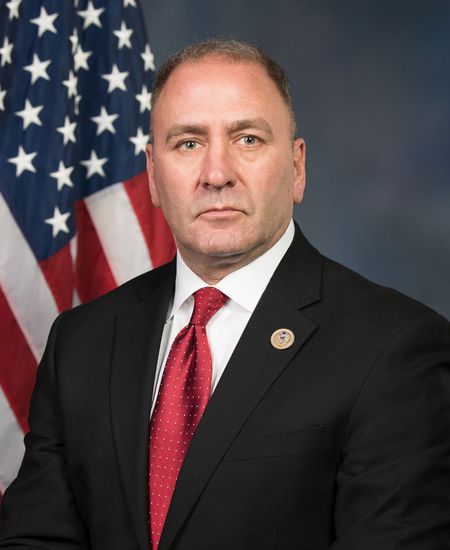
Rep. Clay Higgins
Sponsored bills
Maddy summaryThis bill requires stricter background checks and monitoring for sponsors caring for unaccompanied migrant children. It mandates fingerprint checks, sex offender registry reviews, criminal history checks, and child abuse screenings for all adult household members before a child can be placed with them. The bill also prohibits placing children with undocumented sponsors (except biological parents or legal guardians), requires pre-release home visits, and mandates multiple unannounced post-release visits over two years. Additionally, it requires monthly reports to Congress tracking child placements, vetting status, and missing children cases since January 2021. These changes directly affect unaccompanied migrant children and their sponsors, aiming to prevent trafficking through enhanced safety protocols.
Maddy summaryHR 4942 extends and modifies the Conrad State 30 program, which allows states to sponsor foreign medical graduates to work in medically underserved areas in exchange for a commitment to practice for three years. The bill directly affects foreign medical graduates seeking to work in the U.S., states that sponsor them, and health facilities in underserved communities. Key provisions include creating mechanisms for physicians to change employers or states if they face issues with their current employment, adding requirements for employment agreements (including prohibitions on non-compete clauses), and establishing exceptions to the three-year work requirement under certain circumstances. The bill also creates a process for states to recapture waiver slots when physicians leave their employment and requires annual reporting on the program's usage. These changes aim to improve physician retention in underserved areas by providing more flexibility and protections for foreign medical graduates.
Maddy summaryThis bill directs the U.S. Treasury to mint commemorative coins marking the Marine Corps' 250th anniversary in 2025. It authorizes three coin types: $5 gold coins (max 50,000), $1 silver coins (max 400,000), and half-dollar coins (max 750,000), with surcharges of $35, $10, and $5 respectively. The surcharge proceeds will fund the Marine Corps Heritage Center's educational programs, with no net cost to taxpayers as the Treasury must recover all minting costs through the surcharges. The coins can only be issued during 2025, and the Treasury must ensure all costs are covered before distributing funds to the Heritage Foundation.
Maddy summaryHR 4776, the Protecting Free Speech Act, ends a specific Department of Homeland Security (DHS) program called the Disinformation Governance Board and prevents federal funding for any similar entity. The bill directly affects DHS by terminating the board's operations and prohibiting the use of federal funds to create or support any replacement program with comparable functions. It does not create new free speech protections but formally removes this particular DHS initiative and blocks future funding for equivalent efforts. The bill focuses on eliminating an existing program rather than changing broader speech policies.
Maddy summaryHR 4721, the Main Street Tax Certainty Act, makes a permanent the 20% tax deduction for eligible small business owners under Section 199A of the tax code. This provision directly affects pass-through business owners (like S-corps, partnerships, and sole proprietorships) who qualify for the deduction. The bill achieves this by removing the temporary expiration language (subsection (i)) from the existing tax code provision. The key change is ending the need for annual congressional extensions of this deduction, providing long-term tax certainty for small businesses.
Maddy summaryThis bill, HR 1282 (Major Richard Star Act), expands benefits for certain military retirees by allowing them to receive both veterans' disability compensation and military retirement pay simultaneously. It specifically affects combat-related disabled retirees under Chapter 61 of the military retirement system who have fewer than 20 years of service. The key change removes the automatic reduction of military retirement pay when these retirees also receive disability compensation, as amended in Section 1413a(b)(3) of Title 10. Technical updates to the law’s structure and effective date (starting after enactment) complete the provisions.
Maddy summaryThis bill prohibits entities controlled by Iran, North Korea, China, or Russia from purchasing or leasing agricultural land in the United States, including both public land managed by federal agencies and private land. It also bars such entities from participating in most U.S. Department of Agriculture programs (with exceptions for food safety, health, and labor safety initiatives). The bill expands reporting requirements to include leases and security interests in foreign land ownership, mandates public online disclosure of foreign ownership data with specific details, and imposes penalties like liens on land for violations. Additionally, it requires annual reports to Congress on risks of foreign ownership, enforcement effectiveness, and foreign investment motives.
Maddy summaryHR 4615, the National Emergency Expenditure Reporting Transparency Act, requires federal agencies to provide detailed public reports on spending during national emergencies declared by the President. It mandates disclosure of specific data - including budget authority, obligations, unobligated balances, and spending by program activity and funding source - beginning six months after the bill's enactment. This applies to all national emergencies under the National Emergencies Act (50 U.S.C. 1621), directly affecting federal agencies managing emergency funds and increasing transparency for the public. The bill updates existing federal spending data standards to include unique identifiers for emergency-related funds, requiring agencies to report this information through the government’s public spending database.
Maddy summaryThis bill prohibits the IRS from using federal funds to purchase, receive, or store firearms or ammunition. Within 120 days of enactment, the IRS must transfer all existing firearms and ammunition to the General Services Administration for sale - firearms to licensed dealers and ammunition to the public - with proceeds deposited into the Treasury for deficit reduction. It also transfers the IRS Criminal Investigation Division’s authority for enforcing tax-related crimes to the Department of Justice, effective 90 days after enactment. The bill directly affects the IRS’s internal operations and weapon inventory, not taxpayer obligations or policy.