

Maddy summaryHR 8847, the "Confronting CCP Human Rights Abusers Act," requires the U.S. Commerce Department to add China's Ministry of Public Security's Institute of Forensic Science (including its aliases) to the Commerce Department's sanctions list within 60 days of the bill's enactment. The law directly affects this Chinese entity by restricting its access to U.S. technology and exports through sanctions. A waiver is permitted if the President certifies the institute is not involved in human rights abuses against Uyghurs and other minorities in Xinjiang, submitting this certification to Congress within 60 days. The bill's key mechanism is the mandatory inclusion on the sanctions list, with the waiver option tied to human rights certification.
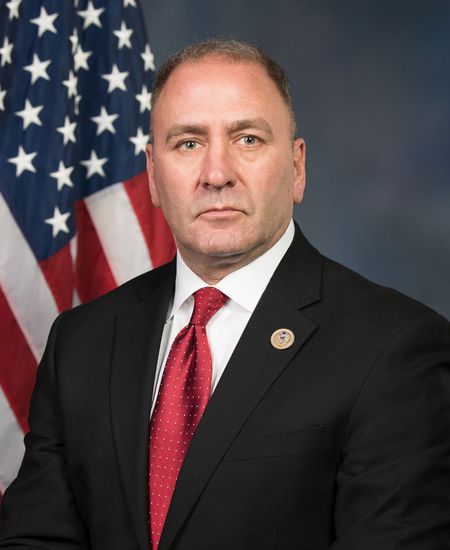
Rep. Clay Higgins
Sponsored bills
Maddy summaryHRES 1305 is a procedural resolution that formally rescinds subpoenas issued by the January 6th Select Committee to four individuals (Stephen Bannon, Mark Meadows, Daniel Scavino Jr., and Peter Navarro) and withdraws the committee’s recommendations finding them in contempt of Congress. The bill specifically cancels subpoenas from September 2021, October 2021, and February 2022, along with related contempt resolutions adopted in 2021-2022. It does not alter legal proceedings but withdraws the committee’s authority to enforce these actions. The resolution is supported by House members who argue the committee was partisan and illegitimate, though the bill itself only addresses the committee’s procedural actions.
Maddy summaryHRES 1311 is a symbolic resolution commemorating the second anniversary of the Supreme Court's Dobbs decision (June 24, 2022), which overturned *Roe v. Wade*. It celebrates the ruling as a step toward protecting unborn life and commits the House to supporting families and policies aligned with its view of unborn life's humanity. The resolution does not create new laws or affect any specific group directly - it is purely ceremonial, expressing the House's position on the Dobbs ruling.
Maddy summaryHR 8785, the Tax Free Tips Act of 2024, reclassifies tips as gifts rather than taxable income for workers in service industries like restaurants and hospitality. It removes tips from income tax calculations, Social Security taxes, unemployment taxes, and wage withholding requirements. The bill repeals existing rules requiring employers to report tips (Section 6053) and eliminates related tax credits (Section 45B). Tips will no longer be counted as income for tax purposes, effective for tips received after the bill's enactment date. This directly affects tipped employees by eliminating tax obligations on their gratuities.
Maddy summaryThis bill rescinds unspent funds from specific federal programs. It targets leftover money from pandemic relief (like the CARES Act and American Rescue Plan) and certain infrastructure initiatives (including education stabilization funds and transportation programs like the Congestion Mitigation Program). The rescission is limited to amounts already allocated for Israel, Ukraine, and Indo-Pacific security supplements under recent appropriations. Unspent funds must be returned to the Treasury, with no new spending created.
Maddy summaryHRES 1303 is a resolution passed by the U.S. House of Representatives on June 14, 2024, that condemns the Biden administration's suspension of pending approvals for liquefied natural gas (LNG) exports to countries without free trade agreements with the U.S. The resolution argues this action is politically motivated, citing studies showing economic benefits of LNG exports and noting that previous administrations conducted similar environmental reviews without halting permits. It calls for lifting the suspension to restore confidence in the energy sector, prioritize U.S. workers and communities, and align with the administration's stated goals of economic growth. As a non-binding resolution, it does not change policy but formally expresses congressional disapproval of the administration's approach.
Maddy summaryHRES 1300 is a non-binding House resolution condemning campus protests and the groups organizing them. It specifically targets protesters at universities like Columbia and George Washington for actions including blocking classes, using antisemitic rhetoric, and defacing U.S. flags with Palestinian flags. The resolution condemns organizations like Students for Justice in Palestine and George Soros for funding these protests, and calls for an investigation into foreign adversaries involved. It also urges politicians to reject contributions from groups supporting anti-American or antisemitic demonstrations. The resolution does not create new laws but expresses the House's position on campus protests.
Maddy summaryThis bill amends the International Religious Freedom Act and Foreign Assistance Act to restrict U.S. foreign aid funding for non-theist groups. It requires that U.S. diplomatic missions ensure foreign aid programs do not promote non-theist ideologies or expand non-theist group membership, and mandates proportional funding to religious groups if non-theist groups receive support. The bill also requires annual reports listing all grants to religious, atheist, agnostic, and humanist groups worldwide, including funding details and compliance with constitutional religious freedom principles. These changes directly affect U.S. diplomatic missions and foreign organizations receiving U.S. government aid.
Maddy summaryThe NEST Act (HR 8715) creates a federal pilot program to provide newborn supply kits to mothers in underserved communities. The kits, containing essentials like diapers, postpartum supplies, blood pressure monitors, and health resources, are distributed through grants to community organizations or hospitals. Priority goes to mothers in areas with limited maternal care access (e.g., rural regions or high-mortality "Delta" communities) and those earning under 185% of the poverty line. The program, funded at $5 million annually through 2029, requires annual reports tracking distribution demographics and health outcomes to Congress.
Maddy summaryThis bill directs the Department of Homeland Security to strengthen partnerships with law enforcement in Mexico, Central America, and South America to address human smuggling and trafficking. Key provisions include creating cross-border investigative teams to disrupt trafficking operations, expanding training for foreign law enforcement, and supporting investigations targeting smugglers who threaten border security - particularly those exploiting children and families. It also mandates targeted public information campaigns in high-migration regions to counter misinformation from criminal groups and inform migrants about travel risks. These efforts directly affect U.S. border security operations, foreign law enforcement partners, and migrant populations in affected countries.