

Maddy summaryThe Streamlining Federal Cybersecurity Regulations Act establishes a new Harmonization Committee, led by the National Cyber Director, to align cybersecurity rules across federal agencies. The committee will develop a regulatory framework with common minimum security standards for all sectors and sector-specific rules where needed, and test it through a voluntary pilot program involving multiple agencies and regulated entities. Agencies must consult the committee before creating new cybersecurity rules (except in emergencies), and the committee will submit annual reports to Congress on its progress and pilot program results. This aims to reduce overlapping or conflicting requirements for businesses operating under multiple regulatory agencies.
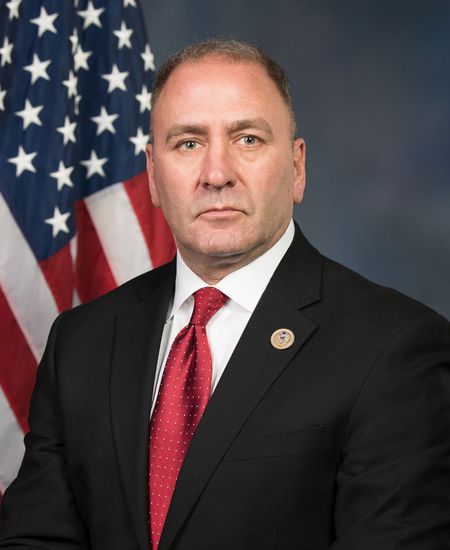
Rep. Clay Higgins
Sponsored bills
Maddy summaryThe Keeping Violent Offenders Off Our Streets Act requires states and tribes to create a public safety report system for defendants charged with specific violent crimes, including murder, rape, assault, kidnapping, robbery, and firearm offenses. The system provides judges and prosecutors with free, detailed reports containing criminal history, bail eligibility, and offense-specific criteria within 48 hours of arrest. Prosecutors must deliver these reports to courts before bail decisions, and courts must consider them when setting bail for these defendants. The reports are also submitted to the National Crime Information Center, and the bill additionally amends federal law to include bail bonds in fraud-related provisions.
Maddy summaryHR 6174, the DHS Biodetection Improvement Act, requires the Department of Homeland Security (DHS) to assess its past use of Department of Energy national laboratories for biodetection research and develop a strategy to improve future collaboration. The strategy must identify effective detection technologies (informed by past studies like the 2021 BioWatch network review), create a plan to procure these tools for existing BioWatch systems, and establish regular reviews to address gaps. It directly affects DHS operations, BioWatch jurisdictions (which deploy these detection systems), and partnerships with national labs, universities, and state/local governments. DHS must submit the initial strategy to Congress within 180 days and provide annual updates on implementation progress.
Maddy summaryThe PROVIDE Act creates a new priority processing category for veterans whose disability claims are impacted by major disasters (like fires or floods) where the President has declared a federal emergency. It requires the VA to establish regulations that automatically include veterans living in declared disaster zones among those eligible for expedited claim handling, alongside existing categories like homelessness or terminal illness. The bill also mandates flexible evidence requirements and extended filing deadlines for veterans unable to meet standard documentation due to the disaster. This policy change directly affects veterans in disaster-affected areas by streamlining access to disability benefits during recovery. The VA must post these eligibility details on its website within 60 days of the bill's enactment.
Maddy summaryThis bill provides one-time financial assistance to U.S. farmers growing specific crops (like corn, soybeans, wheat, cotton, and rice) during the 2024 crop year if their expected costs exceed expected returns. Payments equal 60% of the difference between the expected cost of production per acre (based on USDA cost forecasts) and the expected gross return per acre (based on projected farm prices and yields). Payments are calculated using actual planted acreage plus 50% of acreage prevented from planting due to natural disasters, with annual caps of $175,000 or $350,000 depending on the farm’s primary income source. The program uses existing USDA data sources and applies standard farm payment limits.
Maddy summaryHR 10083, the "No Funding for Illegal Migrant Billboards Act," prohibits the use of federal funds to advertise the Immigration Detention Ombudsman's office or functions through billboards or similar public advertising. This bill directly affects the Department of Homeland Security, specifically restricting how the Ombudsman's office can be promoted using public funds. The key mechanism is an amendment to the Homeland Security Act of 2002, adding a provision that bans obligating or expending funds for such advertising. The law applies to all public advertising methods, not just physical billboards, and takes effect immediately upon enactment.
Maddy summaryHR 10069 transfers unobligated funds from the Ukraine Security Supplemental Appropriations Act (specifically the Economic Support Fund) to the Disaster Relief Fund. These funds will support disaster response under the Robert T. Stafford Disaster Relief Act for major disasters declared under that law. The bill excludes funds designated for preventing or responding to food insecurity. This transfer directly affects how unspent emergency aid funds are used for disaster relief, not for other purposes like food security programs.
Maddy summaryThis bill creates a new H-1D visa category specifically for foreign emergency medical technicians (EMTs) and paramedics to address workforce shortages in emergency medical services. It establishes requirements for foreign workers (including education, licensing, and background checks) and mandates that employers attest they won't harm U.S. workers' wages or conditions, pay comparable wages, and take steps to recruit domestic EMTs/paramedics. The bill limits the number of such visas to 2,500 per year with annual adjustments possible based on workforce needs, and establishes oversight mechanisms to monitor compliance and enforce labor protections. Employers must also limit foreign workers to 15% of their total EMT/paramedic staff and provide regular reports to government agencies.
Maddy summaryHR 10010, the Protect American Fisheries Act of 2024, amends the Magnuson-Stevens Act to address economic harm to U.S. fisheries. It adds "economic cause" to the definition of fishery disasters, specifically when foreign activities distort markets, disrupt sustainable harvesting, or threaten the economic viability of U.S. fisheries. The bill defines "foreign person" broadly to include foreign governments, companies, and U.S. entities controlled by foreign interests, and requires documentation of foreign activities like illegal fishing, predatory pricing, or harmful subsidies when declaring a disaster. This change directly affects U.S. fishing communities and industries by expanding the criteria for federal disaster assistance to include economic impacts from foreign actors.
Maddy summaryHR 9921 amends the Delta Development Act to designate Terrebonne Parish, Louisiana, as an official Delta Regional Authority area. This change directly affects residents and local officials in Terrebonne Parish by expanding their eligibility for federal economic development programs and funding under the Delta Regional Authority. The bill achieves this by adding "Terrebonne" to the list of designated parishes in the law, following "Webster" in the existing text. This is a procedural update to geographic eligibility, not a new policy.