

Maddy summaryHR 1526 (NORRA of 2025) limits U.S. district courts' power to issue injunctions. It prohibits courts from granting court orders that stop actions affecting parties outside the specific lawsuit, restricting injunctions to apply only to the immediate parties involved in the case. This change would directly affect federal district courts and the parties seeking injunctive relief in litigation. The bill adds Section 1370 to Title 28 of the U.S. Code, requiring that any injunction be limited to the specific case parties. It does not alter other court powers or affect existing legal procedures beyond this specific restriction.
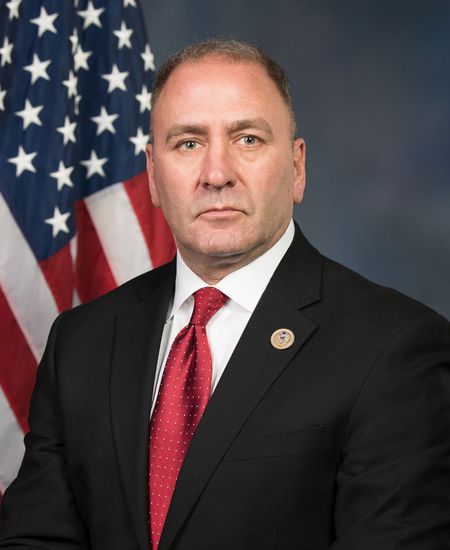
Rep. Clay Higgins
Sponsored bills
Safeguard American Voter Eligibility Act or the SAVE Act This bill requires individuals to provide documentary proof of U.S. citizenship when registering to vote in federal elections. Specifically, the bill prohibits states from accepting and processing an application to register to vote in a federal election unless the applicant presents documentary proof of U.S. citizenship. The bill specifies what documents are considered acceptable proof of U.S. citizenship, such as identification that complies with the REAL ID Act of 2005 that indicates U.S. citizenship. Further, the bill (1) prohibits states from registering an individual to vote in a federal election unless, at the time the individual applies to register to vote, the individual provides documentary proof of U.S. citizenship; and (2) requires states to establish an alternative process under which an applicant may submit other evidence to demonstrate U.S. citizenship. Each state must take affirmative steps on an ongoing basis to ensure that only U.S. citizens are registered to vote, which shall include establishing a program to identify individuals who are not U.S. citizens using information supplied by certain sources. Additionally, states must remove noncitizens from their official lists of eligible voters. The bill allows for a private right of action against an election official who registers an applicant to vote in a federal election who fails to present documentary proof of U.S. citizenship. The bill establishes criminal penalties for certain offenses, including registering an applicant to vote in a federal election who fails to present documentary proof of U.S. citizenship.
Maddy summaryThis bill strengthens U.S. seafood import safety by requiring foreign exporters to maintain programs meeting U.S. standards for seafood manufacturing, processing, and holding. It mandates annual inspections of foreign seafood facilities, tests 20% of all imported seafood annually (with all first 15 shipments from new exporters tested), and requires exporters to pass 15 straight shipments after a failure before resuming imports. Repeat failures trigger a one-year import ban, and ports must be certified to handle seafood inspections. The bill also allows states to partner with the FDA to conduct inspections under federal oversight.
Maddy summaryHR 2774, the Safeguarding Our Levees Act, requires the federal agency to begin repairing or restoring flood control projects within 180 days of a request from a non-Federal sponsor. It also increases federal cost-sharing for these projects to cover 25% of the difference in costs. The bill directly affects local communities and organizations responsible for maintaining flood control infrastructure by setting clear timelines and funding terms. These changes aim to speed up critical repairs after natural disasters while clarifying federal financial responsibility.
Maddy summaryThis resolution recognizes Tren de Aragua members as "alien enemies" under the 1798 Alien Enemies Act, affirming the President's authority to apprehend and remove them from the U.S. It does not create new law but supports the executive action taken under existing legal authority. The resolution specifically references the President's March 2025 proclamation declaring Tren de Aragua's activities constitute an invasion, citing its presence in 19 states and alleged violent actions against law enforcement.
Maddy summaryHR 2124 (LAND Act) restricts foreign purchases of U.S. agricultural land by requiring foreign buyers to follow the same rules as U.S. citizens would face in their home country, plus applicable state laws. It defines "home country" based on citizenship (using the most restrictive foreign law for dual nationals or companies) and mandates sellers to report sales to the USDA, which then notifies relevant lawmakers. A new U.S. Land Protection Task Force (including USDA, Justice, and State departments) will monitor compliance, track land sales data, and report to Congress every six months. The bill directly affects foreign individuals, companies, and governments purchasing agricultural land, with no changes to existing U.S. citizen purchasing rules.
Maddy summaryThis bill, HR 2102 (Major Richard Star Act), allows veterans with combat-related disabilities to receive both full military retired pay and veterans' disability compensation simultaneously, without the previous offset that reduced retired pay. It directly affects veterans already eligible for both benefits due to combat-related injuries, removing the requirement that their retired pay be reduced by the disability compensation amount. The key provision amends Title 10 and Title 38 to eliminate the offset rule (sections 5304 and 5305 of Title 38) for these veterans. The change applies to payments starting after the bill’s enactment date, effective for all qualifying veterans. This is a policy change to increase financial support for affected veterans, not a new benefit.
Maddy summaryHR 2552, the RIFLE Act, repeals the federal tax on firearm transfers (Section 5811 of the Internal Revenue Code). This directly affects firearm sellers and purchasers by removing the tax paid when transferring firearms. The bill also updates related tax code references to reflect the repeal and specifies the tax removal applies to transfers after the law's enactment. It clarifies that the repeal does not change how firearms are regulated under the National Firearms Act or involve the Consumer Product Safety Commission.
Maddy summaryHRES 270 is a House resolution proposing the removal of Chief Judge James E. Boasberg of the U.S. District Court for the District of Columbia. It alleges he failed to maintain "good behavior" under Article III of the Constitution by interfering with President Trump's foreign policy regarding the Alien Enemies Act and ordering the return of Tren de Aragua members (a group designated under that law). The resolution also cites undisclosed non-federal payments and misuse of discretion on the Foreign Intelligence Surveillance Court as additional grounds. This procedural resolution, if passed, would send an "article of removal" to the Senate for trial, but does not remove the judge immediately. It targets Boasberg personally and focuses on specific judicial conduct claims.
Maddy summaryThe Free Speech Fairness Act (HR 2501) would amend tax law to allow 501(c)(3) organizations, such as charities and educational nonprofits, to make political campaign statements as part of their regular activities without risking their tax-exempt status. The bill specifies that these statements must be made in the ordinary course of the organization's exempt purpose and result in only minimal additional costs. This change clarifies that routine political commentary by these groups does not violate their tax-exempt status under current rules. The provision would apply to tax years beginning after the bill's enactment.