

Maddy summaryThis bill adds a death penalty option for individuals convicted of distributing, manufacturing, or possessing fentanyl with intent to distribute when their actions cause a death. It directly affects fentanyl traffickers and dealers found guilty under specific drug trafficking laws (sections 401(a)(1) or 416 of the Controlled Substances Act) if their distribution results in a fatality. The key provision allows courts to impose the death penalty, life imprisonment, or any term of years, along with fines under federal law. This policy change specifically targets fentanyl-related offenses causing death, not other drugs or non-fatal cases.
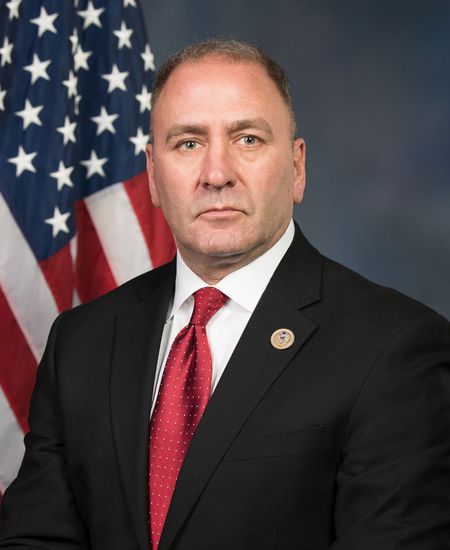
Rep. Clay Higgins
Sponsored bills
Maddy summaryHR 3598, the Deescalation Drone Pilot Program Act of 2025, establishes a federal pilot program to test nonlethal drones for law enforcement during active shooter events. The program, managed by the FAA, will review nonlethal devices (like sound emitters or cameras) for drones, develop training and safety protocols, and assess effectiveness in indoor scenarios to increase officer safety. It requires drones to be manufactured in the U.S. and mandates a report to Congress within 3 months of the pilot's conclusion, followed by rulemaking to create a formal approval process for law enforcement use. The bill directly affects Federal, State, local, and Tribal law enforcement agencies responding to active shooter events as defined by the legislation.
Maddy summaryHR 513, the Offshore Lands Authorities Act of 2025, reverses multiple existing presidential protections that blocked oil and gas leasing on offshore federal lands. It nullifies 8 specific presidential withdrawals (including areas in the Arctic, Atlantic, Gulf of Mexico, and Pacific) and restricts future presidential actions by limiting withdrawals to 150,000 acres per action, capping them at 20 years, and requiring Congressional approval for cumulative withdrawals exceeding 500,000 acres. The bill mandates that before any withdrawal, the Secretary must complete four assessments covering mineral resources, economic/energy value, revenue impacts, and national security. It also establishes a fast-track process for Congress to disapprove withdrawals within 20 days, with limited debate (10 hours) on the resolution.
Maddy summaryHR 3463 (COUNTER Act) expands the U.S. military's authority to counter drone threats by allowing the Department of Defense and Coast Guard to neutralize unmanned aircraft systems without being restricted by certain federal laws. It exempts related technology, procedures, and protocols from public disclosure requirements under federal and state laws, and permits military commanders to delegate these actions. The bill applies to both domestic and overseas operations, clarifying that other federal laws do not apply to U.S. military or Coast Guard activities mitigating drone threats abroad. Key changes include broadening legal authority beyond previous restrictions and extending reporting deadlines for related activities.
Maddy summaryThis bill establishes the Law Enforcement Education Grant Program, providing $4,000 annual grants to students pursuing associate or bachelor's degrees in law enforcement or criminal justice. To qualify, students must be enrolled at approved institutions, complete required coursework, and agree to serve as full-time law enforcement officers for four years within eight years of graduation. Failure to fulfill this service obligation requires repayment of the grants as federal loans, with repayment terms mirroring unsubsidized Stafford Loans. The program is funded separately from Pell Grants and Direct Loans, with a lifetime cap of $16,000 per recipient.
Maddy summaryThe Racehorse Health and Safety Act of 2025 replaces the 2020 Horseracing Integrity and Safety Act with a new framework for horse racing safety and medication control. The bill establishes a Racehorse Health and Safety Organization (RHSO) to coordinate safety rules across states, with breed-specific committees for Thoroughbreds, Standardbreds, and Quarter Horses to develop medication control and safety protocols. It creates new rules prohibiting certain medications, mandates track safety standards, and establishes procedures for handling violations, including administrative sanctions and disciplinary processes. The law requires states to join an interstate compact to participate in the new system, with states that don't join prohibited from allowing interstate wagering on races. This legislation directly affects all entities involved in horse racing, including owners, trainers, veterinarians, racetracks, and breed associations across the country.
Maddy summaryHR 3347, the Sovereign States Emergency Management Act, ends the Federal Emergency Management Agency (FEMA) and transfers its disaster response functions to the President within two years of enactment. It creates a new federal grant program where the Treasury Department allocates disaster relief funds directly to states based on population, historical disaster data, geographic risks, and economic need. States must submit annual emergency management plans and reports detailing fund use and outcomes, and cannot receive duplicate federal aid for the same purposes. The program would operate for four years, ending in 2028, with states retaining full control over how funds are spent for preparedness, response, recovery, and mitigation.
Maddy summaryThe Sovereign States Education Restoration Act would abolish the U.S. Department of Education and transfer its programs to other federal agencies, including moving student loans (Pell Grants, Direct Loans) to the Treasury, special education to Health and Human Services, and Indian education to the Interior. It would create block grants for states to fund K-12 and postsecondary education, with funding allocated based on student enrollment in each state. States receiving these grants must submit annual data, pass audits, and comply with federal civil rights laws, enforced by the Justice Department. The bill authorizes funding equivalent to the 2019 Department of Education budget, allocating 50% for state block grants and 20% for oversight.
Maddy summaryHR 3344 would redirect federal prison funding by converting 50% of Bureau of Prisons (BOP) funds to block grants for states, while maintaining 2019 funding levels as the baseline. The bill requires the Attorney General to develop a plan within 270 days and implement it within one year, directing 10% of funds to a DOJ office managing the grants and another 10% to the Office of Inspector General for oversight. This directly affects states receiving the block grants and the federal BOP, shifting control of a significant portion of prison funding from the federal government to state authorities. The legislation focuses on restructuring funding mechanisms rather than altering prison policies or inmate treatment.
Maddy summaryHR 3346 would eliminate the federal Environmental Protection Agency (EPA) 270 days after the bill becomes law, transferring its environmental responsibilities to state and territorial agencies. The bill allocates $4.4 billion annually (2026-2029) to states based on population for programs covering air/water quality, waste management, chemical safety, and contaminated site cleanup. States must designate a specific environmental department to manage funds, undergo audits, and repay misused funds. This directly affects all 50 states, the District of Columbia, and U.S. territories by replacing federal oversight with state-administered environmental programs.