

Maddy summary# Summary of National Flood Insurance Program Reform Bill This comprehensive legislation proposes significant reforms to the National Flood Insurance Program (NFIP) with a focus on policyholder protections, program transparency, financial solvency, and flood mitigation. ## Key Themes 1. **Policyholder Protections & Transparency** - Establishes an Independent Office for Policyholder Appeals with clear deadlines (90 days for final decisions) - Requires disclosure of all claim documents to policyholders within one week of request - Prohibits manipulation of engineer reports and requires final engineering reports to be transmitted directly to policyholders - Creates a "grace period" for policyholders renewing lapsed coverage (90 days) 2. **Transparency & Data Access** - Mandates public release of premium calculation formulas - Requires a public tool for estimating premium rates under Risk Rating 2.0 - Requires annual publication of premium rate distributions by state, county, and zip code - Studies feasibility of licensing historical claims data to third parties 3. **Mitigation Focus** - Requires consideration of mitigation projects (including Army Corps of Engineers projects) in premium calculations - Creates incentives for policyholders to accept mitigation offers (refusal increases premiums by 25% annually) - Provides clarification on coverage for pre-FIRM condominium basements - Establishes a "rebuttable presumption" for foundation/structural damage caused by flood 4. **Financial Solvency** - Provides 5-year forbearance on interest payments for NFIP debt - Caps Write Your Own company compensation at 22.46% of premiums - Requires transparency on third-party service provider costs - Creates a "National Flood Mitigation Fund" to use saved interest payments 5. **Claims Process Improvements** - Sets 60-day deadline for initial claim determination (with 30-day extension for extraordinary circumstances) - Requires clear documentation of foundation conditions before flood events - Establishes standards for engineering reports used in claims adjustment - Creates an Agent Advisory Council to provide recommendations on policyholder experience The bill aims to create a more sustainable, transparent, and fair flood insurance program while encouraging flood mitigation and improving the claims experience for policyholders.
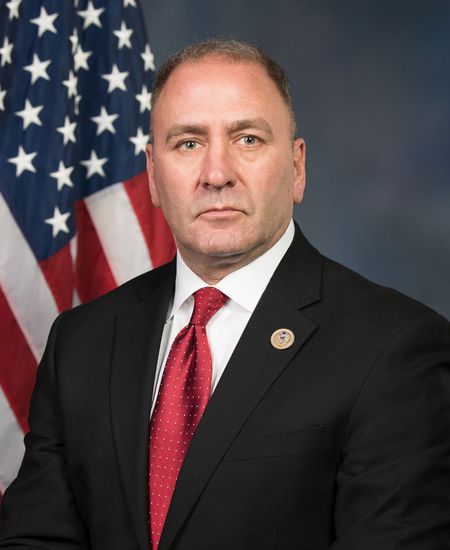
Rep. Clay Higgins
Sponsored bills
Maddy summaryHR 5125, the District of Columbia Judicial Nominations Reform Act of 2025, eliminates the District of Columbia Judicial Nominating Commission and shifts the judge appointment process directly to the President. The bill removes all references to the commission from the District's Home Rule Act, requiring the President to nominate judges without needing recommendations from the commission. This change applies to all future judicial appointments made on or after the bill's enactment date. The reform directly affects how judges are selected for the District of Columbia courts.
Maddy summaryThis bill amends Washington, D.C.'s policing law to change rules for police vehicle pursuits. It removes previous restrictions on pursuits and requires officers to only pursue a suspect if they reasonably believe it won't create unacceptable risk to others or be futile, or if another method would be more effective. The bill also mandates a Department of Justice report within three years evaluating technology like PursuitAlert that alerts the public during police pursuits. These changes directly affect D.C. police officers making real-time decisions during vehicle chases. The law updates existing policy without altering other policing standards.
Maddy summaryThis bill lowers the age at which minors in Washington, D.C. can be tried as adults for certain crimes from 16 to 14 years old. It amends two key sections of D.C. law: changing the age for exclusion from juvenile court jurisdiction (from 16 to 14) and lowering the age for transfer to criminal court (from 15-18 to 14 across multiple scenarios). The policy directly affects minors aged 14 or older who commit specified serious offenses in D.C., removing them from the juvenile justice system. The changes apply to offenses committed on or after the bill's effective date.
Maddy summaryHR 4922, the DC Criminal Reforms to Immediately Make Everyone Safe Act of 2025 (DC CRIMES Act), modifies youth offender definitions and creates public transparency measures. It limits "youth offender" status to individuals 18 or younger (previously 24), removing provisions for 18-24 year olds in sentencing and facility planning. The bill requires the DC Attorney General to establish a public website publishing monthly juvenile crime statistics, including arrest data by age, race, sex, crime type, recidivism rates, and sentencing outcomes - without personally identifiable information. It also prohibits the DC Council from changing existing criminal sentencing laws. These provisions directly affect youth offenders aged 15-18 and DC government operations related to juvenile justice data.
Maddy summaryHRES 702 is a symbolic resolution condemning the September 10, 2025, assassination of Charlie Kirk, founder of Turning Point USA and a conservative political activist. It expresses condolences to his family, praises first responders, and reaffirms the right to peaceful assembly. As a non-binding resolution, it does not create new laws or policies but serves as a formal statement of condemnation. The resolution directly addresses the House of Representatives' stance on this event, with no direct impact on constituents or legislation.
Maddy summaryHRES 695 is a commemorative resolution honoring Charlie Kirk, a conservative speaker and Turning Point USA leader, following his assassination on September 10, 2025, in Orem, Utah. The resolution condemns the attack, offers condolences to his family, and recognizes first responders. It reaffirms the First Amendment right to peaceful assembly and emphasizes that violence cannot silence democratic participation. This non-binding resolution does not create new laws or policies but serves as a symbolic tribute to Kirk's memory and the principles of democratic engagement.
Maddy summaryThe SOAR Act Improvements Act (HR 5181) amends Washington, D.C.'s scholarship program to extend grant durations from 5 to 10 years without competitive renewal, expand eligibility to schools across the Washington metropolitan region (including parts of Maryland and Virginia), and update funding rules. It allows scholarship funds to cover pre-kindergarten, increases annual academic assistance funding from $2 million to $2.2 million, and requires participating schools to maintain accreditation. The bill also modifies evaluation requirements to include annual reporting on student outcomes like graduation rates and school safety comparisons, with evaluations mandated every seven years starting in 2027. These changes directly affect D.C. scholarship recipients, participating schools, and eligible entities administering the program.
Maddy summaryThe FIREARM Act (HR 3770) changes how federal firearm licensees (like dealers) handle violations of firearms laws. It requires the Attorney General to give licensees 30 business days to correct minor, self-reported violations - such as clerical errors - with assistance and training, instead of automatically revoking licenses. The bill also adds a 15-day window for licensees to challenge revocations in federal court, where courts must review the case anew and only uphold revocations if the licensee willfully violated the law. Additionally, it applies retroactively to licensees whose licenses were revoked under a 2021 enforcement policy, allowing them to reapply if they meet compliance requirements.
Maddy summaryThis bill changes federal rules for rural healthcare facilities that employ physician assistants (PAs) and nurse practitioners (NPs). It requires these facilities (not run by a physician) to have arrangements consistent with state laws governing PA/NP practice, ensuring services follow state regulations. The policy directly affects rural clinics and hospitals seeking federal reimbursement for PA/NP services. The changes take effect January 1, 2027, aligning federal requirements with existing state oversight of these healthcare providers.