

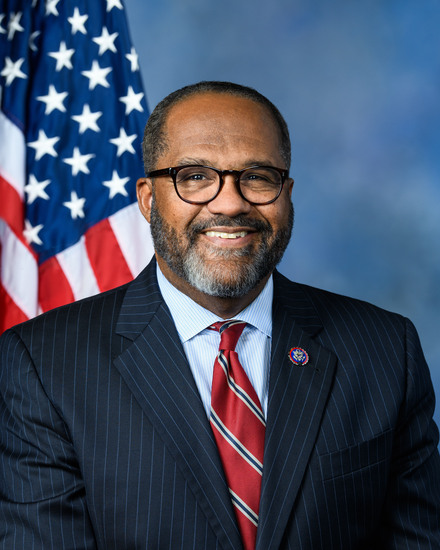
Photo of Troy A. Carter
D United States House · District 2 · Louisiana On the 2026 ballot

Rep. Troy A. Carter

Compare
Total votes
2,715
all sessions
Attendance
99%
37 missed
Near the chamber average
With party
98%
of cast votes
Higher than 82% of chamber peers
Bipartisan score
1%
crosses aisle rarely
Lower than 83% of chamber peers
Sponsored
1,610
bills & resolutions
Higher than 92% of chamber peers
Committees
7
assignments
1,610 bills and resolutions

Sponsored bills

Total
1,610
Primary
74
Co-sponsor
1,536
This page
1,610
matching current filters
Co-sponsor HR 3513
In committee · Indiana House · Co-sponsor
Supreme Court Ethics, Recusal, and Transparency Act of 2025

Maddy summaryThis bill establishes a code of conduct for Supreme Court justices, requiring them to disclose gifts, income, and potential conflicts of interest. It creates a formal process for handling complaints about justices, including a judicial investigation panel to review allegations. The bill adds specific circumstances requiring recusal, such as when a justice or family member has financial ties to a party in a case. Additionally, it mandates that parties and amicus briefs disclose any gifts given to justices and lobbying activities related to their nomination. These provisions aim to increase transparency and accountability in the Supreme Court's operations.

In committee May 20, 2025 1 co-sponsor
Co-sponsor HR 3498
In committee · Indiana House · Co-sponsor
Henrietta Lacks Congressional Gold Medal Act

Maddy summaryHR 3498, the Henrietta Lacks Congressional Gold Medal Act, authorizes a commemorative gold medal to honor Henrietta Lacks for her contribution to science through her immortal HeLa cells. The bill directs the Treasury Secretary to strike the medal, which will be presented posthumously by Congress and displayed at the Smithsonian Institution. It also permits the sale of bronze duplicates to cover costs, with proceeds going to the U.S. Mint fund. This is a ceremonial recognition of Lacks' legacy, not a policy change affecting any group or requiring new regulations.

In committee May 19, 2025 1 co-sponsor
Co-sponsor HR 3449
In committee · Indiana House · Co-sponsor
Stronger Communities through Better Transit Act

Stronger Communities through Better Transit Act This bill requires the Department of Transportation (DOT) to establish a grant program to support operating projects for public transportation and related service improvements, particularly in underserved communities and areas of persistent poverty. Specifically, the bill requires DOT to allocate funding under the program for urbanized areas, states, and Indian tribes that are recipients of funds under either the Federal Transit Administration's (FTA's) Urbanized Area Formula Funding program or Formula Grants for Rural Areas program. Eligible recipients may use funding for operating costs associated with projects that improve public transportation service for transit-dependent populations and support increased transit ridership (e.g., service expansion, information technology enhancements, and workforce development). DOT must apportion the funding so that recipients receive funds that are proportional to their share of operating costs. The bill also provides for an increased federal cost share for operating assistance for projects or programs carried out in areas of persistent poverty or underserved communities. DOT must set up a multimodal access measurement interface for public agencies to aid transit agencies in determining and reporting on access to jobs and essential services. A grant recipient must (1) report specific information to the FTA for inclusion in the National Transit Database, and (2) survey transit riders and non-riding residents regarding transit service improvements. Further, the bill expands the purposes of the public transportation programs to include supporting public transportation's role in combating climate change through growing/retaining transit ridership.

In committee May 16, 2025 1 co-sponsor
Co-sponsor HR 3454
In committee · Indiana House · Co-sponsor
Protecting Our Constitution and Communities Act

Maddy summaryThis bill clarifies that the President has no constitutional authority to withhold funds Congress has appropriated. It creates new legal mechanisms allowing private citizens and state/local governments to sue the federal government for impoundments of appropriated funds. The bill strengthens the Comptroller General's oversight role by requiring executive branch cooperation in investigations of potential violations. Federal employees who knowingly violate these provisions would face personal liability and lose immunity protections. The legislation aims to reinforce Congress's constitutional authority over the budget process.

In committee May 15, 2025 1 co-sponsor
Co-sponsor HR 3442
In committee · Indiana House · Co-sponsor
SNAP Administrator Retention Act of 2025

SNAP Administrator Retention Act of 2025 This bill directs the Food and Nutrition Service (FNS) to pay Supplemental Nutrition Assistance Program (SNAP) state agencies for 100% of SNAP administrative personnel costs. The bill also requires that state SNAP agency administrators be paid at least the same amount as federal employees. (Under current law, FNS generally pays 50% of a state's administrative costs for SNAP.) Specifically, FNS must pay a state agency for 100% of all SNAP administrative personnel costs that are part of an FNS-approved state agency personnel wage plan. This must include all costs associated with hiring and training new employees, maintaining those personnel costs, and complying with wage standards. The state agency must use these funds (1) to supplement, not supplant, nonfederal funds used for existing administrative personnel costs; and (2) for existing or additional full-time positions that are above the number of positions that were held in FY2024. The bill also requires that the wage standards for SNAP state agency administrators be (1) at least the same amount as the General Schedule (GS) pay rate for federal employees; and (2) updated annually based on any increase in the GS pay rate, including locality adjustments.

In committee May 15, 2025 1 co-sponsor
Co-sponsor HRES 352
Passed · Indiana House · Co-sponsor
Calling on elected officials and civil society leaders to counter antisemitism and educate the public on the contributions of the Jewish American community.

Maddy summaryHRES 352 is a non-binding House resolution calling on elected officials, faith leaders, and civil society leaders to condemn antisemitism and educate the public about Jewish American contributions to U.S. culture, innovation, and society. It specifically urges the executive branch and local leaders to uplift Jewish stories and ensure safety for Jewish Americans in public spaces, workplaces, and on campuses. The resolution references rising antisemitism since October 7, 2023, including reported increases in hate incidents and safety concerns among Jewish communities. It does not create new laws or allocate funds but serves as a formal statement urging existing leaders to take action through education and safety measures.

Passed May 14, 2025 1 co-sponsor
Co-sponsor HR 3405
In committee · Indiana House · Co-sponsor
Suspending Transfer of Property for Improper Trump Use Act

Maddy summaryHR 3405 requires the Secretary of State to provide Congress with all documents and a detailed report within 30 days regarding negotiations between the U.S. and Qatar about transferring an aircraft to the U.S. government for eventual transfer to an entity controlled by former President Donald Trump. The report must detail any promises made to Qatar, potential private contracts, and legal reviews related to the transfer. The bill also prohibits federal funding for any action supporting the transfer of foreign-owned aircraft to the U.S. government, the President, or Trump’s presidential library. This applies specifically to aircraft transfers involving Qatar and Trump-controlled entities, focusing on transparency and funding restrictions.

In committee May 14, 2025 1 co-sponsor
Co-sponsor HR 3398
In committee · Indiana House · Co-sponsor
Aaron Salter, Jr., Responsible Body Armor Possession Act

Maddy summaryHR 3398 (the Aaron Salter, Jr., Responsible Body Armor Possession Act) bans civilians from purchasing, owning, or possessing "enhanced body armor" (defined as bullet-resistant gear meeting National Institute of Justice RF1 standards) without exception. The law directly affects most private citizens who might seek such armor, while exempting law enforcement officers (including corrections officers), government agencies, tribes, and individuals who legally owned enhanced body armor before the law took effect. Key provisions include creating a new federal criminal offense punishable by up to five years in prison for violations, with clear definitions of "enhanced body armor" and "covered law enforcement officer" based on existing legal standards. The bill focuses on restricting access to high-level protective gear for non-official use, not on regulating standard body armor.

In committee May 14, 2025 1 co-sponsor
Co-sponsor HR 3368
In committee · Indiana House · Co-sponsor
Born in the USA Act of 2025

Maddy summaryHR 3368, the "Born in the USA Act of 2025," prohibits federal funding for Executive Order 14160 (which aimed to restrict birthright citizenship for children born in the U.S.). The bill directly affects federal agencies that might implement the executive order by blocking their use of funds for that purpose. Its key provision is a funding ban targeting the executive order and any similar future policies, without changing citizenship law. The bill does not alter birthright citizenship rights but prevents federal resources from being used to enforce the controversial executive order. It is a procedural measure focused on funding, not a substantive policy change to citizenship rules.

In committee May 13, 2025 1 co-sponsor
Co-sponsor HR 3324
In committee · Indiana House · Co-sponsor
Safer Shrimp Imports Act

Maddy summaryHR 3324, the Safer Shrimp Imports Act, requires foreign countries exporting shrimp to the U.S. to meet specific food safety standards. It mandates that foreign governments enter agreements with the FDA within 180 days of the bill’s enactment, and shrimp from countries without such agreements or with inadequate food inspection systems will be refused entry one year after enactment. The law defines "equivalent" food inspection systems as those with sufficient staffing for uniform enforcement and regulations covering shrimp farming and transport conditions. This directly affects shrimp importers and foreign facilities manufacturing, processing, or holding shrimp for U.S. consumption.

In committee May 13, 2025 1 co-sponsor
Showing 451 to 460 of 1,610 bills
Previous 1 … 45 46 47 … 161 Next