

Federal Extreme Risk Protection Order Act of 2022 This bill authorizes and establishes procedures for federal courts to issue federal extreme risk protection orders. Additionally, the bill establishes grants to support the implementation of extreme risk protection order laws at the state and local levels, extends federal firearms restrictions to individuals who are subject to extreme risk protection orders, and expands related data collection. Extreme risk protection order laws, or red flag laws, generally allow certain individuals (e.g., law enforcement officers or family members) to petition a court for a temporary order that prohibits an at-risk individual from purchasing and possessing firearms. Among its provisions, the bill authorizes a family or household member, or a law enforcement officer, to petition for a federal extreme risk protection order with respect to an individual who poses a risk to themselves or others; directs the Department of Justice to establish a grant program to help states, local governments, Indian tribes, and other entities implement extreme risk protection order laws; extends federal restrictions on the receipt, possession, shipment, and transportation of firearms and ammunition to individuals who are subject to extreme risk protection orders; and requires the Federal Bureau of Investigation to compile records from federal, tribal, and state courts and other agencies that identify individuals who are subject to extreme risk protection orders.
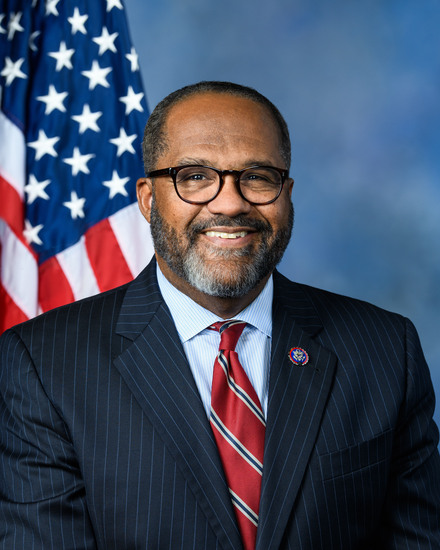
Rep. Troy A. Carter
Sponsored bills
This resolution condemns in the strongest terms the great replacement theory, which it describes as a white supremacist conspiracy theory that has been used to falsely justify racially motivated, violent acts of terrorism domestically and internationally.
This bill establishes reporting and other requirements related to disaster preparedness and response and hazard mitigation. The Governmental Accountability Office (GAO) must conduct a study and report on disaster spending and strategies for reducing the need for such spending. Specifically, the GAO must identify for the 5-year period ending on the date of this bill's enactment, the total amount of federal, state, and tribal funds spent in response to major disasters and emergencies; 10 proposed federal actions, including reinsurance, that, if implemented, would most effectively reduce the need for spending related to such major disasters or emergencies; the effect that using blockchain may have on delivering disaster assistance to state and Indian tribal governments; and whether insurance protection against wildfires will remain available and affordable to homeowners. The President must coordinate with each state to update state plans to incorporate strategies that decrease the time required to prepare for disasters, including the time to evacuate individuals. An entity that receives grants for hazard mitigation revolving loan funds must ensure that at least 10% of the total dollar amount of the loans it makes each fiscal year assist projects or activities that reduce risks for residential structures related to specified natural hazards.
This joint resolution directs the President to remove U.S. Armed Forces from hostilities against the Houthis in Yemen within 30 days of the enactment of this joint resolution unless Congress authorizes a later withdrawal date, issues a declaration of war, or specifically authorizes the use of the Armed Forces. Prohibited activities include sharing intelligence or providing logistical support to enable offensive strikes by the coalition led by Saudi Arabia. This joint resolution shall not affect any military operations directed at Al Qaeda or associated forces.
Relief for Restaurants and other Hard Hit Small Businesses Act of 2022 This bill addresses support for restaurants, arts and entertainment venues, and small businesses impacted by the COVID-19 pandemic. The bill provides an additional $42 billion in FY2021 for the Restaurant Revitalization Fund and gives priority to previous applicants who have not received a grant. The Small Business Administration (SBA) must provide to applicants an explanation for denied applications, establish a reconsideration process for denied applications, and institute an audit and oversight plan with respect to grant recipients. Additionally, the bill establishes the Hard Hit Industries Award Program for small businesses that suffered a pandemic-related revenue loss of 40% or more. Aggregate grant amounts are capped at $1 million. Funds may be used for expenses including mortgage, rent, and utility payments and payroll. SBA must prioritize entities that have experienced significant pandemic-related revenue loss, with first priority going to those that experienced a loss of at least 80%, and second priority going to those that experienced a loss of at least 60%. Finally, the bill extends to March 11, 2023 (or a later date as determined by the SBA), the time frame during which Shuttered Venue Operators Grant recipients may use grant funds to cover their expenses.
This resolution expresses that the House of Representatives is deeply concerned for the latest years-long drought in the Horn of Africa and the ensuing food security crisis and severe socioeconomic disturbances it caused; acknowledges the role that climate change plays in increasing the frequency of extreme weather events like droughts, and pledges to take coordinated, international action to adapt to and avert further global warming; reaffirms the effectiveness and instrumentality of U.S. international food assistance for meeting humanitarian obligations, cultivating enduring self-reliance in developing nations, ensuring the stability of global financial markets, and mitigating the likelihood of conflict in accordance with our national security interests; and emphasizes the importance of funding urgently needed humanitarian assistance for hunger-stricken regions of the world, supporting the development of sustainable agricultural sectors in developing nations, and assisting with the international resettlement of refugees escaping droughts and extreme hunger.
Disaster Resiliency Planning Act This bill requires the Office of Management and Budget to establish guidance that requires federal agencies to incorporate natural disaster resilience into real property asset management and investment decisions. Specifically, the guidance must direct each agency to incorporate assessments of natural disaster risk information conducted by the agency, such as from vulnerability and other risk assessments, into real property asset management and investment decisions.
Access to Baby Formula Act of 2022 This bill authorizes the Department of Agriculture (USDA) to take certain actions to address emergencies, disasters, and supply chain disruptions (particularly the shortage of infant formula in the United States) affecting participants of the Special Supplemental Nutrition Program for Women, Infants, and Children (WIC). The bill directs USDA to require each infant formula cost containment contract to include remedies in the event of an infant formula recall, including how an infant formula manufacturer would protect against disruption to WIC participants in the state. USDA must, within 30 days, ensure there is a memorandum of understanding with the Department of Health and Human Services that includes procedures for coordination and information sharing regarding any supply chain disruption, including a supplemental food recall. The bill also authorizes USDA to waive or modify any WIC qualified administrative requirement during emergencies, disasters, and supply chain disruptions. Specifically, USDA may waive or modify such a requirement for one or more state agencies if (1) the requirement cannot be met by state agencies during the emergency, disaster, or disruption; and (2) the modification or waiver is necessary to provide assistance to WIC participants and does not substantially weaken the nutritional quality of supplemental foods. For example, USDA may waive the maximum monthly allowance for infant formula. The bill establishes notification requirements for USDA and state agencies related to supply chain disruptions.
Health Care Providers Safety Act of 2022 This bill authorizes the Department of Health and Human Services to award grants to health care providers for security services and other expenses related to physical security and cybersecurity.
Workforce Innovation and Opportunity Act of 2022 This bill reauthorizes through FY2028 and expands programs under the Workforce Innovation and Opportunity Act (WIOA). The bill also revises workforce investment, vocational rehabilitation, employment, training, and literacy programs for eligible individuals. For example, the bill increases workforce representation on state and local workforce investment boards from 20% to 30%; reworks one-stop center infrastructure funding by requiring costs to be covered by state allocations of WIOA funds; establishes subsidized youth employment programs that include work-readiness training and mentoring; allows states and localities to partner with educational institutions to address the skill needs for in-demand jobs; establishes grants to connect youth in communities disproportionately affected by gun violence with in-demand jobs; eliminates a requirement that the Department of Labor ensure that individuals participating in WIOA activities comply with Selective Service laws; modifies the allotment of youth workforce investment funds to states; requires Labor to prioritize providing access to certain services to girls and women and applications for assistance from minority-serving institutions; expands the Job Corps program, including by serving individuals in outlying areas and relaxing age requirements; establishes grants to expand training programs through industry or sector partnerships; expands grants for integrated English literacy and civics education to outlying areas; and expands Wagner-Peyser employment services to the Northern Mariana Islands and American Samoa. The bill also provides statutory authority for Labor to award competitive grants, contracts, and cooperative agreements to improve employment and training outcomes and reduce recidivism of justice-involved youth; and competitive grants for states to create workforce longitudinal administrative databases.