

Maddy summaryThis bill authorizes the Department of Homeland Security and Department of Justice to detect, identify, monitor, and mitigate drone threats to specific high-risk facilities including government buildings, airports, critical infrastructure, and locations hosting special events. It establishes a 5-year pilot program allowing state and local law enforcement agencies to use drone detection technology under federal oversight, with strict privacy protections requiring 180-day data retention limits and mandatory training for personnel. The bill requires coordination with the Federal Aviation Administration to minimize impacts on air traffic and mandates regular congressional reporting on how these authorities are being used. It sets an expiration date of 7 years after enactment for these new authorities.
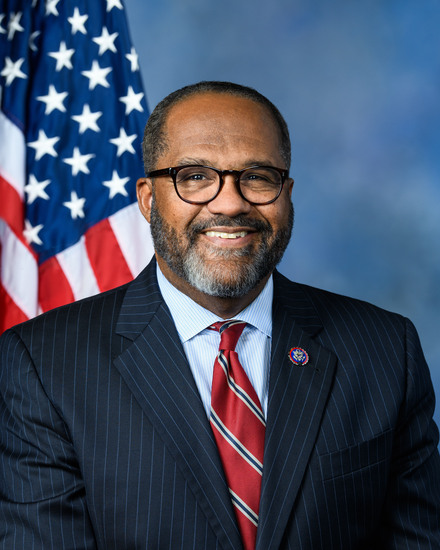
Rep. Troy A. Carter
Sponsored bills
This resolution expresses support for (1) equal rights and protections for all people, regardless of actual or perceived sexual orientation, gender identity, or sex characteristics; and (2) the designation of LGBTQI+ Equality Day to commemorate Supreme Court decisions handed down on June 26 in 2003, 2013, and 2015. The resolution also acknowledges the need for further legislation to ensure that people in the United States are free from all forms of discrimination on the basis of actual or perceived sexual orientation, gender identity, or sex characteristics.
Customer Non-Discrimination Act This bill prohibits discrimination based on sex, sexual orientation, and gender identity with respect to public accommodations and facilities. Specifically, the bill defines and includes sex, sexual orientation, and gender identity among the prohibited categories of discrimination or segregation. The bill expands the definition of public accommodations to include places or establishments that provide (1) exhibitions, recreation, exercise, amusement, gatherings, or displays; (2) goods, services, or programs; and (3) transportation services. Protections against discrimination based on race, color, religion, sex, sexual orientation, gender identity, or national origin shall include protections against discrimination based on (1) an association with another person who is a member of such a protected class; or (2) a perception or belief, even if inaccurate, that an individual is a member of such a protected class. The bill prohibits the Religious Freedom Restoration Act of 1993 from providing a claim, defense, or basis for challenging such protections. The bill prohibits an individual from being denied access to a shared facility, including a restroom, a locker room, and a dressing room, that is in accordance with the individual's gender identity. The bill also prohibits the provision of less favorable treatment with respect to pregnancy, childbirth or related medical conditions as compared to other physical conditions.
Maddy summary# Summary of National Flood Insurance Program Reform Bill This comprehensive legislation proposes significant reforms to the National Flood Insurance Program (NFIP) with a focus on policyholder protections, program transparency, and program solvency. ## Key Provisions: ### Policyholder Protections (Sections 401-416) - **Enhanced Appeals Process**: Creates an Independent Office for Policyholder Appeals with a 90-day deadline for final decisions - **Foundation Damage Presumption**: Establishes a rebuttable presumption that foundation/structural damage was caused by flood, not earth movement - **Mold Remediation Guidance**: Requires FEMA to provide policyholders with guidance on mold prevention after floods - **Transparency in Claims**: Mandates disclosure of all claim documents to policyholders upon request - **Training Requirements**: Requires continuing education for insurance agents every 2 years - **Prohibition on Report Manipulation**: Prevents alteration of engineer reports before providing them to policyholders - **Agent Advisory Council**: Establishes a council with diverse representation to advise FEMA on policyholder experience ### Solvency Measures (Sections 301-306) - **Interest Forbearance**: Forbids interest on NFIP debt for 5 years - **Write Your Own Company Compensation Cap**: Limits reimbursement to 22.46% of premiums - **Third-Party Cost Transparency**: Requires public disclosure of vendor costs - **Mitigation Assistance**: Requires policyholders to accept mitigation offers or face 25% premium increases ### Flood Risk Disclosure (Section 416) - Requires property flood hazard disclosure before property transfer, including flood risk information and insurance cost estimates - Sets a deadline of October 1, 2024 for adoption of disclosure requirements ### Additional Key Provisions - **Appeals Process**: Creates formal appeals for map changes and levee protection assessments - **Levee Protection**: Requires proper assessment of levee systems and mandates flood insurance purchase only in unprotected areas - **Premium Calculator**: Requires public tool to estimate flood insurance rates and show impact of mitigation - **Grace Period**: Allows policyholders to renew within 90 days of lapse at the original renewal rate This legislation aims to balance program solvency with improved consumer protections, increased transparency, and better risk management for flood insurance policyholders.
Maddy summaryHouse Resolution 522 is a symbolic resolution recognizing that active father involvement during pregnancy, birth, and postpartum care improves health outcomes for both mothers and babies. It cites research showing fathers' engagement correlates with better prenatal care access, reduced maternal mental health risks, lower smoking/drinking during pregnancy, healthier birth weights, and improved child development. The resolution calls for addressing systemic barriers - such as workplace policies, cultural stigma, and healthcare access inequities - to support fathers as partners in maternal and infant health. It does not create new laws but formally acknowledges the role of fathers in reducing maternal mortality, infant health risks, and racial disparities in care.
Maddy summaryHR 4335, the VA Loan Informed Disclosure Act of 2023, requires mortgage lenders to include specific information about VA home loan programs in standard mortgage disclosures. The bill amends the National Housing Act to mandate that lenders provide details on VA loans (guaranteed under Title 38) alongside other loan options, including assumptions about prevailing interest rates. This change directly affects lenders processing VA-guaranteed mortgages, ensuring borrowers receive clearer comparisons between VA loans and other financing. The law does not require lenders to verify borrower eligibility for VA loans, only to include the specified disclosure language.
Maddy summaryThe PRIDE Act of 2023 amends the Internal Revenue Code to replace gender-specific terms like "husband and wife" with gender-neutral language such as "married couple" or "spouses" across numerous tax code sections. This bill affects all legally married couples who file federal tax returns by updating language in over 30 sections of the tax code related to filing status, deductions, credits, and other tax matters. The bill is a language update that makes the tax code more inclusive without changing existing tax treatment for married couples. It does not alter tax rates, benefits, or policies, but ensures all provisions apply equally regardless of gender.
Maddy summaryHR 4272, the Stop Fentanyl Now Act of 2023, directly affects schools, public health systems, and law enforcement by expanding prevention and response efforts to the fentanyl crisis. The bill requires schools to train staff on carrying and administering naloxone (an opioid overdose reversal drug) and provides grants to states for school-based programs, treatment access, and harm reduction tools like fentanyl test strips. It also increases law enforcement resources to disrupt fentanyl trafficking, including targeting online sales, and removes legal barriers for possessing fentanyl test strips. These provisions aim to reduce overdose deaths by improving education, treatment access, and prevention strategies in communities most impacted by fentanyl-laced pills.
Maddy summaryHR 4268, the Reproductive Health Travel Fund Act of 2023, would provide $350 million annually (2024-2028) in federal grants to nonprofit organizations that help individuals cover travel and logistical costs for accessing abortion care across state lines. The bill directly supports people living in states with abortion bans or severe restrictions who must travel for care, including expenses like transportation, lodging, childcare, meals, and lost wages. Grants may not fund abortion procedures themselves but cover related logistical barriers identified in the bill’s findings, such as increased travel times and costs post-Dobbs. Eligible organizations must provide unbiased, medically accurate assistance, with priority given to those serving individuals traveling to access abortion services.
Maddy summaryHR 3698, the Feed Hungry Veterans Act of 2023, amends the Food and Nutrition Act of 2008 to expand eligibility for SNAP (Supplemental Nutrition Assistance Program) benefits to more veterans. It adds four new categories of veterans who can qualify: those with a "catastrophically disabled" status under military disability law, veterans under 65 receiving a pension under specific veteran benefits law, and those meeting existing high-disability rating thresholds. This change directly affects veterans who previously did not meet the program’s eligibility criteria but now qualify under these expanded definitions. The bill takes effect on October 1, 2023, making these eligibility changes operational for SNAP enrollment.