Maddy summaryHRES 644 is a House resolution calling on the Judicial Conference of the United States to authorize public broadcasting of Donald Trump's upcoming trial. The trial relates to alleged crimes connected to efforts to overturn the 2020 election results and his role in the January 6, 2021, Capitol insurrection. This resolution requests but does not require the Judicial Conference to make the trial proceedings publicly accessible. It is a procedural measure, not a law altering any legal process.
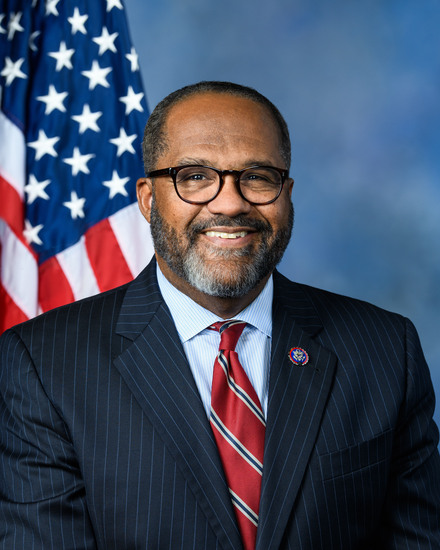
Rep. Troy A. Carter
Sponsored bills
Maddy summaryHR 5098, the Economic Empowerment Through Predevelopment Act of 2023, creates new federal grants to help community groups and nonprofits prepare for future development projects. The bill adds Section 208 to the Public Works and Economic Development Act of 1965, allowing grants for activities like community asset mapping, feasibility studies, training, and organizational capacity building - before actual construction begins. These grants directly assist eligible recipients (such as local nonprofits or community organizations) seeking to develop projects like housing or infrastructure. The policy change enables these groups to conduct essential predevelopment work without requiring upfront funding for major construction.
Maddy summaryThis bill requires the Department of Homeland Security (DHS) to establish a new Joint Task Force focused on combating transnational criminal organizations operating along U.S. land borders. The task force must prioritize disrupting smuggling and trafficking of people (especially children and families) and fentanyl/fentanyl precursors across borders, with specific performance metrics and quarterly reports to Congress. It also mandates DHS to create an integrated border intelligence cell within U.S. Customs and Border Protection to track migrant surges and trafficking routes, and to strengthen international partnerships with Canada, Mexico, and Central/South American countries to combat drug and human trafficking. The bill directly affects DHS operations, border security agencies, and international law enforcement partners by mandating new structures and coordination mechanisms.
Maddy summary# Summary of the "Protecting Our Democracy Act" This comprehensive legislation aims to strengthen democratic processes, increase government transparency, and prevent foreign interference in elections. Key provisions include: ## Ethics and Transparency - **Ethics Pledge**: Requires all appointees to sign an ethics pledge committing to: - Ban on gifts from registered lobbyists - 2-year revolving door ban (prohibiting participation in matters related to former employers) - Golden parachute ban (no special payments from former employers) - Commitment to decision-making based on public interest - **Tax Transparency**: Requires presidential and vice presidential candidates to disclose 10 years of tax returns, with sitting presidents submitting returns within 30 days of enactment ## Campaign Finance and Foreign Interference - **Foreign Contact Reporting**: Requires political committees to report any contact with "covered foreign nationals" within 1 week - **Enhanced Penalties**: Criminal penalties of up to $1 million and 5 years in prison for violations - **Online Advertising Rules** ("Honest Ads Act"): - Requires clear disclosure of who paid for political ads online - Mandates machine-readable public databases of political ads - Requires visible sponsor identification that remains when ads are shared - Defines "qualified political advertisements" to include various online formats ## Preventing Patronage Systems - Limits exceptions to competitive service for federal positions - Restricts transferring positions between competitive and excepted service - Requires employee consent for position transfers ## Use of Federal Property - Prohibits holding national political conventions on federal property - Requires publicly available visitor records at White House and other official locations (with privacy exceptions) The legislation establishes detailed definitions, reporting requirements, and enforcement mechanisms across multiple agencies, with the goal of increasing transparency, preventing foreign interference, and ensuring ethical conduct in government service.

Maddy summaryThis bill amends U.S. Code to allow capital construction funds - previously used for vessel upgrades - to cover the replacement or purchase of cargo handling equipment at U.S. marine terminals. It defines "cargo handling equipment" to include U.S.-manufactured gear or foreign-made equipment if U.S. supply is insufficient or low-quality, as determined by terminal operators. The bill prohibits using funds for cranes made in China or fully automated equipment that could cause job losses at terminals. Marine terminal operators (not individual vessels) are the primary beneficiaries, with eligibility tied to equipment meeting specific U.S. manufacturing or supply criteria.
Maddy summaryThis bill establishes a federal system to coordinate efforts across agencies to address health risks from extreme heat. It creates a National Integrated Heat Health Information System (NIHHIS) and an interagency committee to develop a strategic plan for heat health planning and response. The bill authorizes funding for community resilience projects that prioritize historically disadvantaged communities and those with environmental justice concerns. It mandates a study to identify gaps in heat information and response systems across the country. The legislation aims to reduce health impacts of extreme heat, particularly for vulnerable populations including the elderly, low-income communities, and communities of color.
Maddy summaryThis bill requires phone calls, texts, and chats to 9-8-8 (the national suicide prevention and mental health crisis hotline) to be routed to the nearest participating crisis center within 90 days of enactment, while protecting caller privacy by not revealing precise location. It mandates all phone carriers to transmit every 9-8-8 call or text - including those from prepaid or non-initialized handsets - and updates phone systems to allow direct 9-8-8 dialing without extra steps. The law affects crisis centers (by directing calls to their area), callers (through improved routing and privacy), and phone carriers (by requiring transmission compliance). These changes aim to make the 9-8-8 system more efficient and accessible for those seeking mental health support.
Maddy summaryHR 4985, the Expanding Medical Education Act, creates federal grants to help medical schools and osteopathic medicine programs open or expand campuses in areas without existing medical education options, especially in medically underserved communities. It prioritizes funding for schools in regions with no current medical schools or for minority-serving institutions in areas lacking such schools. Grants can be used to recruit students from underrepresented groups (including rural, low-income, and first-generation students), develop curricula focused on underserved care, build facilities, and hire faculty. Institutions must report annually on student demographics and program activities, with detailed congressional reports every five years tracking outcomes like workforce diversity and healthcare access in target areas.
Maddy summaryThe provided context for HR 4060 (Food Access and Stability Act of 2023) only describes a technical amendment to an existing law (the Fiscal Responsibility Act of 2023), specifically modifying section 311(b)(2) by replacing subsection (a) with subsection (a)(1). It does not explain the policy substance, who is affected, or the practical impact of this change. Without additional details on the amendment's purpose or resulting policy shifts, a substantive summary cannot be generated. This appears to be a procedural adjustment rather than a new policy measure.
Maddy summaryThis bill prohibits federal involvement in commercial greyhound racing, live lure training, and open field coursing by banning interstate activities related to these practices. It makes it unlawful to conduct betting on greyhound races (including remote gambling), use live animals as bait, or transport animals for these purposes. The law specifically targets the declining greyhound racing industry (now operating at only two tracks in West Virginia), banning federal facilitation of betting, live bait use, and interstate transport of animals for racing or training. It does not affect horse racing or state laws already prohibiting these activities in most states.