

Maddy summary# Summary of EDUCATORS for America Act Provisions This comprehensive legislation makes significant changes to educator preparation, certification, and support systems, with a strong focus on loan forgiveness and retention of educators in high-need settings. ## Key Provisions: 1. **Enhanced Loan Forgiveness Programs**: - Creates new "Educator Loan Forgiveness Programs" under sections 428J and 460 of the Higher Education Act - Provides 100% loan forgiveness for educators who complete 5 years of qualifying service in high-need schools or early childhood education programs - Offers monthly loan forgiveness/cancellation during the service period (in addition to annual forgiveness) 2. **Expanded Eligibility**: - Defines "high need school" as schools where: * Over 30% of students meet poverty measures * School is identified for comprehensive support * School is Bureau of Indian Education funded * School is operated by Tribal educational agencies - Includes Tribal early childhood programs, Native Hawaiian education systems, and Bureau of Indian Education programs as eligible settings - Special rule for educators providing instruction in Native American languages 3. **"Qualifying Educator" Definition**: - Includes elementary/secondary teachers (with full certification) - Includes school leaders (with full certification) - Includes early childhood educators and program directors - Includes educators working in Native American language instruction regardless of certification status 4. **New Support Programs**: - Centers of Excellence for teacher preparation at institutions serving underrepresented populations - Recruitment and completion grants for underrepresented students in education - Resiliency grants for technology integration and educator workforce partnerships - Doctoral fellowships to diversify faculty in high-need education areas 5. **Implementation Details**: - Monthly loan credit program for eligible educators in income-driven repayment plans - Allows counting of partial service years under specific conditions - Prevents double benefits with other service programs - Allows for promotions within qualifying schools without losing eligibility This legislation aims to create a more diverse, stable, and well-prepared educator workforce by reducing financial barriers to entering and remaining in the education profession, particularly in high-need schools and early childhood education settings.
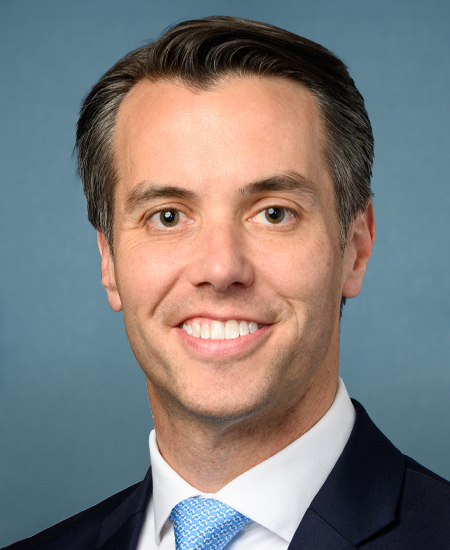
Rep. Morgan McGarvey
Sponsored bills
Maddy summaryHR 3022 is a procedural bill that adds "Workers’ Memorial Day" to the list of official federal holidays observed by the U.S. government. It amends Title 5 of the U.S. Code to insert "Workers’ Memorial Day" after "Washington’s Birthday" in the federal holiday schedule. This bill does not create new policies, programs, or funding; it solely recognizes April 28th as a day for honoring workers who have died in workplace incidents. The change affects only the federal government's calendar, not private citizens or businesses.
Maddy summaryHR 2904, the Anti-Racism in Public Health Act of 2023, establishes a National Center on Antiracism and Health within the CDC. The center will declare racism a public health crisis, conduct research on how structural racism affects health outcomes, and develop data systems to track health disparities across race, ethnicity, gender, and other factors. It will fund regional centers in minority communities, create public health interventions, and require CDC to report annually on antiracist efforts. This bill directly affects public health agencies, researchers, and communities of color by mandating systemic analysis of racial inequities in healthcare and public health policy.
Maddy summaryThis bill adjusts veterans' disability and survivor benefits to match the annual cost-of-living increase for Social Security. It requires the Veterans Affairs Secretary to raise specific payments - such as disability compensation for veterans, dependency payments for spouses and children, and clothing allowances - effective December 1, 2023, by the same percentage as the Social Security COLA for that year. The adjustment directly affects veterans receiving disability compensation under 38 U.S.C. § 1114, surviving spouses under § 1311, and children under §§ 1313-1314, as well as those receiving clothing allowances. The change ensures these benefits keep pace with inflation, using the Social Security Act’s established adjustment formula.
Maddy summaryHRES 335 is a symbolic resolution condemning two mass shootings in Louisville, Kentucky: one at the Old National Bank on April 10, 2023 (killing 5 people), and another at Chickasaw Park on April 15, 2023 (killing 2 people). It honors the victims' memories, expresses condolences to their families and the affected community, and reaffirms the House's commitment to supporting all gun violence victims. The resolution does not propose new laws or policies but serves as a formal statement of condemnation and solidarity. It directly affects the victims' families, Louisville residents, and the broader community impacted by these tragedies.
Maddy summaryThe PSLF Payment Completion Fairness Act (HR 2949) amends the Higher Education Act to clarify eligibility for the Public Service Loan Forgiveness (PSLF) program. It revises Section 455(m)(1)(B) by removing the phrase "is employed" and related text, replacing it with "has been" to focus solely on payment completion. This change ensures borrowers qualify for loan forgiveness once they've made 120 qualifying payments, regardless of current employment status. The bill directly affects federal student loan borrowers working in public service jobs who are seeking loan forgiveness under the PSLF program.
Race Horse Cost Recovery Act of 2023 This bill amends the Internal Revenue Code to modify the accelerated depreciation allowance for race horses to allow a three-year recovery period for any race horse. (Current law limits the three-year recovery period to race horses placed in service before January 1, 2022, and race horses placed in service after December 31, 2021, that are more than two years old at the time they are placed in service.)
Maddy summaryThe Child Care for Working Families Act establishes a federal entitlement program providing subsidized child care for working families with children under age 6 who are not yet in kindergarten. It creates a sliding fee scale where families at or below 85% of State median income pay no copayment, while higher-income families pay up to 7% of their income based on income thresholds. The bill requires states to develop quality rating systems for child care providers and ensures providers receive sufficient funding to meet quality standards, including wages equivalent to elementary educators. It prioritizes access for underserved populations including children with disabilities, infants and toddlers, children experiencing homelessness, and families in low-income communities. The program is funded with $20 billion for fiscal year 2024 and subsequent years through 2029.
Forced Arbitration Injustice Repeal Act of 2023 or the FAIR Act of 2023 This bill prohibits a predispute arbitration agreement from being valid or enforceable if it requires arbitration of an employment, consumer, antitrust, or civil rights dispute.
Equine Tax Fairness Act This bill modifies the tax treatment of gains and losses from the sale of depreciable property used in a trade or business to eliminate horses from the definition of livestock (thus making the 24-month holding period requirement for livestock inapplicable to horses and allowing horses to be treated as capital assets subject to the existing 1-year holding period requirement for long-term capital gains).