

Maddy summaryHR 7746, the "Destroy Zombie Guns Act," requires businesses that destroy firearms to destroy every component of a firearm during the process, not just parts of it. This law directly affects licensed firearm destruction businesses and individuals operating as regular business to destroy firearms for profit. The bill amends federal law (18 U.S.C. § 922) to make it unlawful to fail this complete destruction, adding penalties including fines, up to 2 years in prison, and license suspension or revocation for licensed destroyers who violate the rule. The key mechanism ensures no firearm parts remain usable after destruction, targeting incomplete destruction practices.
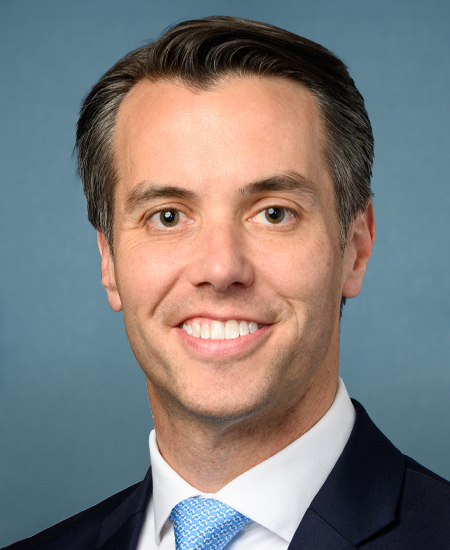
Rep. Morgan McGarvey
Sponsored bills
Maddy summaryThis bill sets a $100,000 lifetime limit on VA educational benefits for flight training at public colleges or universities under the Post-9/11 GI Bill, adjusted annually for inflation based on the Consumer Price Index. It directly affects veterans pursuing flight training programs at public institutions of higher learning, capping their total benefit for such training at $100,000 (adjusted yearly). The annual adjustment calculates the increase using the previous year's inflation rate (CPI change between June 30 and the prior year's June 30). The limit applies only to flight training programs at public institutions and begins for veterans starting such programs on or after August 1, 2025.
Maddy summaryThe Housing ACCESS Act requires the federal government to issue guidance within one year to help states connect Medicaid beneficiaries with housing services. It directs states to align eligibility processes, streamline service coordination between health and housing agencies, and track outcomes like housing stability - disaggregated by race. The bill also mandates a national study to set fair reimbursement rates for housing services, aiming to ensure living wages for providers and a 1:15 case manager-to-client ratio. States must report on progress within two years, with the guidance intended to simplify how health and housing providers access each other's systems.
Maddy summaryHR 7629, the Protect Our Letter Carriers Act of 2024, allocates $1.4 billion annually (2025-2029) to the U.S. Postal Service for high-security collection boxes and replacing physical universal mailbox keys with electronic versions, directly affecting USPS operations and letter carriers. It requires the Attorney General to appoint specialized prosecutors in each district to coordinate investigations and prosecutions of postal-related crimes, such as assaults on carriers or mail theft. The bill also mandates the U.S. Sentencing Commission to adjust guidelines so that assaults or robberies against postal employees are treated with the same severity as assaults against law enforcement officers. These provisions aim to enhance safety through infrastructure upgrades, improved prosecution, and stricter sentencing for crimes targeting postal workers.
Maddy summaryThis bill prohibits federal law enforcement officers and state/local agencies receiving Department of Justice funding from executing no-knock warrants. Specifically, it requires officers to announce their authority and purpose before forcibly entering a residence. The law applies to all warrant executions by federal officers (as defined in 18 U.S.C. §115) and to state/local agencies receiving DOJ funds starting in the first fiscal year after enactment. It directly affects law enforcement agencies at all levels that use federal funding, changing how they execute search warrants. The core policy change is mandating audible notice before entry, replacing the previous no-knock practice.
Maddy summaryThe American High-Speed Rail Act authorizes $35 billion annually for high-speed rail corridor development (with $3 billion for corridor planning), requiring at least 20% of project costs to come from non-Federal sources. It defines "high-speed rail" as services reaching 186+ mph and "higher-speed rail" as 110-186 mph, with no more than 20% of funds allocated to higher-speed rail projects. Key provisions include allowing advance acquisition of rail corridors before environmental reviews, creating tax exclusions for rail carriers selling property to high-speed rail projects, and requiring consideration of equity, sustainability, and economic development impacts in planning. The bill affects federal agencies, state and local governments, rail carriers, and communities along proposed rail corridors.
Maddy summaryHR 7575, the Supporting America’s Young Entrepreneurs Act of 2024, provides student loan relief to borrowers who start or work for qualifying small businesses in economically distressed areas. Founders of certified "distressed area businesses" (operating 5+ years in designated low-income/unemployment zones) can have up to $20,000 of their Federal Direct Loans canceled after 24 months of payments while employed by their business. Employees of new "small business start-ups" (operating ≤3 years) may qualify for up to $3,000 annually (max $15,000 total) after 12 months of full-time employment. The Young Entrepreneurs Business Center, established under the Small Business Act, certifies businesses, identifies distressed areas, and approves loan cancellations, with canceled debt excluded from taxable income.
Young Adult Tax Credit Act This bill allows a refundable young adult tax credit and a monthly advance payment of such credit. The bill defines young adult as an individual who is at least age 18, but not yet 25, and is either a citizen, national, or resident of the United States. The amount of such credit is the sum of $500 for each taxpayer or taxpayer dependent who is a young adult in any calendar month.
Maddy summaryThis bill requires federal agencies that haven't met their annual goal for awarding contracts to service-disabled veteran-owned small businesses to provide staff training on improving those contracts. Within 180 days of enactment, the Small Business Administration must issue guidance to these agencies on best practices for increasing such contracts. Agencies must also report annually to Congress listing those that missed the goal, the number of training sessions provided, and the training content. The law directly affects federal agencies failing to meet the existing contracting target, aiming to improve their performance through structured training and transparency.
Maddy summaryThis bill designates the U.S. Postal Service facility at 835 South 7th Street in Louisville, Kentucky, as the "Alberta Odell Jones Post Office Building." All official references in laws, maps, regulations, or documents to this location will now use the new name. The bill directly affects the Louisville post office and any government records referencing it.