

Maddy summaryThis resolution (HRES 549) is a non-binding House measure expressing support for designating June 26 as "LGBTQI+ Equality Day." It commemorates three landmark Supreme Court rulings on June 26 (2003, 2013, and 2015) that ended criminalization of same-sex intimacy, struck down marriage discrimination, and established marriage equality. The resolution encourages public celebration of this day to honor these milestones and educate about ongoing discrimination faced by LGBTQI+ communities. It also acknowledges the need for future legislation to address discrimination in areas like employment, housing, and public accommodations. As a symbolic resolution, it does not create new legal requirements but formally recognizes these historical court decisions.
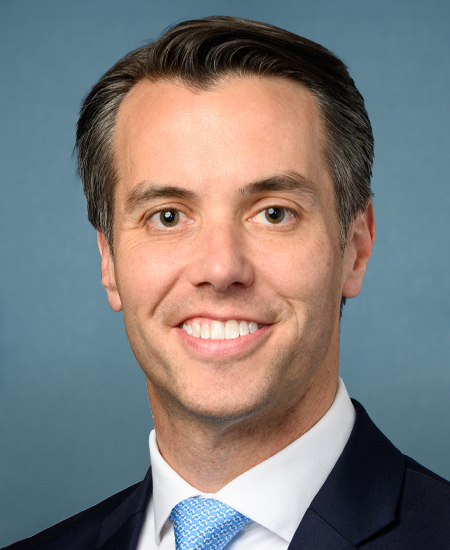
Rep. Morgan McGarvey
Sponsored bills
Maddy summaryThe CONNECT for Health Act of 2025 expands Medicare telehealth coverage by removing geographic restrictions that limited where patients could receive care, expanding the types of health care providers who can offer telehealth services, and eliminating the requirement for an in-person visit before receiving telemental health services. The bill includes specific provisions to support telehealth use for Native American health facilities, rural health clinics, and Federally Qualified Health Centers. It requires the Centers for Medicare & Medicaid Services to collect and publish data on telehealth usage and impacts, and to develop resources to improve accessibility for people with disabilities and limited English proficiency. Program integrity measures are added to monitor telehealth billing practices and prevent fraud while maintaining coverage for telehealth services during public health emergencies.
Maddy summaryThis bill prohibits defendants in federal criminal cases from using a victim's LGBTQ identity (sexual orientation, gender identity, or expression) as a defense to excuse or reduce punishment for violent crimes. It amends federal law to ban arguments that claim a "nonviolent sexual advance" or inaccurate perception of someone's LGBTQ status justified the defendant's actions. The law allows limited admission of past trauma evidence under standard federal rules but requires the Attorney General to annually report on federal prosecutions involving bias-motivated violence against LGBTQ individuals. This directly affects defendants in federal court cases where such defenses were previously used, aiming to end the practice of treating LGBTQ victims' identities as justification for violence.
Maddy summaryThis bill makes technical corrections to the Camp Lejeune Justice Act of 2022 to streamline claims for individuals harmed by water contamination at Camp Lejeune. It clarifies the evidence required (30+ days at the base plus a link between contaminants and health harm), specifies that cases must be handled in North Carolina courts (with limited transfer options), and sets attorney fee caps (20% before suit, 25% after). These changes directly affect veterans and civilians who lived at Camp Lejeune and filed claims under the 2022 law. The bill does not create new eligibility but aims to improve the legal process for existing cases.
Maddy summaryHR 4139, the Cutting Copays Act, lowers out-of-pocket prescription drug costs for low-income Medicare Part D beneficiaries. It reduces the maximum copay for generic drugs to $0 starting in 2026 and caps copays for other drugs at $3 before 2026, with future adjustments tied to inflation. The bill directly affects Medicare Part D enrollees who qualify for low-income subsidies, ensuring their annual drug costs stay below set limits. These changes modify existing Medicare Part D cost-sharing rules without creating new programs or altering eligibility.
Maddy summaryThe Women's Health Protection Act of 2025 would protect access to abortion services across the United States by prohibiting states from imposing restrictions that are more burdensome than those on comparable medical procedures. The bill directly affects people seeking abortion care and health care providers by banning restrictions such as mandatory in-person visits, requirements for specific tests, limitations on telemedicine, and rules based on a patient's reason for seeking abortion. It prohibits state laws that single out abortion for unnecessary restrictions while allowing post-viability abortions when necessary to protect a patient's life or health. The bill preempts conflicting state laws and provides enforcement mechanisms through private lawsuits and actions by the Attorney General.
Maddy summaryThis bill prohibits state officials from blocking abortion access for patients traveling from other states, including restricting providers who offer legal abortions in their state to out-of-state patients. It protects people traveling across state lines for legal abortions, those assisting such travel, and the interstate transport of FDA-approved abortion medication. Violations can be challenged by the Justice Department or affected individuals through civil lawsuits seeking injunctions and damages. The law applies broadly across all states, territories, and tribal nations, defining "abortion service" to include both medical procedures and related care.
Maddy summaryThis bill creates federal funding for community-based violence intervention programs in high-violence areas, targeting communities with 35+ homicides annually or 20+ homicides with rates double the national average. It establishes grants for community organizations to implement trauma-informed violence interruption strategies, hospital-based programs for injured patients, and job training for "opportunity youth" (16-25 year olds not in school or work). The legislation authorizes $300 million in 2026, increasing to $700 million annually through 2033, with requirements for evidence-based approaches that reduce violence without contributing to mass incarceration. It creates a National Community Violence Response Center to coordinate data collection, research, and best practices for these programs. The focus is on prevention through economic opportunity, trauma care, and community-driven interventions rather than traditional law enforcement approaches.
Maddy summaryThe Caring for Survivors Act of 2025 increases monthly dependency and indemnity compensation for surviving spouses of veterans. It changes the calculation method from a fixed $1,154 to 55% of a specific veteran compensation rate, effective six months after enactment. The bill also reduces the required continuous disability rating period for survivors from 10 years to 5 years, and provides a proportional payment for cases where the rating period is shorter than 10 years. Surviving spouses of veterans who died before January 1, 1993, receive the greater of their current benefit or the new calculation. This directly affects surviving spouses eligible for benefits under Title 38, U.S. Code, particularly those with veterans who died prior to 1993.
Maddy summaryHRES 512 is a symbolic resolution expressing the House of Representatives' support for designating Sunday, June 15, 2025, as "Father's Day." It recognizes fathers' roles in families and society, citing statistics about fatherhood and the benefits of involved fathering. The resolution urges support for existing policy proposals like universal paid family leave, affordable childcare, and a child tax credit - though it does not create new laws or funding. As a commemorative measure, it has no legal effect beyond formally acknowledging Father's Day.