

Maddy summaryThis bill expands VA healthcare access to military family members (including those in utero) who lived or worked at military locations where veterans have a presumption of service-connected illness due to toxic exposure (e.g., Camp Lejeune). It requires the VA to provide hospital care and medical services for covered illnesses if families demonstrate exposure to the same toxins qualifying veterans for benefits. Key limitations include requiring exhausted third-party payment claims (like insurance) before VA coverage, and restricting care to illnesses with VA-established presumptions. The VA must report annually on utilization, denials, and pending applications starting in 2027. This directly affects military families residing at contaminated bases, not veterans themselves.
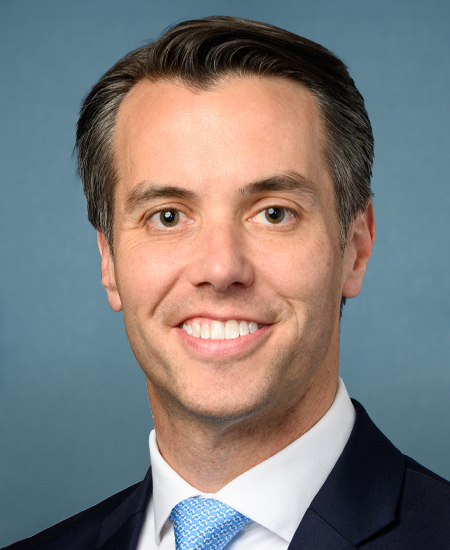
Rep. Morgan McGarvey
Sponsored bills
Maddy summaryHR 4611 (EACH Act of 2025) requires all federally funded health programs - including Medicaid, Medicare, military health plans, and the Indian Health Service - to cover abortion services without restrictions, repealing the Hyde Amendment's long-standing ban on federal funding for most abortions. This directly affects millions of people enrolled in these programs, particularly low-income women, women of color (including 25% of Black women and 22% of Hispanic women on Medicaid), and young people. The bill mandates coverage in all federally administered health plans and prohibits state or private insurers from restricting abortion coverage in health insurance. It aims to eliminate current federal and state barriers that deny abortion access to people who rely on government health programs.
Maddy summaryHR 3578 establishes the Veterans Experience Office within the Department of Veterans Affairs (VA), led by a Chief Veterans Experience Officer appointed by the VA Secretary. The office requires VA offices to report customer experience metrics, collects veteran feedback on benefits and services (disaggregated by demographic and service type), and assesses VA websites and customer service. It mandates annual reports to Congress on veteran satisfaction and barriers to service use, such as lack of awareness or technical access issues. The office operates until September 30, 2028, and the bill also requires a Comptroller General review of VA customer experience efforts within 540 days of enactment. This bill directly affects veterans, beneficiaries, and VA staff responsible for delivering services.
Maddy summaryHR 1404, the CHAMPVA Children’s Care Protection Act of 2025, expands healthcare eligibility under the CHAMPVA program for children of veterans. It increases the maximum age for children to receive medical benefits from 21 to 26 years old, regardless of marital status. This change directly affects dependent children of veterans who were previously eligible until age 21, extending coverage through their mid-twenties. The policy amendment applies to medical care provided on or after the bill’s enactment date.
Maddy summary# Summary of Proposed Tax Code Amendment This document is a comprehensive proposal for tax code amendments, primarily focused on extending, modifying, and creating new tax credits related to clean energy, energy efficiency, and environmental initiatives. The key components include: ## Housing and Residential Credits - **First-Time Homebuyer Tax Credit**: A refundable credit for first-time homebuyers (Section 13001) - **Renter Tax Credit**: A refundable credit for renters paying more than 30% of their adjusted gross income in rent (Section 13002) ## Clean Energy Credits (Sections 21001-21007) - Extended clean energy production credit with a new phase-out date (2032 or when greenhouse gas emissions reach 25% of 2022 levels) - Extended clean electricity investment credit for wind and solar facilities - Restored credit for wind and solar leasing arrangements - Extended clean hydrogen production credit (construction date reverted to 2033) - Extended residential clean energy credit (termination date moved to 2034) - Reinstated special rate for sustainable aviation fuel (35 cents/ gallon for certain facilities) ## Energy Efficiency Credits (Sections 22001-22004) - Restored product identification number requirement for energy-efficient home improvements - Extended new energy efficient home credit (acquisition date moved to 2032) - Repealed termination of new energy efficient commercial buildings deduction - Restored cost recovery for energy property ## Electric Vehicle and Charging Infrastructure Credits (Sections 23001-23005) - Extended previously-owned vehicle credit (acquisition date moved to 2032) - Extended clean vehicle credit (placement in service date moved to 2032) - Extended commercial clean vehicles credit (termination date moved to 2032) - Extended alternative fuel vehicle refueling property credit (termination date moved to 2032) - Created a new credit for electric bicycles (30% of cost, up to $5,000 per bicycle) ## Clean Infrastructure and Resiliency Credits (Sections 24001-24007) - Created qualifying water reuse project credit (30% of qualified investment) - Created recycling property investment credit (30% of qualified investment with phase-out) - Excluded amounts received from State-based catastrophe loss mitigation programs from gross income - Expanded exclusion for certain emergency agricultural assistance - Created credit for disaster mitigation expenditures (30% of qualifying mitigation activities) - Created qualifying electric power transmission line credit (30% of qualified investment) - Created qualifying advanced battery project credit (30% of qualified investment with $3 billion cap) The proposed amendments generally extend existing credits through 2032-2037, with some credits having phase-out schedules and others having specific termination dates. The document also includes numerous conforming amendments to other sections of the tax code to accommodate these changes.
Maddy summaryThe Antisemitism Response and Prevention Act of 2025 aims to combat rising antisemitism through evidence-based policies rather than political weaponization. It requires universities to designate Title VI coordinators to handle civil rights complaints, establishes a National Coordinator to Counter Antisemitism within the Department of Justice, and creates a Hate Crime Reporting Center at the FBI to improve data collection on hate crimes. The bill prohibits using antisemitism accusations to restrict diversity programs, political advocacy, or immigration policies, and ensures nonprofit security grants for Jewish community centers cannot be tied to unrelated political conditions. The legislation authorizes $280 million annually for the Department of Education's Office for Civil Rights and $50 million for the Hate Crime Reporting Center from 2027-2032.
Maddy summaryThe Black Lung Benefits Improvement Act of 2025 simplifies and strengthens the process for coal miners and their families to obtain benefits for black lung disease (pneumoconiosis). It clarifies eligibility using medical evidence standards (Section 102), requires the Secretary to provide complete pulmonary evaluations (Section 103), and establishes an attorneys' fees and medical expenses payment program to help claimants (Section 106). The bill also restores automatic cost-of-living adjustments for benefits (Section 107) and strengthens financial safeguards for the Black Lung Benefits Disability Trust Fund by requiring coal companies to secure payment obligations (Section 131). These changes directly affect coal miners with black lung disease, their dependents, and the administration of the benefits program.
Maddy summaryHR 6757, the Relief for Survivors of Miners Act of 2025, simplifies the process for survivors to receive black lung benefits by changing how deaths from pneumoconiosis (black lung disease) are proven. It creates a rebuttable presumption that a miner’s death was caused by black lung if they worked 10+ years in coal mines or were totally disabled by the disease before death, making it harder for claims to be denied. The bill also establishes a program to pay up to $4,500 in attorneys’ fees and $3,000 in medical expenses for qualifying claims through a federal fund, with operators later reimbursing the fund if benefits are approved. Additionally, it requires the Government Accountability Office to review interim payments, benefit adequacy, and potential policy changes for black lung survivors.
Maddy summaryHR 6731, the "Restore Trust in Government Act," requires Members of Congress, the President/Vice President, and their spouses or dependent children to divest certain financial investments during federal service. It defines "covered investments" broadly (including stocks, commodities, and derivatives) but excludes Treasury bonds, municipal bonds, family farm interests, and some Alaska Native Settlement stock. Covered individuals must sell holdings within 90-180 days of taking office or enacting the law, with limited exceptions for qualified blind trusts or spouses’ occupational trading. Violations incur a 10% fee on the investment value and require returning profits, paid to the Treasury. Ethics offices enforce these rules, publish penalty details, and issue divestiture certificates.
Maddy summaryThis bill requires all federal agencies to identify, preserve, and transmit records related to missing military personnel and civilian employees to the National Archives for public access. It establishes a Missing Armed Forces and Civilian Personnel Records Review Board to oversee the process, determine which records can be disclosed, and handle exceptions for national security reasons. The bill mandates that most records be made public within 1 year of the Review Board's establishment, with specific deadlines for agencies to complete the process. It directly affects families of missing personnel by providing access to historical records about their loved ones' fate and government efforts to account for them. The law creates a new collection at the National Archives and requires agencies to disclose records unless national security concerns outweigh the public interest in disclosure.