

Maddy summaryHR 2864, the Countering CCP Drones Act, adds DJI Technologies (Shenzhen Da-Jiang Innovations Sciences and Technologies Company Limited) and its equipment/services to the list of prohibited communications products under the Secure and Trusted Communications Networks Act. The bill directly affects U.S. federal agencies and entities receiving federal funds by prohibiting them from using DJI's telecommunications or video surveillance equipment or services. Its key mechanism requires federal agencies to remove DJI equipment from their networks and bans future procurement or use of such equipment. This policy change aims to address security concerns related to Chinese-owned drone technology in U.S. communications infrastructure.
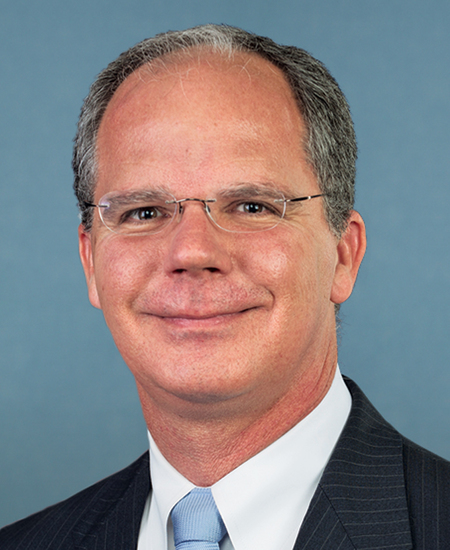
Rep. Brett Guthrie
Sponsored bills
Maddy summaryHRES 1420 is a disapproval resolution that stops a rule issued by the Department of Homeland Security regarding the "Keeping Families Together process." The resolution directs Congress to reject the rule, meaning it will have no legal effect and cannot be enforced. This resolution specifically targets a procedural rule related to immigration procedures, not new policy. It does not change immigration law or directly affect individuals but prevents the rule from being implemented. As a disapproval resolution, it is procedural and focuses solely on blocking the rule's enforcement.
Maddy summaryHR 8230, the FOREST Act, exempts certain telecommunications projects on National Forest System lands from standard environmental review requirements under the National Environmental Policy Act (NEPA). It specifically applies to projects using existing infrastructure (like power lines) or located on areas where the Forest Service has already completed environmental and historical reviews for prior communications use authorizations. The bill prevents the need for re-initiating these reviews if new information about a previously analyzed area becomes available. This directly affects telecom companies seeking permits for new facilities on National Forest lands, streamlining the approval process for projects in already reviewed locations. The policy change focuses on reducing regulatory duplication for infrastructure already vetted by the Forest Service.
Maddy summaryHR 9277, the REG Act, prohibits federal agencies from considering "environmental justice" when creating rules or enforcing laws, unless required by existing law. It directly affects agencies like the EPA by restricting how they evaluate policies' impacts on minority and low-income communities during rulemaking. The bill repeals three key executive orders: E.O. 12898 (addressing environmental justice in vulnerable communities), E.O. 14008 (climate action), and E.O. 14096 (environmental justice commitments). This changes how agencies develop regulations by removing mandatory consideration of environmental justice in their processes.
Maddy summaryThis resolution aims to block a rule issued by the National Highway Traffic Safety Administration (NHTSA) that sets new fuel efficiency standards for passenger cars, light trucks (starting in 2027), and heavy-duty pickup trucks/vans (starting in 2030). If passed, it would prevent this specific rule from taking effect by disapproving it under a congressional review process. The rule directly affects vehicle manufacturers by requiring them to meet these updated fuel economy targets for future model years. This is a procedural resolution, not a new law, focused solely on halting the implementation of the existing NHTSA rule.
Maddy summaryThe Counter SNIPER Act (HR 9282) establishes a formal process for presidential and vice-presidential candidates seeking protective details from the U.S. Secret Service. If the Secretary of Homeland Security denies a request, they must provide a written explanation within 14 days, detailing the criteria not met, and allow candidates to request reconsideration with supporting evidence. The Secretary must then issue a final written decision within 14 days of the reconsideration request. Additionally, the bill requires the Director of the U.S. Secret Service to be appointed by the President with Senate confirmation.
Maddy summaryHRES 1394 is a non-binding resolution celebrating the U.S.-India partnership based on shared democratic values, religious pluralism, and human rights, while highlighting the contributions of the Indian diaspora in the United States. It specifically recognizes the 50th anniversary of BAPS Swaminarayan Sanstha's community work, including its spiritual centers (mandirs) and volunteer efforts across the country. The resolution does not create legal obligations but formally acknowledges these ties and achievements.
Maddy summaryThis bill reauthorizes the Debbie Smith DNA Backlog Grant Program, which provides federal funding to state and local law enforcement agencies to reduce backlogs in processing DNA evidence from crime scenes. It extends the program's funding period from fiscal years 2024 through 2029 (previously ending in 2024). The bill also updates audit requirements to ensure grant funds are used properly through 2029. This directly affects law enforcement agencies that receive these grants to accelerate DNA analysis for criminal investigations.
Maddy summaryThis is a commemorative resolution (HRES 1369) honoring Corey Comperatore, a volunteer firefighter, U.S. Army Reserves veteran, and community leader from Sarver, Pennsylvania, who died on July 13, 2024. The resolution formally mourns his passing and celebrates his life, noting he left behind his wife, Helen, and two daughters, Allyson and Kaylee. It recognizes his service to the Buffalo Township Volunteer Fire Department, his military service, and his role as a devoted member of Cabot Methodist Church. As a ceremonial resolution, it has no policy impact or direct effect on legislation or constituents beyond this formal acknowledgment.
Maddy summaryThis bill creates a new Public Participation Division within the Federal Energy Regulatory Commission to better coordinate assistance for the public during regulatory proceedings. The Division would be led by a Director who provides technical and logistical support to individuals and groups participating in Commission processes, but cannot offer financial compensation for legal or expert witness fees. The legislation also requires the new Director to submit a report to Congress within one year detailing how the Division operates and how its functions overlap with existing Commission authorities. This structure aims to streamline public engagement in energy regulation while maintaining clear boundaries on the type of assistance provided.