

Maddy summaryThe Dental and Optometric Care Access Act of 2023 (DOC Access Act) requires health insurance plans covering dental and vision care to allow providers (like dentists and optometrists) to charge patients the usual and customary rate for uncovered services, with a specific rule limiting dental cleanings to the network fee even if it exceeds annual coverage limits. It prohibits plans from restricting providers' choices of laboratories or suppliers for patient care. This law directly affects dental and vision care providers and the health insurance plans that offer these services. The bill establishes concrete billing and coverage standards to improve access to necessary dental and vision care.
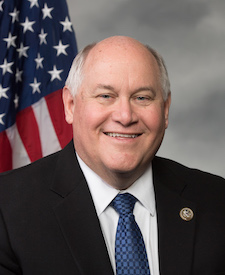
Rep. Ron Estes
Sponsored bills
Maddy summaryThe PHIT Act of 2023 allows individuals and families to deduct certain fitness expenses as medical costs on their federal taxes. It covers gym memberships, fitness classes, and specific equipment used exclusively for exercise (like home workout gear), with a yearly limit of $1,000 ($2,000 for joint returns). Expenses for activities like golf, hunting, or non-exercise-focused facilities (e.g., private clubs) are excluded, and equipment must be used solely for physical activity. This directly affects taxpayers who pay for qualifying fitness programs, making these costs partially tax-deductible under revised IRS rules.
Maddy summaryThe TABS Act of 2023 would rename the Consumer Financial Protection Bureau (CFPB) to the Consumer Financial Empowerment Agency (CFEA) throughout U.S. federal law. This bill would change the agency's name in the Consumer Financial Protection Act of 2010 and over 25 other federal statutes, including the Dodd-Frank Act and Truth in Lending Act. The bill does not alter the agency's responsibilities, authority, or budget structure - only its name. This is a procedural change affecting all federal documents, regulations, and references to the agency.
This resolution supports the designation of National FFA Week. It also (1) recognizes the important role of the National FFA Organization (Future Farmers of America) in developing the next generation of leaders who will change the world, and (2) celebrates the 90th anniversary of the iconic FFA jacket.
Maddy summaryThis bill prohibits the Department of Defense from using funds to pay for or reimburse abortion services, except when the pregnancy endangers the mother's life, results from rape, or results from incest. It directly affects military personnel, civilian DOD employees, and contractors receiving medical care at military facilities by restricting funding for abortion-related expenses. Key provisions include amending federal law to ban reimbursement for travel or licensing costs related to abortion services and repealing a 2022 DOD memo that expanded access to such care. The bill explicitly blocks all funding for abortion services beyond the existing exceptions, with no new exceptions added. It does not change abortion access for civilians outside the military healthcare system.
Maddy summaryThe HITS Act changes tax rules to help independent music producers by allowing them to deduct costs for creating sound recordings as immediate business expenses, rather than spreading costs over time. It specifically applies to U.S.-produced sound recordings (like albums or podcasts) by qualifying independent producers, with a $150,000 annual cap on deductible costs. The bill also enables bonus depreciation for equipment used in these productions, treating them similarly to film or theater projects for tax purposes. This aims to improve cash flow for smaller music businesses by reducing upfront tax burdens on recording costs.
Maddy summaryHR 1228 prohibits the U.S. military and Department of Defense-operated academic institutions from promoting specific anti-American or racist theories in training. It bans military programs that teach ideas such as "the U.S. is fundamentally racist," "the Constitution is fundamentally racist," or that "an individual’s worth is determined by race." The bill explicitly states it does not restrict protected speech, research access, or educational contexts that clearly disavow military endorsement of such theories. This directly affects military training curricula, workshops, and educational materials within the armed forces.
Chisholm National Historic Trail and Western National Historic Trail Designation Act This bill designates (1) the Chisholm National Historic Trail, and (2) the Western National Historic Trail. The Department of the Interior shall administer any portion of these trails that is located on nonfederal land only (1) with the voluntary consent of the owner of the nonfederal land, and (2) if the portion qualifies for certification as a component of the applicable trail. The approval by an owner of applicable nonfederal land of a certification agreement shall satisfy the voluntary consent requirement. A certification agreement may be terminated at any time. The establishment of these trails does not authorize any person to enter private property without the consent of the private property's owner. Interior may accept a donation of land or an interest in land for these trails, with specified exceptions. Land or an interest in land may not be acquired for these trails by eminent domain or condemnation.
Promoting Local Management of the Lesser Prairie Chicken Act This bill prohibits any population of the lesser prairie-chicken ( Tympanuchus pallidicinctus ) in Kansas, Oklahoma, Texas, Colorado, or New Mexico from being listed as endangered or threatened under the Endangered Species Act of 1973 (ESA). The lesser prairie-chicken is a type of grouse. Currently, two distinct population segments (DPS) of the lesser prairie-chicken are listed under the ESA. The Southern DPS of the lesser prairie-chicken is listed as endangered and the Northern DPS is listed as threatened. The bill removes both populations from the list. In addition, the bill bans Interior from listing any population of the lesser prairie-chicken as endangered or threatened in the future.
Maddy summaryHR 150, the Protecting American Energy Production Act, gives states primary authority to regulate hydraulic fracturing (fracking) for oil and gas on state and private lands, directly affecting state governments and energy producers. The bill requires states to maintain this regulatory role and blocks the President from imposing a fracking moratorium without explicit congressional approval. Key provisions include a Congressional "sense" statement affirming state primacy and a direct prohibition on presidential moratoriums unless authorized by a new law. This bill focuses on shifting regulatory power to states and limiting federal executive action on fracking, without specifying financial impacts or environmental standards.