

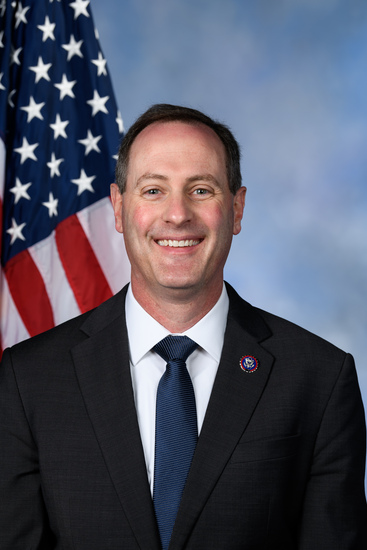
Photo of Tracey Mann
R United States House · District 1 · Kansas On the 2026 ballot

Rep. Tracey Mann

Compare
Total votes
2,837
all sessions
Attendance
100%
7 missed
Higher than 89% of chamber peers
With party
94%
of cast votes
Near the chamber average
Bipartisan score
3%
crosses aisle rarely
Near the chamber average
Sponsored
1,264
bills & resolutions
Near the chamber average
Committees
8
assignments
1,264 bills and resolutions

Sponsored bills

Total
1,264
Primary
77
Co-sponsor
1,187
This page
1,264
matching current filters
Co-sponsor HR 2192
In committee · Indiana House · Co-sponsor
Air America Act of 2025

Maddy summaryThe Air America Act of 2025 authorizes one-time payments of $40,000 to individuals who worked for Air America or its affiliated companies for at least five years during 1950-1976, or to their surviving spouses, children, or dependents. Additional payments of $8,000 per full year beyond five years are allowed. The program is capped at $60 million total funding, with claims required within two years of final regulations. Payments are a single lump sum with no ongoing benefits, and the bill explicitly states it does not create new entitlements beyond this one-time award.

In committee Mar 18, 2025 1 co-sponsor
Co-sponsor HR 2182
In committee · Indiana House · Co-sponsor
Pre-Pilot Pathway Act

Maddy summaryThe Pre-Pilot Pathway Act creates a voluntary apprenticeship program for aspiring commercial pilots through FAA-certified flight training academies. It allows each participating academy to select up to eight students annually to complete a structured curriculum under existing FAA rules (Part 141), with graduates required to meet standard certification requirements. The bill also directs the Transportation Secretary to develop incentives for retired pilots to become instructors or mentors at these academies and mandates annual reports tracking apprentice progress, retention, and job placement. This program directly affects flight training providers, their students, and the broader pilot workforce pipeline, aiming to address pilot shortages through structured training pathways.

In committee Mar 18, 2025 1 co-sponsor
Co-sponsor HR 2160
In committee · Indiana House · Co-sponsor
Maintaining and Enhancing Hydroelectricity and River Restoration Act

Maintaining and Enhancing Hydroelectricity and River Restoration Act This bill establishes a new investment tax credit in the amount of 30% of the basis of any hydropower improvement property. The bill defines hydropower improvement property as property that adds or improves fish passage at a qualified dam; maintains or improves the quality of the water retained or released by a qualified dam; promotes downstream sediment transport and habitat maintenance; upgrades, repairs, or reconstructs a qualified dam to meet safety and security standards; improves public uses of, and access to, public waterways impacted by a qualified dam; removes an obsolete river obstruction; or places into service an approved remote dam. Further, written approval for hydropower improvement property must be obtained from the Federal Energy Regulatory Commission or state or local officials prior to January 1, 2032. The bill also allows an election to claim the investment tax credit for qualified progress expenses for some types of hydropower improvement property in advance of such property being placed into service. Any investment tax credit amount claimed for qualified progress expenses reduces the amount of the investment tax credit that may be claimed once the hydropower improvement property is placed into service.  The bill authorizes certain entities, including tax-exempt and governmental entities, to treat the investment tax credit for hydropower improvement property as a payment of tax and receive a refund of any overpayment (also known as elective pay).  Finally, the investment tax credit for hydropower improvement property may be transferred (i.e., sold).

In committee Mar 14, 2025 1 co-sponsor
Co-sponsor HR 2126
In committee · Indiana House · Co-sponsor
FOCA Act of 2025

Maddy summaryThe FOCA Act of 2025 prohibits federal agencies from requiring or banning contractors from using union agreements in construction project bids or contracts. It directly affects federal agencies, contractors, and subcontractors working on federally funded or assisted construction projects (like buildings or infrastructure). The law requires bid documents to not favor or penalize contractors based on whether they have union agreements, aiming to promote open competition and prevent discrimination. This changes how agencies structure bids but does not affect union agreements themselves. The bill applies to all new contracts and subcontracts after enactment, with limited exemptions only for public health/safety emergencies or national security.

In committee Mar 14, 2025 1 co-sponsor
Co-sponsor HR 2036
In committee · Indiana House · Co-sponsor
Credit for Caring Act of 2025

Maddy summaryThe Credit for Caring Act of 2025 creates a federal tax credit for family caregivers of elderly or disabled relatives. It allows eligible caregivers (with over $7,500 in earned income) to claim a credit equal to 30% of qualified caregiving expenses exceeding $2,000, capped at $5,000 per year. Qualified expenses include human assistance, home modifications, respite care, counseling, lost wages for unpaid time off, and transportation, all requiring certification from a licensed healthcare provider that the care recipient has long-term needs. The credit phases out for higher earners (over $75,000 single/$150,000 joint) and requires documentation of expenses and care recipient certification.

In committee Mar 11, 2025 1 co-sponsor
Co-sponsor HR 2028
In committee · Indiana House · Co-sponsor
REDI Act

Resident Education Deferred Interest Act or the REDI Act This bill allows borrowers in medical or dental internships or residency programs to defer student loan payments until the completion of their programs.

In committee Mar 11, 2025 1 co-sponsor
Co-sponsor HR 2082
In committee · Indiana House · Co-sponsor
WISH Act

Maddy summaryThe WISH Act would create a federal long-term care insurance program to help seniors cover costs of long-term care services. It would provide monthly benefits to seniors who have a serious disability lasting at least a year, have met coverage requirements (6 quarters of coverage in the base period starting in 2026), and have not exhausted their savings. Benefits would be calculated based on the median cost of personal assistance care and the individual's work history. The program would be funded through an initial $12 million appropriation for each of fiscal years 2026-2028, plus $50 million for public education. This would help seniors avoid exhausting their savings or becoming dependent on Medicaid for long-term care costs.

In committee Mar 11, 2025 1 co-sponsor
Co-sponsor HR 2033
In committee · Indiana House · Co-sponsor
Military Spouse Hiring Act

Maddy summaryHR 2033, the Military Spouse Hiring Act, expands the Work Opportunity Tax Credit to include spouses of active-duty military personnel. It adds "qualified military spouse" as an eligible category for the tax credit, meaning employers who hire such spouses can claim the credit. A "qualified military spouse" is defined as someone certified by a local agency as married to an active-duty service member at the time of hire. The credit applies to hires occurring after the bill's enactment date. This directly affects military spouses seeking employment and employers hiring them, providing a tax incentive to encourage their hiring.

In committee Mar 11, 2025 1 co-sponsor
Co-sponsor HR 2039
In committee · Indiana House · Co-sponsor
Protecting the Right to Keep and Bear Arms Act of 2025

Maddy summaryHR 2039, the Protecting the Right to Keep and Bear Arms Act of 2025, prevents the President and Health Secretary from using emergency declarations (under the National Emergencies Act or Public Health Service Act) to implement gun control measures. It amends disaster relief law to explicitly prohibit future rules that would ban firearm possession, sales, or accessories during emergencies. The bill directly affects federal agencies and future emergency declarations, blocking them from being used as a tool for gun regulation. It does not change existing gun laws but restricts how emergency powers can be applied to firearms policy.

In committee Mar 11, 2025 1 co-sponsor
Primary HRES 206
In committee · Indiana House · Lead sponsor
Recognizing the importance of stepped-up basis under section 1014 of the Internal Revenue Code of 1986 in preserving family-owned farms and small businesses.

Maddy summaryThis is a non-binding resolution (HRES 206), not a legislative bill. It expresses the House's support for preserving the "stepped-up basis" tax provision (Section 1014 of the Internal Revenue Code), which allows heirs to reset the tax cost basis of inherited assets like farmland or business equipment to their current market value. The resolution cites that 98% of farms and 19% of businesses are family-owned, noting that eliminating this provision could increase taxes for 66% of midsized farms. It specifically urges opposition to new taxes on family farms and small businesses but does not change any tax law or policy.

In committee Mar 10, 2025 0 co-sponsors
Showing 271 to 280 of 1,264 bills
Previous 1 … 27 28 29 … 127 Next